TLDR;
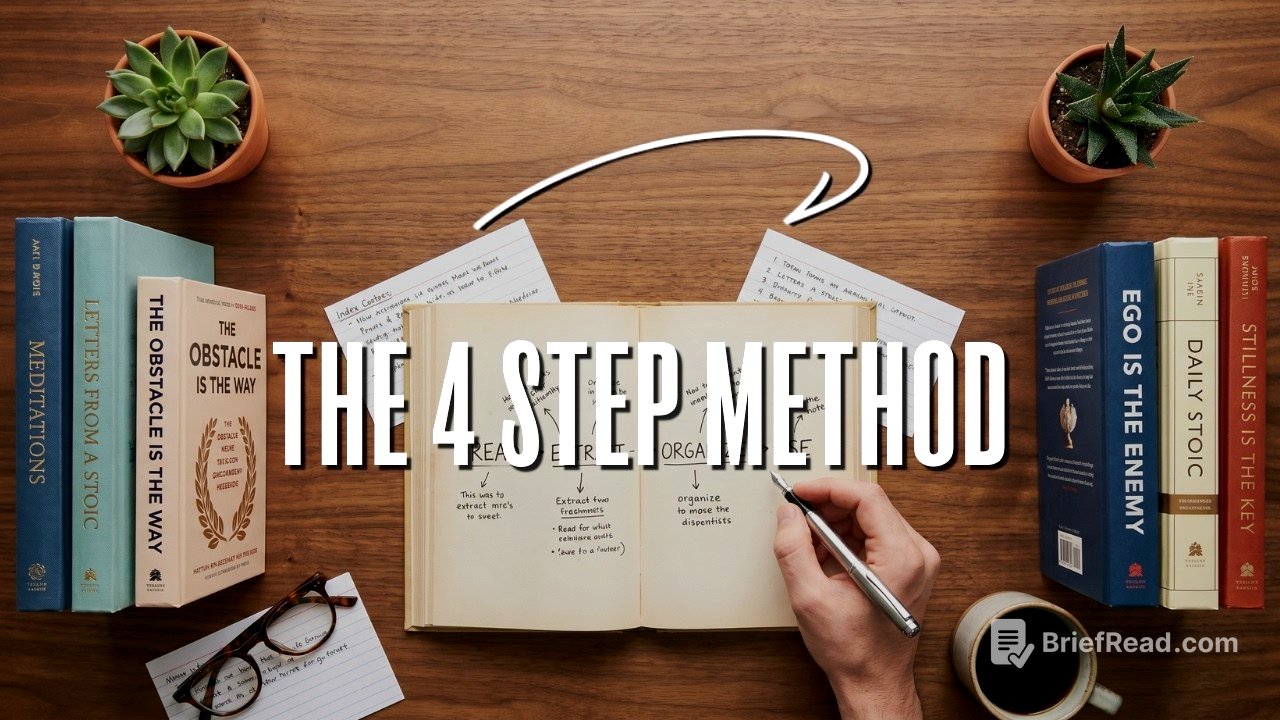
In this video, Ryan Holiday discusses the importance of not just reading but actively engaging with the material to retain and utilize the knowledge gained. He presents a four-part system for effective reading and information retention involving active reading, extraction of notes, organizing them into a commonplace book, and applying these insights to life.
- Engaging actively with texts is crucial for retention.
- The commonplace book is a key tool for organizing thoughts and notes for future reference.
The Importance of Active Reading [0:00]
Reading is an essential skill, yet reading without memory retention presents a significant issue. Holiday emphasizes that valuable lessons from reading may be forgotten if not recorded or organized. The consequence of forgetfulness could negatively impact finances, relationships, and personal growth. Therefore, he introduces a systematic approach to capture and preserve what we learn from reading.
Engaging with the Material [1:20]
Active reading involves using tools like pens or highlighters to mark significant parts of the text, making notations, and reflecting on thoughts or disagreements. Holiday underscores the practice of marginalia, as seen in prominent historical readers like David McCullough. He advocates for treating books as living documents that should be engaged with rather than preserved in pristine condition. The act of physically interacting with the book enhances understanding and retention.
The Reading Process and Reflection [4:00]
After reading a book, Holiday suggests setting it aside to allow for unconscious reflection before extracting key points. This helps ensure that second passes through the material reveal deeper insights that were initially overlooked. The extraction phase is crucial, transitioning from reading to capturing key takeaways, enhancing understanding and retention.
Note Cards and the Extract Phase [6:40]
Holiday explains the significance of transferring notes from books to 4x6 note cards, a method he learned while working as a research assistant. He cites Pliny the Elder's advice about taking extracts, regardless of the book's quality. Each note card serves as a building block for later use, allowing for the easy organization and recall of insights that can be applied in various contexts.
Creating a Commonplace Book [7:40]
The commonplace book is a personal collection of thoughts, quotes, and ideas that one wishes to retain. Holiday highlights this practice as a historical tradition among thinkers such as Montaigne and Emerson. The method allows individuals to compile their knowledge systematically, using physical cards that can be reorganized to find themes and connections over time.
The Timelessness of the System [8:50]
Holiday emphasizes the value of the commonplace book for extracting wisdom from experiences and learning materials. By continually creating and maintaining these collections, individuals can tap into their past knowledge when needed, whether for professional or personal challenges. The timeless nature of this system encourages consistent use and adaptation over time.
Applying Knowledge to Life [10:00]
The culmination of the system is applying the organized notes and insights to everyday life. Holiday urges viewers to actively incorporate what they learn into their work, projects, and personal development. He encourages starting the practice of a commonplace book and extracting knowledge now, as it will benefit one's future self.