TLDR;
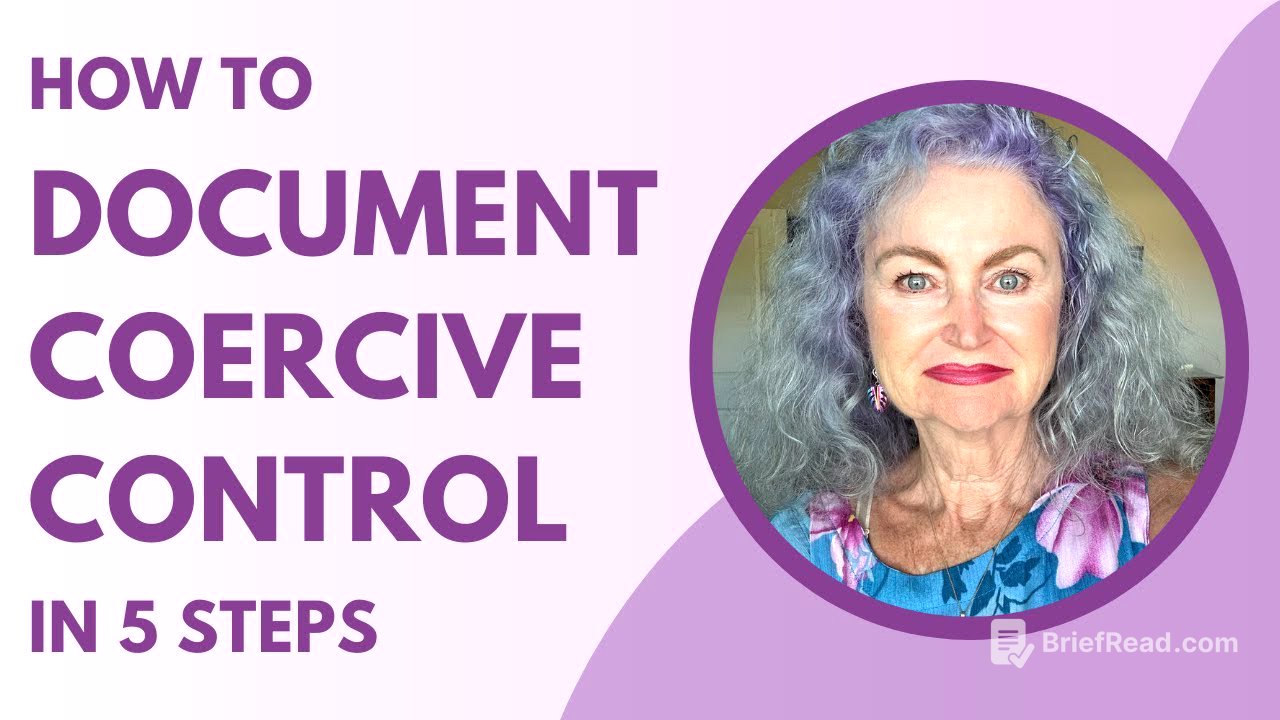
The video features Ruth Darlene from WomenSV, who presents five essential steps for documenting coercive control, aiming to empower survivors and aid service providers. The steps include understanding coercive control, establishing goals, creating a timeline, logging incidents, and gathering supporting documents. Darlene emphasizes the importance of clear communication and documentation for survivors seeking support and understanding.
- Understanding coercive control, its definitions, and implications.
- Establishing goals and audience for documentation.
- Creating a timeline of abuse incidents.
- Logging detailed accounts of interactions and incidents.
- Gathering contextual documents to support claims of abuse.
Introduction to Documenting Coercive Control [0:00]
Ruth Darlene discusses the challenges survivors face when recounting intimate partner abuse, particularly coercive control. This type of abuse can be difficult to articulate, especially when it lacks physical evidence. She introduces WomenSV, a nonprofit dedicated to educating about covert abuse, and outlines five essential steps for documenting coercive control that can empower survivors.
Step 1: Understanding Coercive Control [1:27]
Darlene defines coercive control as a pattern of behavior that manipulates, threatens, and isolates an intimate partner, primarily affecting women. She highlights its characteristics, such as micromanaging household duties, which can turn women into servants in their personal lives. Understanding both general and legal definitions is crucial, as legal recognition varies by location; some states in the U.S. classify it as a crime, while others treat it as a civil issue. Resources for further information are provided.
Step 2: Goals and Audience [3:32]
This step emphasizes the importance of defining the goals and audience for documenting experiences of coercive control. Darlene explains that survivors may document their experiences for various reasons, including reporting to law enforcement or seeking support. By clarifying their objectives, survivors can focus on relevant details, whether for their personal understanding or to communicate their experiences effectively to others.
Step 3: Timeline [4:19]
Darlene discusses creating a timeline of events related to the abusive experiences. This timeline should include key incidents, with exact dates when possible; approximate dates or significant timeframes are also valuable. Building this chronological outline helps both survivors and providers understand the history and context of the abuse and can be a crucial tool in documenting experiences accurately.
Step 4: Incident / Allegation Log [5:11]
Survivors are encouraged to create a detailed incident and allegation log, building on the timeline. Darlene suggests documenting incidents by noting the date or date range, descriptions of what occurred, emotional reactions, and any false allegations made by the abuser. Gathering supporting evidence, such as text messages or police reports, is essential. This structured log assists in revisiting and sharing experiences when needed.
Step 5: Gather Supporting Documents [6:22]
This step involves collecting documents that provide context about the coercive control experienced. Darlene highlights the importance of utilizing resources, such as the power and control wheel and risk assessments like the danger assessment. Organizing these documents helps survivors strengthen their claims and prepares them to summarize their experiences effectively.
How to Document Coercive Control + Important Considerations [7:59]
Darlene outlines the significance of a concise summary of gathered documentation, which serves as a powerful organizational tool for survivors. This summary can be tailored to specific audiences and purposes, ensuring clarity about legal, financial, or support needs. She emphasizes the need for survivors to keep their documentation secure.
Coercive Control Training Online - Understanding and Documenting Coercive Control: Executive Summary Workshop [11:55]
Darlene introduces the Executive Summary Workshop designed to help both survivors and providers in the documentation process. The workshop aims to equip participants with the skills needed to articulate their experiences with coercive control and other forms of abuse, emphasizing the importance of understanding and navigating this often subtle form of violence while providing resources for further support and learning.