TLDR;
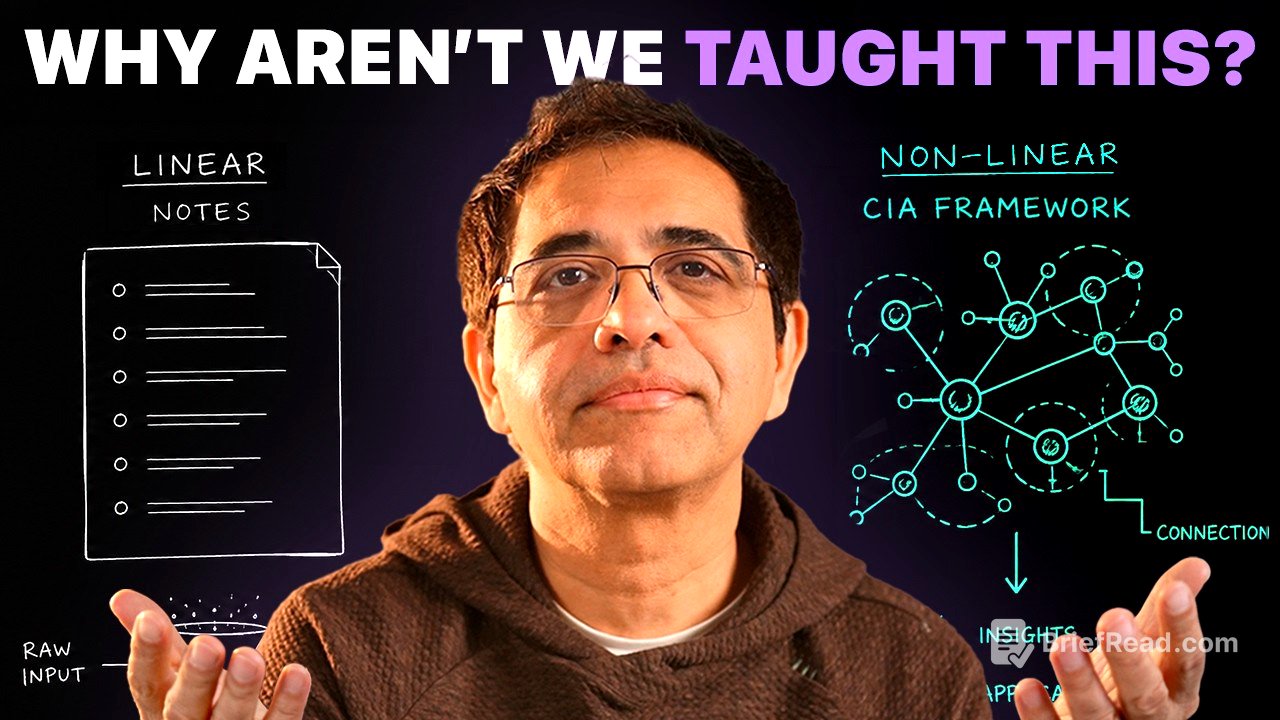
This video discusses an effective reading framework designed to enhance comprehension and retention. The speaker emphasizes that reading should not just be a passive activity but rather a purposeful engagement that transforms information into usable insights.
- The top 1% of readers read with intention to change their thought processes and actions.
- Common myths about reading can hinder effective learning.
- A five-step framework, including Aim, Compress, Test, Own, and Run, encourages readers to actively interact with the text and apply knowledge.
Introduction: The Importance of Intentional Reading [0:00]
The speaker challenges viewers to think about the last five books they read and whether they had any influence on their thinking and decision-making. He introduces the idea that many readers forget what they read, while the top 1% read with the intent to change and improve. He plans to share a system connected with this approach that utilizes AI to enhance reading comprehension.
Myths About Learning and Reading [0:44]
Three myths about learning are highlighted: the belief in distinct learning styles, the illusion of understanding from clear explanations, and the misconception that AI summaries can replace reading. Research suggests that preferred learning styles do not necessarily enhance retention, and the confidence in understanding something does not always equate to true comprehension. Common reading pitfalls include the highlighter trap, summary trap, and completion trap.
Building a Framework for Effective Reading [3:12]
The speaker introduces the concept of becoming an "actor" in the reading process rather than a passive observer. This involves actively engaging with the text and using AI not as a shortcut but as a supportive tool in the reading journey. The speaker sets the stage for the five-step framework aimed at improving reading effectiveness.
Aim: Set Your Purpose Before Reading [4:01]
The first step, Aim, encourages readers to define their mission before starting a book. By writing a sentence about why they are reading the material, they can shift from passive consumption to active construction of knowledge. Example provided is Lin-Manuel Miranda’s inspiration from the biography of Alexander Hamilton, which ignited his passion for creating the musical "Hamilton".
Compress: Focus on Core Ideas [6:51]
In the Compress stage, readers are encouraged to identify and condense the book's core central idea, referred to as the trunk, while distinguishing it from supporting details (leaves). This process helps in better retention and understanding, emphasizing that a thorough grasp of a book goes beyond mere collection of quotes and highlights.
Test: Engage with Challenging Ideas [9:25]
The Test phase advises readers to seek out disagreements within the text and use them for self-discovery. Referring to a Stanford study, the speaker explains that readers often cling to affirming evidence while rejecting contradictory views. Acknowledging what bothers them can lead to deeper insights, and AI can serve as a counterpart for testing interpretations and finding blind spots.
Own: Make Knowledge Personal [11:43]
The Own section stresses the importance of internalizing knowledge through techniques like recalling it in one's own words and connecting it to personal experiences. Teaching the material to others, even if just conceptually, reinforces ownership of the knowledge. AI can assist in clarifying ideas and contextualizing them further.
Run: Apply Knowledge in Real-World Situations [13:47]
Finally, the Run step relates to the application of learned knowledge to enact real-world change. The speaker reflects on how reading can influence behavior and decision-making. Each book's insights should lead to actionable outcomes, stressing that knowledge should translate into meaningful action that can impact one's life positively.