TLDR;
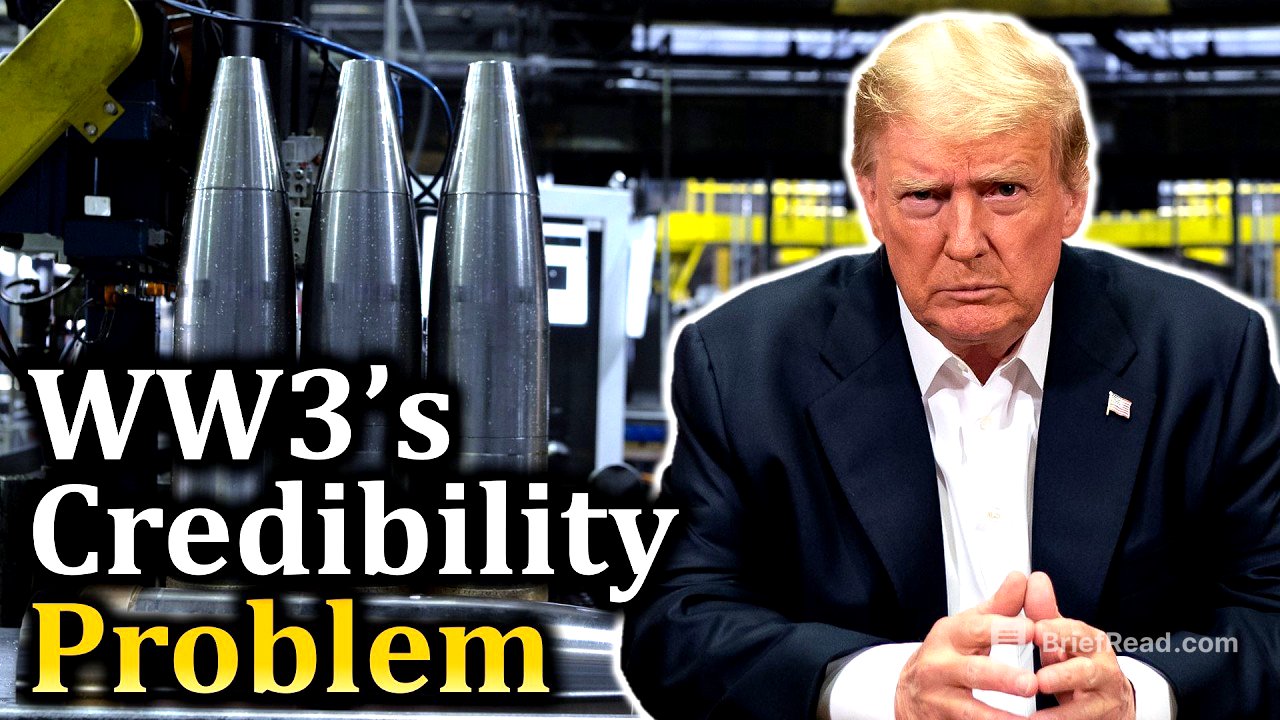
The video discusses the fundamental credibility problem of World War 3, focusing on the potential conflict over Taiwan. It highlights how the destruction of Taiwan's semiconductor industry could undermine the U.S.'s incentive to intervene, turning the conflict into a minigame over the island's technology. The video also addresses the impact of the Iran War on U.S. stockpiles and the ability to supply Taiwan with necessary defenses, emphasizing the need for proactive investments in Taiwan's security to deter PRC.
- The U.S. threat to intervene on behalf of Taiwan is only as good as the net benefit of doing so.
- A rapid destruction of Taiwan’s semiconductor manufacturing sector calls that into question.
- Solving that problem requires proactive investments in Taiwan’s defenses.
- The Iran War has called into question the U.S. ability to make those investments.
Iran War Problems [0:00]
The Iran War has depleted U.S. stockpiles, affecting Ukraine's ability to procure weapons from U.S. suppliers and raising concerns about Taiwan's defense capabilities against a potential mainland invasion. The fundamental credibility problem of World War 3, exposed by the Iran War, will compound the issues Ukraine is facing and lacks a simple solution. The discussion covers the difference between a low-hanging credibility problem and the broader credibility problem, the microchip minigame that World War 3 could devolve into, potential solutions for the U.S. to fix its credibility problem, and contingency plans.
The Trump Credibility Problem [1:17]
The fundamental credibility problem is not solely based on Trump's commitment to defending Taiwan, the state of U.S. inventories, his capricious nature, unwillingness to deploy troops, or fondness for Mexican food. While these are concerns, China is the Pentagon's focus, and Trump's attitude toward Iran may not translate to the Indo-Pacific. The decision to hold back in Iran may have been intended to reserve resources for China, a more strategically important region. These Trump-specific problems will become irrelevant in a few years, and U.S. inventories may improve.
The Much Bigger Credibility Problem [2:51]
The credibility problem extends beyond Trump and will affect future presidential candidates. The U.S. can only credibly threaten to intervene in Taiwan if participating in the war is better than not doing so. Taiwan's strategic importance lies in its semiconductor industry; if Taiwan stops producing semiconductors, the world’s economy will collapse. The U.S. is expected to flood the Indo-Pacific with resources to prevent a PLA landing and maintain the global economic system.
The Semiconductor Minigame [4:57]
The potential invasion of Taiwan could turn into a minigame over the island's semiconductor manufacturing, where both sides have conflicting incentives to either save or destroy the technology. Taiwan aims to protect its semiconductor industry to maintain its wealth and U.S. investment in its defense. If the war goes poorly, Taiwan will evacuate its human capital and sabotage its semiconductor operations, rendering the machines worthless to prevent the mainland from profiting from them. The PRC wants to control Taiwan and might destroy its fabs to deter U.S. intervention, increasing the likelihood of a successful invasion.
How to Fix the Problem [7:16]
To address the credibility problem, the U.S. could concede that the semiconductor industry is a lost cause if war starts and focus on alternative solutions, such as the TSMC facility in Arizona. Proactively protecting Taiwan by arming it now is crucial. The better prepared Taiwan is to defend itself, the less U.S. intervention factors into Beijing’s calculations. Taiwan has increased its defense spending, but faces implementation challenges due to U.S. hold ups and unfulfilled arms purchases.
Contingency Plans [11:46]
Despite potential grim scenarios, the U.S. is unlikely to be caught completely by surprise if an invasion begins, as the PRC would need to amass a large invasion force. However, any U.S. response would be a rush job, and the PRC may proceed if they calculate that the U.S. response will be insufficient. The U.S. has a defense relationship with Taiwan predating semiconductors, rooted in containing the PRC within the First Island Chain. Maintaining this defense perimeter is critical for protecting the rest of the Pacific and the world.
Takeaway Lines [14:39]
The U.S. threat to intervene on behalf of Taiwan is contingent on the net benefit of doing so, which is jeopardized by the potential destruction of Taiwan's semiconductor manufacturing sector. Addressing this requires proactive investments in Taiwan's defenses, but the Iran War has raised questions about the U.S.'s ability to make these investments.