TLDR;
This video explores the complex causes of revolutions, drawing from historical examples and fictional narratives. It identifies five key factors that contribute to revolutionary circumstances: socioeconomic instability, injustice, alienation, elite infighting, and international support. The video emphasizes that revolutions are not simple uprisings against injustice but rather the result of deep-seated issues and power dynamics.
- Revolutions arise from a combination of socioeconomic instability, injustice, alienation, elite infighting, and international support.
- Dictators face a dilemma: modernization can lead to instability and potential overthrow.
- Revolutions often result from the erosion of relationships between communities and those in power.
Intro [0:00]
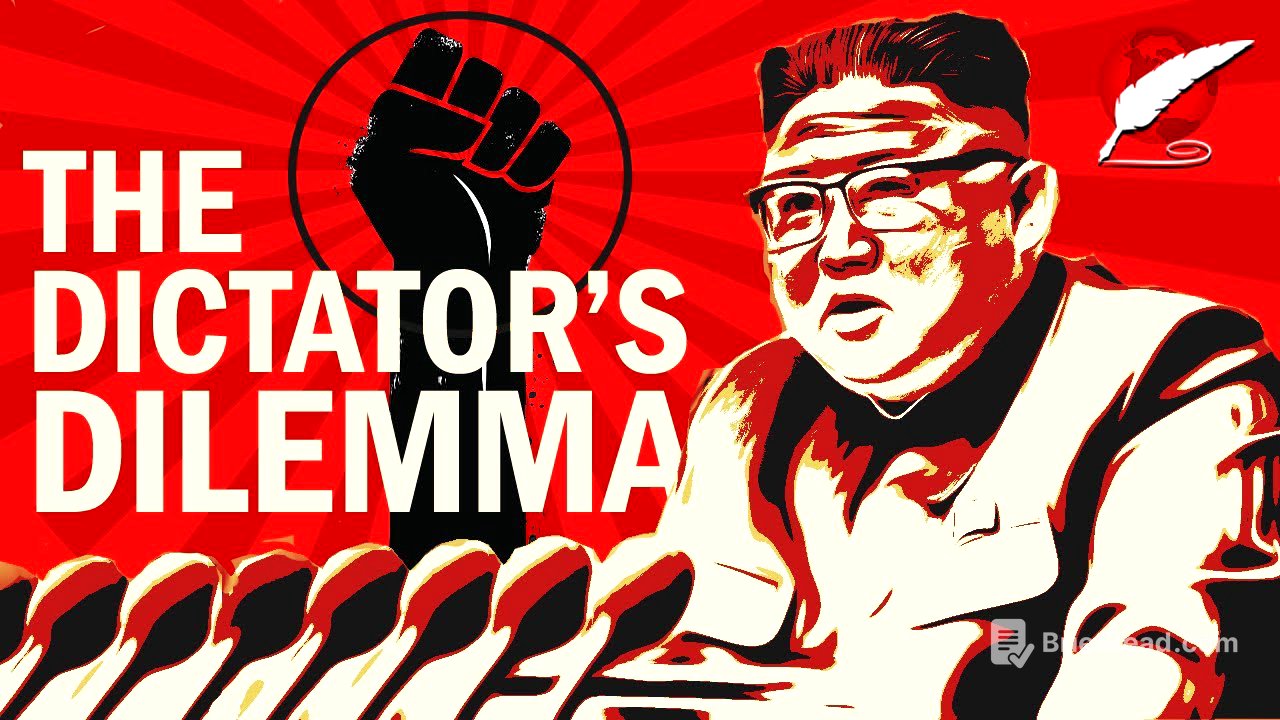
Dictators face a challenge when trying to modernize their countries. While modernization can bring economic and military advancements, it also creates an educated, organized, and wealthier population that may be more likely to oppose the dictator's rule. This is the dilemma facing North Korea and Kim Jong-un, as modernization could lead to the end of their dynasty.
The Spark of Revolution [2:03]
Revolutions are not simple events led by chosen ones, but complex processes with multiple causes. The US military has identified five factors that contribute to revolutions: socioeconomic instability, injustice, alienation, elite infighting, and international support. The dictator's dilemma highlights how modernization can create socioeconomic opportunities while also exacerbating instability and empowering new factions that may not align with the dictator's interests.
Proximate Socio Economic Instability [5:03]
Injustice is often a framework attached to pre-existing socioeconomic instability, providing momentum and a shared vision for revolution. While injustice is common in autocratic societies, it doesn't always lead to rebellion. The 2011 Egyptian revolution, for example, was driven by economic instability, income inequality, and youth unemployment, with injustice serving as a catalyst. Socioeconomic instability affects communities differently, and autocratic systems often insulate certain factions to maintain loyalty. Revolutions can be seen as a result of changing relationships between communities and those in power due to socioeconomic instability. This instability can arise from income inequality, disruption of traditional ways of life, and a feeling of change outside of one's control.
Injustice [14:49]
Injustice, like anger, can be directed away from the regime, even back at the victims themselves. Ethnic, religious, and regional lines can be used to justify repression and create community instability. Revolutions introduce instability and injustice, and people may turn against the revolutionary cause if they feel their lives are being torn apart. Controlling the narrative of who is the oppressor and who is the oppressed is crucial.
Alienation [18:07]
Alienation from national communities, institutions, and legal systems is a powerful motivator for revolution. This feeling of being outside the system can affect both the privileged and underprivileged. Colonial powers often alienated the people they governed, leading to revolutions and partition movements along religious or ethnic lines. Groups may also be alienated along class and cultural lines. Solving the problems of alienated groups is crucial to preventing revolution. Demographic changes can also contribute to alienation, as can the feeling of being culturally excluded or economically left behind.
Elite Infighting [23:00]
Elite infighting matters because of organizational capacity. Revolutions often spring up around communities with pre-existing structures, and elites have the connections, wealth, and influence to mobilize these communities. Elite infighting can weaken the regime and align some elites with revolutionary interests. Cracks within the regime are crucial for revolution to succeed.
International Support [29:00]
International support is crucial for revolutions because foreign powers can fund, arm, and supply revolutionary forces. This support can be used as a tool of disruption, coercion, or regime change. Countries may support revolutions to isolate or destabilize hostile governments, force policy changes, or create ideologically favorable allies. However, neighboring countries may oppose revolutionary efforts to avoid instability and maintain economic ties with the existing regime. Dictators are often reluctant to allow international influence because it can lead to coercion, disruption, and regime change.