TLDR;
In this video with polyglot Will John, he shares insights on learning languages and becoming a polyglot, emphasizing practical strategies and the need for discipline. Key takeaways include:
- Exposure to comprehensible input is crucial for language learning.
- Discipline and routine are essential for consistent progress.
- Making mistakes and practicing speaking are invaluable parts of the learning process.
Intro [0:00]
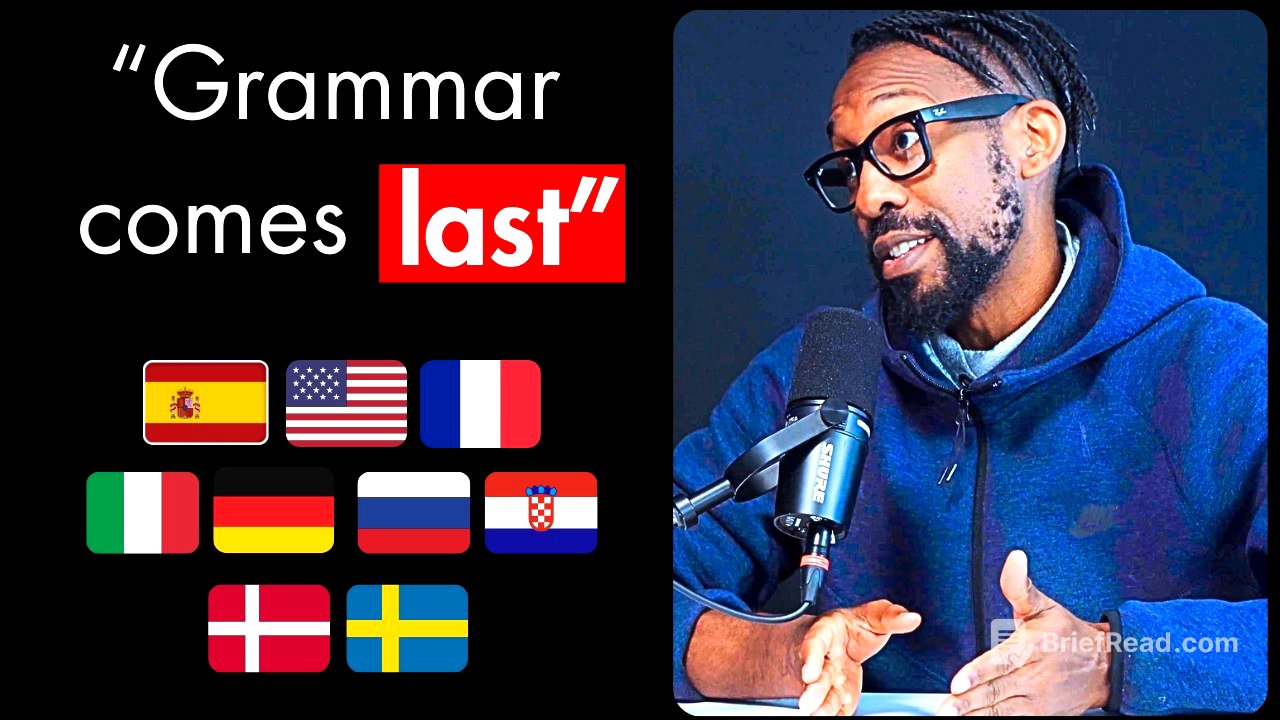
Will John introduces himself as a polyglot and professional footballer, listing the nine languages he speaks: Spanish, French, Italian, Danish, Swedish, Croatian, Russian, German, and English. The hosts invite him to share how he became a polyglot.
Speaking 9 languages [0:36]
Will discusses the difference between wanting to simply learn a new language versus becoming a polyglot. He mentions the extensive time commitment required for mastering languages and likens casual learning via apps like Duolingo to playing a game rather than serious study. He highlights the importance of comprehensible input—being immersed in the language at a level that’s understandable—as essential for effective learning.
Steps to becoming a polyglot [1:50]
Will outlines necessary steps for aspiring polyglots, emphasizing the need to focus on one language at a time for a considerable period to reach a proficient level (B1/B2). He notes that most learners often rush into studies without adequate exposure or structure and suggests laying out a clear strategy for language acquisition.
Learning languages without traveling [5:48]
He asserts that it is entirely possible to learn a language without immersing oneself in a country where it is spoken, given the modern tools available, such as technology and online tutors. Will stresses the importance of actively engaging with native speakers to practice and improve fluency.
The importance of discipline [7:07]
Will emphasizes the need for discipline in language learning, noting that distractions from modern life hinder progress. He advocates for minimizing distraction and adhering to a structured plan, suggesting that learners should engage with language content consistently to avoid losing motivation.
The perfect routine [9:03]
He offers a simplified routine for learners, recommending at least 8-10 hours of study per week, ideally in the morning when energy levels are higher. The focus should be on comprehensible input and deeper engagement in the language, which will improve long-term retention and understanding.
Passive learning [10:35]
Will discusses passive learning methods, such as listening to news in the target language daily. He describes how repeated exposure to language through audio aids comprehension and retention, ultimately becoming easier over time. He shares his experiences of studying through passive methods and the long-term benefits they provide.
The grammar debate [12:15]
In addressing the grammar debate, Will suggests easing up on explicit grammar instruction in the early stages. He encourages learners to avoid fixating on the rules and instead focus on comprehension and communication. Grammar can be integrated later as learners become more proficient.
italki ad [12:49]
Will introduces italki, an online language learning platform that connects students with native speakers for one-on-one lessons, emphasizing the personalized and focused nature of these sessions.
Studying vocabulary [15:29]
He discusses vocabulary acquisition, suggesting that brute-force memorization may not be the most effective method. Instead, he recommends extensive reading as a way to naturally incorporate high-frequency words relevant to the learner's interests.
The problem with apps [19:02]
Will critiques language learning apps, arguing that although they offer a structure, they often fail to provide personalized content that matches the learner's unique needs. He believes learners should take control of their learning and not rely solely on apps.
Making mistakes [20:01]
He stresses the importance of making mistakes while learning a language, likening it to learning through experience. Will believes errors are essential for growth, allowing learners to remember the correct usage of words after making mistakes.
Seek to understand and seek to be understood [23:11]
Will encourages learners to focus on mutual understanding while communicating in another language. He argues that the goal is to convey messages rather than achieve grammatical perfection.
Practicing without traveling [23:45]
He reiterates that effective language practice is possible without geographical immersion. Online platforms, interaction with native speakers, and various learning resources can compensate for a lack of physical exposure.
Optimizing tutors [25:13]
Will advises learners to take an active role in sessions with tutors by communicating their needs and goals. Understanding your strengths and weaknesses can enhance the learning experience, allowing for tailored instruction.
Learning in the flow state [27:35]
He discusses achieving a flow state during language studies, highlighting the value of focused, uninterrupted study sessions. Will explains how immersing oneself fully in the material can lead to greater engagement and improved learning outcomes.
Studying grammar optimally [30:27]
Will emphasizes that while grammar is important, it should not be the main focus in the early stages of learning. Instead, learners should prioritize communication and comprehension first before diving into complex grammatical structures.
Improving your accent [31:39]
He addresses the significance of accent in language learning, explaining how a good accent can enhance communication and relatability. Will encourages learners to actively work on their pronunciation to foster better connections.
Not being afraid in public [36:59]
Will encourages learners to overcome the fear of speaking a new language in public. He believes recognizing that mistakes are part of the process can help alleviate anxiety.
The journey vs the destination [37:54]
Will stresses appreciating the language learning journey rather than fixating solely on the end goal. He emphasizes enjoying the process and learning from experiences, which can lead to a more fulfilling educational pathway.
Highlights of Will's polyglot experiences [42:17]
He shares memorable experiences from his language learning journey, including opportunities to interview sports stars in their native languages, which not only reinforce his skills but also deepen cultural connections.
Final advice to aspiring polyglots [43:56]
Will's final message underlines the importance of seeking understanding in communication. He encourages learners to immerse themselves, enjoy the language acquisition process, and remain aware that personal growth is what ultimately matters.
Teaching Will some Gallego and Créole [44:39]
The segment features teachback moments where Will learns phrases from Gallego and Créole languages, showcasing practical language learning beyond traditional grammar.
Outro [47:37]
The video concludes with a call-to-action for viewers to engage with the content, subscribe to the channel, and share their own language learning experiences.