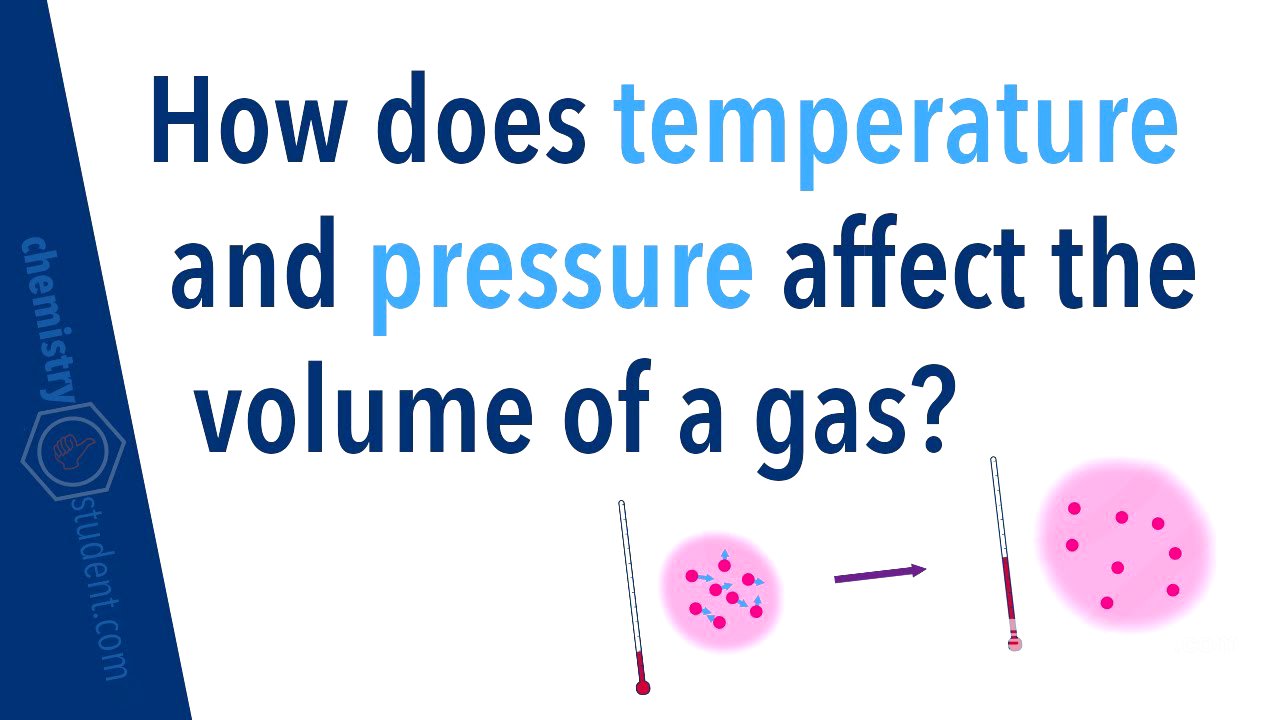
TLDR;
This video explains how the volume of a gas is influenced by the amount of gas present, as well as the temperature and pressure. It discusses the relationship between these variables, highlighting how increasing temperature causes gas molecules to move faster and occupy more space, while increased pressure compresses them into a smaller volume.
- The volume of gas varies with the number of moles, temperature, and pressure.
- Higher temperature leads to increased kinetic energy and more space taken by the gas.
- Increased pressure compresses gas molecules, reducing the volume.
Gas Volume and Temperature Relationship [0:01]
The video begins by stating that the volume occupied by a gas sample depends on the moles of gas, temperature, and pressure. It notes that as temperature rises, the volume taken by one mole of gas also increases due to higher kinetic energy, which causes gas molecules to move faster and spread apart more.
Gas Volume and Kinetic Energy [0:10]
As the temperature of a gas decreases, its kinetic energy drops, causing the molecules to slow down and reduce their spread, thus decreasing the gas volume. This section emphasizes the direct relationship between temperature and the kinetic behavior of gas molecules.
Gas Volume and Pressure Relationship [0:42]
The next part explains how increased pressure leads to a decrease in the volume of gas. More force is exerted on gas molecules, which forces them closer together, resulting in a reduction in overall gas volume. Conversely, lowering the pressure allows gas molecules to occupy a larger volume, as there is less force constraining their movement.