TLDR;
This video explains the fundamental components and functions of computers. It covers the four essential tasks that define a computer: input, storage, processing, and output. The video also touches on the evolution of computers from mechanical devices to modern electronic systems, highlighting their increasing capabilities and applications.
- Computers perform four main tasks: input, storage, processing, and output.
- Early computers were mechanical, later evolving to use electrical components.
- Modern computers, despite their varied forms, still adhere to the same four fundamental functions.
Introduction [0:02]
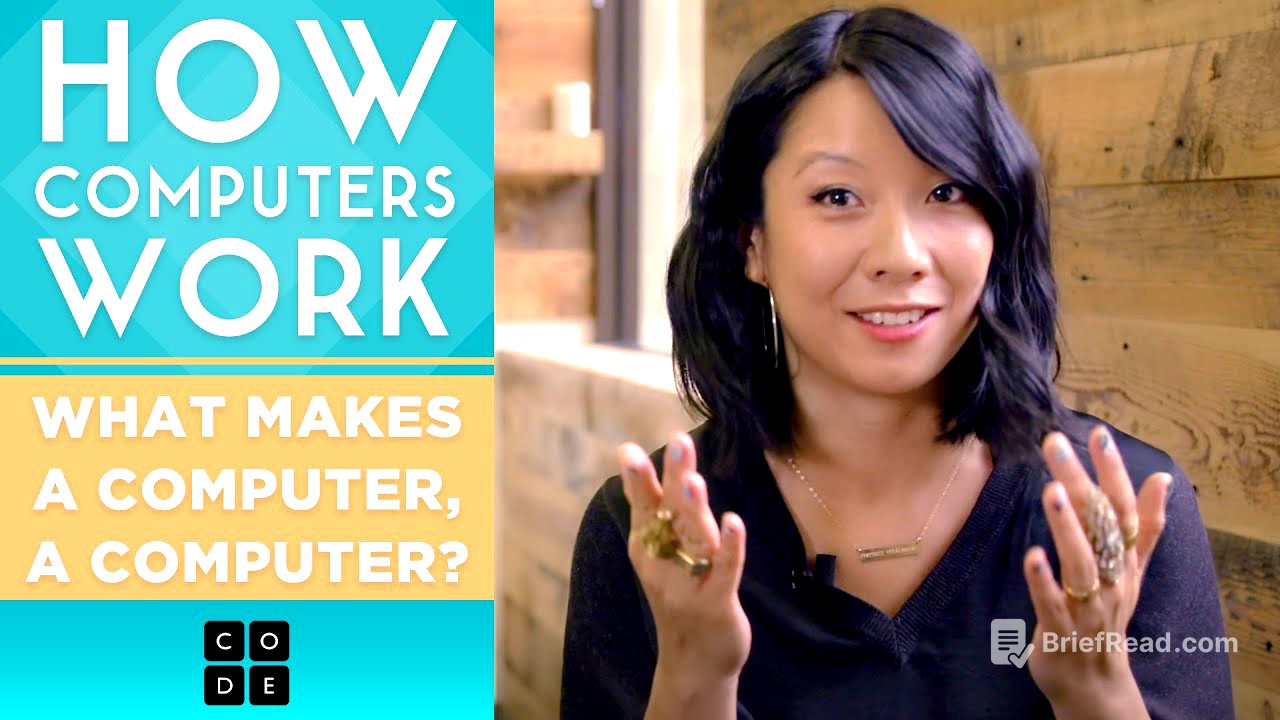
May-Li Khoe, a designer and inventor, introduces the ubiquity of computers in modern life, questioning what fundamentally defines a computer. Nat, one of the original designers of the Xbox, joins to explore how computers work.
The Evolution of Computers [1:07]
Humans have always created tools to solve problems, from wheelbarrows to printing presses, aiding in manual labor. The focus shifted to creating machines that could assist with thinking tasks, such as solving equations and tracking astronomical data. These machines would manipulate information rather than physical objects.
Four Essential Tasks [1:35]
Pioneers in computer science determined that a "thinking machine" must perform four key tasks: take input, store information, process it, and output the results. These four functions are common to all computers, defining what makes a computer a computer.
Early Computer Technology [2:07]
Early computers were constructed from wood and metal, utilizing mechanical levers and gears. By the 20th century, electrical components were introduced. These early machines were large and slow, sometimes taking hours to complete basic math problems. Initially, computers served as basic calculators, manipulating numbers. Today, they facilitate communication, gaming, robotics control, and countless other applications.
Modern Computer Functions [2:49]
Modern computers may look different from their predecessors, but they still perform the same four core functions.
Input [2:54]
Input involves how computers receive instructions or data from the outside world. This can include using a keyboard, mouse, microphone, or camera. Wearable computers might monitor your heartbeat, while cars might track operational data. Touch screens also serve as input devices, sensing finger movements.
Storage & Processing [3:28]
Computers store input information in memory. The processor then retrieves this information and manipulates it using algorithms, which are sets of commands. The processed information is then returned to memory for storage until it is ready for output.
Output [3:55]
Output varies depending on the computer's purpose. Displays can show text, photos, videos, and interactive games, including virtual reality. Output can also control robots. When computers are connected via the internet, the output from one becomes the input for another, creating a continuous exchange of information.
Conclusion [4:23]
While computers have evolved significantly, they still perform the same four fundamental tasks: taking in information, storing it as data, processing it, and outputting the results.