TLDR;
This video explains how avoidant attachment styles develop in children, not necessarily from trauma, but from consistent emotional mismatches with caregivers. It highlights how children adapt to these mismatches by minimizing their emotional expression and dependency, which is often reinforced by parents and teachers. This adaptation, while beneficial in childhood, can lead to difficulties with intimacy and connection in adulthood. The video provides practical advice for parents on how to foster secure attachment by being emotionally available, supporting emotional expression, and modeling healthy emotional behaviors.
- Avoidant attachment develops from repeated emotional mismatches, not trauma.
- Children adapt by minimizing emotional expression and dependency.
- Parents can foster secure attachment by being emotionally available and supportive.
Introduction: The Roots of Avoidant Attachment [0:00]
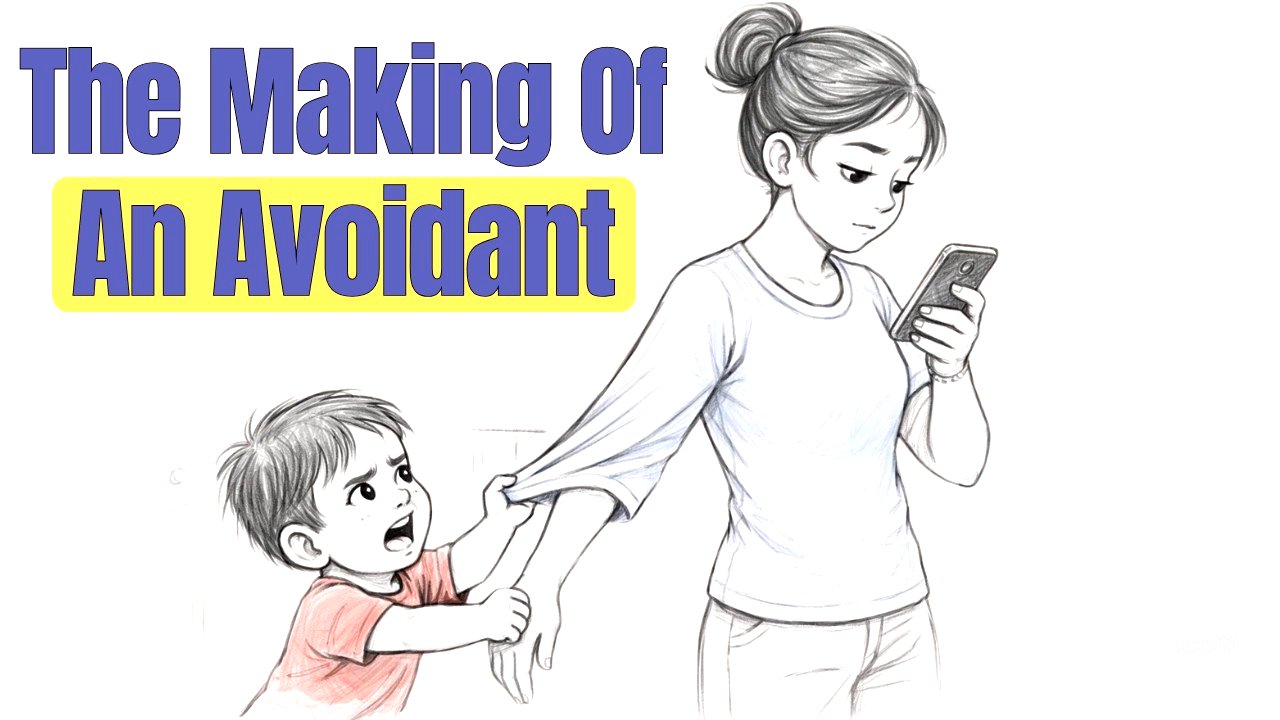
The video addresses the common misconception that avoidant attachment styles stem from extreme experiences, clarifying that they typically arise from consistent emotional mismatches during childhood. When caregivers meet physical needs but struggle with emotional attunement, children learn to manage emotions independently. This isn't due to emotional coldness but rather a learned efficiency, where children become less demanding to maintain comfort and stability. This behavior is often rewarded, reinforcing the pattern and leading to adults who value independence but struggle with intimacy.
Emotions Create Distance [4:30]
The critical factor in developing avoidant attachment is not parental absence or cruelty, but when a child's emotional outreach is met with subtle distance. This distance can manifest as distraction, minimization of feelings, visible discomfort, or delayed responses. The child's nervous system learns to associate expressing big feelings with losing connection. To counteract this, parents should immediately move toward their child during emotional distress, offering physical and emotional presence without trying to fix or minimize their feelings, teaching the child that emotional expression leads to connection.
Self-Soothing is Taught Too Early [6:59]
While self-soothing is a valuable skill, pushing it too early can create avoidant patterns. When parents encourage children to handle distress alone before they've built a foundation of co-regulation, children learn that comfort from others is unreliable. This leads them to prioritize self-reliance out of necessity rather than security. Instead, parents should provide generous co-regulation, acting as an external regulator through calm presence, reassuring touch, and patient witnessing, which helps children internalize regulation and develop self-soothing abilities naturally.
Love is Present but Not Accessible During Stress [10:22]
A confusing pattern for children is when love and comfort are available, but not reliably during emotional distress. The child learns that during times of emotional overwhelm, a parent becomes unreachable, either physically or emotionally. Parents need to recognize that these moments are when their child needs them most. By working on their own capacity to stay present with big feelings, parents can show up with steady, accepting presence, teaching the child that love is most reliable when they need it most.
The Child Learns to Be Low-Maintenance [12:24]
Children adapt to their environment to maximize safety and connection, often becoming low-maintenance to gain approval. They learn that being calm and not needing much leads to praise and positive attention, while expressing emotional needs creates tension. Parents should be curious about whether their "easy" child is naturally that way or has learned to suppress their needs. By consciously reversing the pattern and giving extra warmth and attention when the child expresses needs or emotions, parents can teach them that all parts of themselves are welcome.
Emotional Expression is Replaced by Competence [14:36]
Children may learn that their value comes from what they do rather than who they are, especially when parents respond more positively to achievements than emotional needs. This leads them to trade emotional expression for competence, presenting a mature, capable self to gain validation. Parents should actively engage with their child's emotional world, separate from their achievements, by asking about their internal experiences and showing as much interest in their struggles as in their successes, teaching them that they matter for who they are, not just what they do.
The Child Learns to Observe Instead of Express [17:42]
Children developing avoidant patterns become skilled at reading the room, sensing when emotions are welcome and tailoring their expressions accordingly. This hyper-vigilance prevents genuine connection. Parents need to become more consistently available, letting their child know they can come to them anytime, even when they seem busy or stressed. By being receptive even when it's inconvenient, parents teach their children that they don't have to manage the environment and can just be children.
Comfort Comes After the Feeling Stops [19:41]
A subtle but powerful pattern is when comfort and reconnection come after a child has calmed down, not during their distress. This teaches the child that connection comes after shutting feelings off. Parents should move toward their child immediately while they're still upset, offering presence and support during the storm. This teaches them that connection is available during distress, allowing them to become adults who can be vulnerable in real-time with partners.
Parents Model Emotional Containment [22:44]
Children learn more from what parents do than what they say. If parents model emotional self-sufficiency, never showing vulnerability or asking for help, children learn that this is what proper adults do. Parents should allow their child to see appropriate vulnerability and healthy interdependence, demonstrating that it's okay to need support. By modeling a healthy balance between capability and vulnerability, parents teach their children that it's okay to ask for help and that emotional expression is normal.