TLDR;
Hank Green reflects on a perceived decline in New Year's Eve celebrations, initially attributing it to societal isolation and fear. However, his perspective shifts after discovering an organic New Year's Eve block party at the Los Angeles Smoking Deaths Billboard. This leads him to explore the themes of authenticity, the migration of culture to the internet, and the commercialization of public spaces. He concludes with a hopeful message about humanity's innate ability to create meaningful culture, even in the face of pervasive advertising and manufactured experiences.
- Authenticity is becoming increasingly valued as digital spaces become more commercialized.
- People are seeking genuine connection and experiences, leading to the creation of spontaneous cultural events.
- There's a need to protect these authentic spaces from being co-opted by commercial interests.
Intro [0:00]
The video starts with Hank Green reacting to a video comparing New Year's Eve celebrations in 2002 and 2004, noting a perceived decline in energy and enthusiasm. He initially hypothesizes that increased isolation and fear contribute to this shift, suggesting a potential loss of collective engagement. He reflects on his own recent New Year's experience, describing it as lackluster and indicative of a broader cultural malaise.
Discovering the LA Smoking Deaths Billboard Party [1:36]
Hank's perspective changes after encountering a video about the Los Angeles Smoking Deaths billboard, which has been displaying a running count of smoking-related deaths since 1987. An organic block party has formed around the billboard on New Year's Eve, with people gathering to watch the counter reset to zero. This event, born from genuine interest rather than corporate planning, stands in stark contrast to the commercialized spectacle of Times Square.
Authenticity vs. Commercialization [3:18]
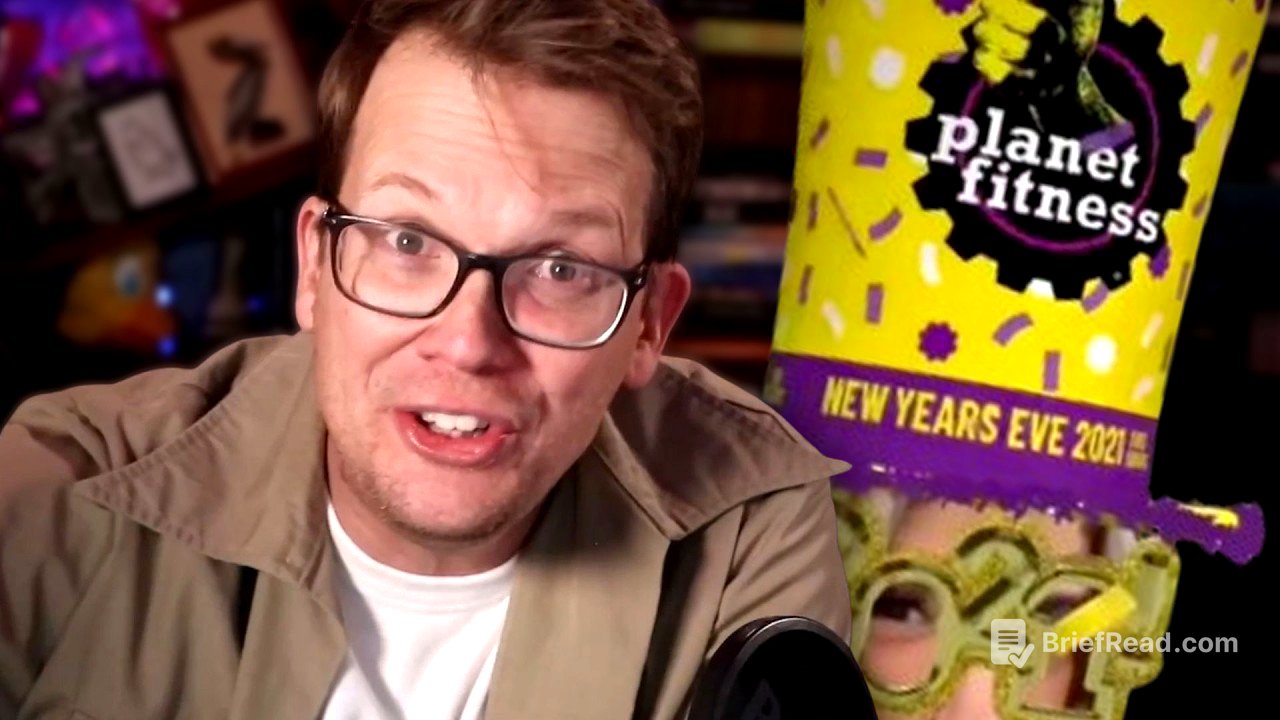
Hank contrasts the authenticity of the LA Smoking Deaths billboard party with the manufactured experience of Times Square on New Year's Eve, which he argues has become a simulation primarily aimed at delivering eyeballs to advertisers like Planet Fitness. He suggests that cultural evolution has largely moved to the internet over the past 20 years, but digital spaces are now facing similar issues of commercialization, resembling shopping malls filled with advertisements. This shift is causing people to seek out authentic experiences in the physical world, away from the pervasive influence of advertising.
Reclaiming Culture and Finding Meaning [6:04]
Hank emphasizes the importance of reclaiming public spaces and traditions from commercial interests, asserting that people have the power to create their own culture. He highlights the unique traditions that have emerged at the LA Smoking Deaths billboard party, such as cheering when the counter resets to zero and shouting "Oh no!" when it clicks over to one. He also notes the presence of a Marlboro-branded car at the event, interpreting it not as nihilism but as a form of ironic detachment necessary for creating authentic connection in a world saturated with performance.
The Beauty of Absurdity and Glitches [8:48]
Hank discusses other examples of accidental or absurd cultural phenomena, such as the Chicago rat hole and the Boston cop slide, where people collectively apply meaning to unexpected things. He sees beauty in this process, viewing it as a way for humanity to assert itself in a world that often feels overly critical and nihilistic. He encourages viewers to seek out and appreciate the unpolished and to support weirdos with unique visions, as these are the sources of genuine cultural creation.
Rejecting Manufactured Culture and Embracing the Real [10:09]
Hank clarifies that the perceived decline in New Year's Eve celebrations is not due to a lack of desire to party, but rather a rejection of inauthentic, manufactured experiences like Times Square. He expresses concern about the potential for commercial interests to co-opt the LA Smoking Deaths billboard party and vows to resist such attempts. He concludes with a hopeful message about humanity's ability to find each other, create culture, and author their own experiences, even in the face of an increasingly optimized and commercialized world.
Connections and Newsletter Plug [14:04]
Hank addresses the advertising on his channel, explaining that he's funding a project without venture capital and plugs his newsletter with his brother John, called "We're Here".
Connections Game [15:42]
Hank plays the Connections game, grouping words into categories. He successfully identifies categories such as types of dwellings (pad, digs, quarters, flat) and words related to understanding (rich, deep, clear, full). He struggles with the remaining words, ultimately failing to solve the puzzle completely.