TLDR;
This presentation covers the atmosphere's composition and structure, suitable for a Grade 10 audience. Key points include:
- The atmosphere is a layer of gases surrounding Earth, consisting of solid particles, liquids, and gases.
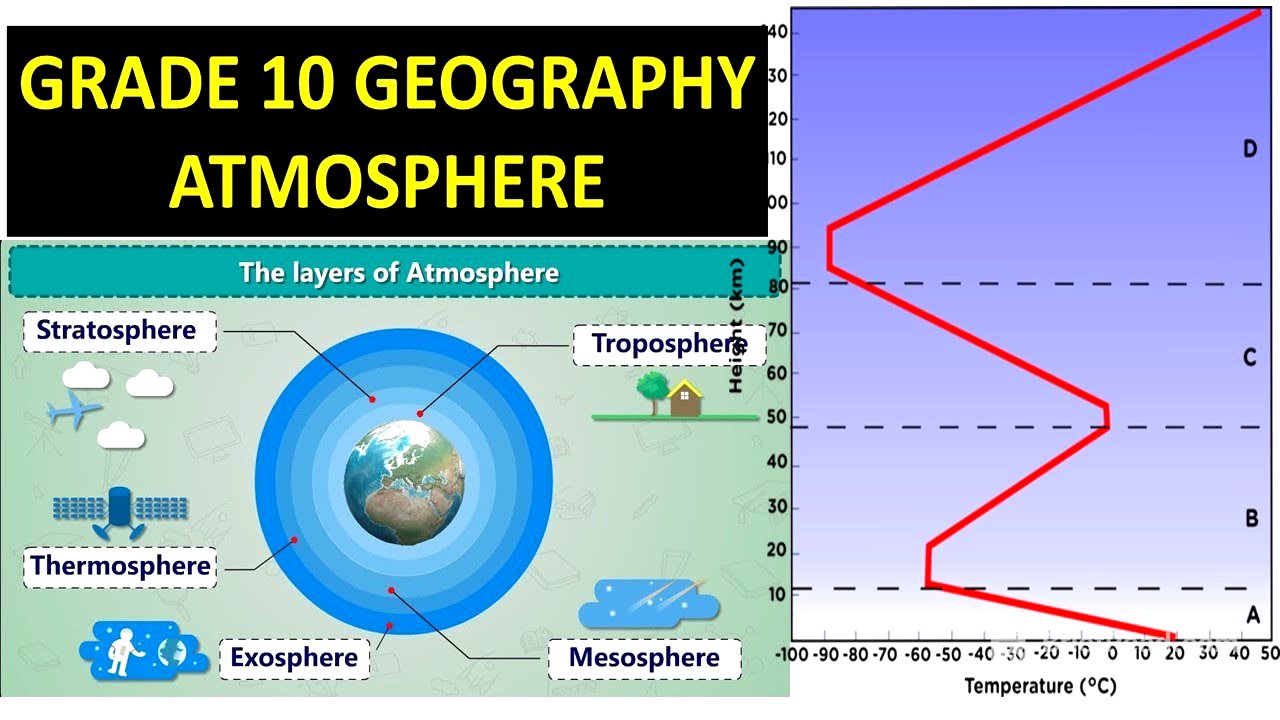
- It contains different layers (troposphere, stratosphere, mesosphere, thermosphere, exosphere) with varying temperatures and characteristics.
Introduction to the Atmosphere [0:00]
The atmosphere is defined as the layer of gases surrounding Earth's surface. It consists of various gases, with density decreasing as altitude increases. Denser gases accumulate closer to the Earth's surface, while less dense gases are found higher up.
Composition of the Atmosphere [3:24]
The atmosphere is made up of solid particles (like dust, smoke, ice, and salt), liquids (mainly water vapor), and gases. Solid particles, such as smoke from burning fuels and dust from dust storms, are introduced to the atmosphere from various activities. Water vapor results from evaporation and is significant for weather processes. The major gases include permanent gases like nitrogen (78%), oxygen (21%), and argon (0.9%), while variable gases, such as water vapor and carbon dioxide, fluctuate depending on geographical location and time.
Importance of Atmospheric Gases [16:29]
Nitrogen aids plant growth; oxygen is essential for respiration and combustion. Argon is an inert gas used for industrial purposes. Water vapor is critical for precipitation, as it forms clouds that produce rain, while carbon dioxide varies based on human activities and vegetation, influencing climate.
Importance of the Atmosphere [25:53]
The atmosphere is crucial for sustaining life on Earth. It provides oxygen for respiration, carbon dioxide for photosynthesis, and acts as a protective blanket against harmful UV radiation from the sun. The atmosphere also prevents harmful particles from space from reaching the Earth's surface.
Structure of the Atmosphere [29:44]
The atmosphere consists of several layers:
- Troposphere: Closest to Earth, where weather occurs; temperature decreases with altitude.
- Stratosphere: Contains the ozone layer, where temperature increases with altitude; airplanes often fly here to avoid weather disturbances.
- Mesosphere: Temperatures decrease with altitude; it protects the Earth from meteors.
- Thermosphere: High temperatures due to atomic interactions; absorbs high-energy solar radiation.
- Exosphere: The outermost layer, where satellites orbit and where Earth’s atmosphere transitions into space.
Conclusion and Future Discussions [52:19]
The presentation concludes by summarizing the important roles and characteristics of the atmosphere's layers and gases. Future discussions will focus on the heating of the atmosphere and the processes involved.