TLDR;
This lecture provides a comprehensive overview of Google Ads, explaining how the platform functions, its components, and strategies for effective campaign management. Key points include the importance of keyword research, the structure of Google Ads accounts, the significance of ad quality and rankings, as well as tips on audience targeting and performance optimization.
- Understanding the Google Ads ecosystem is essential for effective digital marketing.
- Successful campaigns hinge on keyword research, quality scores, and continuous optimization.
Introduction to Google Ads [0:05]
The lecture introduces Google Ads as a pay-per-click advertising platform that allows businesses to show ads to users actively searching for relevant products or services. It outlines how the system effectively connects advertisers with users and emphasizes the benefits of immediate visibility, targeted advertising, flexible budgets, and measurable ROI.
The Google Ads Ecosystem [2:16]
Google Ads consists of six primary channels: search network ads (shown in search results), display network ads (on websites and apps), YouTube ads (video content), shopping ads (showcasing products), app campaigns (promoting mobile apps), and performance marks (utilizing AI for optimized campaign delivery). Each channel serves different advertising needs and strategies.
How Google Ads Works [3:16]
When a user performs a search, an ad auction occurs swiftly, and Google selects relevant ads based on the advertisers' bids, quality scores, and ad ranks. The lecture explains that balancing these three components is crucial for successful ad placements and campaigns.
Importance of Quality Score [4:37]
Quality score, evaluated based on expected click-through rates, ad relevance, and landing page experience, is a vital concept that influences ad performance. A higher quality score can lower advertising costs while enhancing ad positions.
Account Structure in Google Ads [5:16]
A Google Ads account is structured hierarchically, with accounts containing campaigns, and each campaign housing multiple ad groups. Organizing these elements effectively can lead to improved management, reporting, and optimization of campaigns.
Keyword Research and Targeting [6:51]
Keyword research focuses on understanding how users search online and determining relevant search terms. Keywords are categorized into short-tail (broad and competitive) and long-tail (specific and less competitive), with successful advertisers combining both approaches for better results. Proper targeting can significantly enhance a campaign's effectiveness.
Search Intent and Ad Creation [9:00]
Search intent is critical for aligning ad messaging with users' needs. Advertisements should leverage compelling headlines, descriptions, and strong call-to-action phrases to encourage clicks from qualified visitors. Responsive search ads automate testing of different combinations to optimize performance.
Bidding Strategies and Conversion Tracking [11:15]
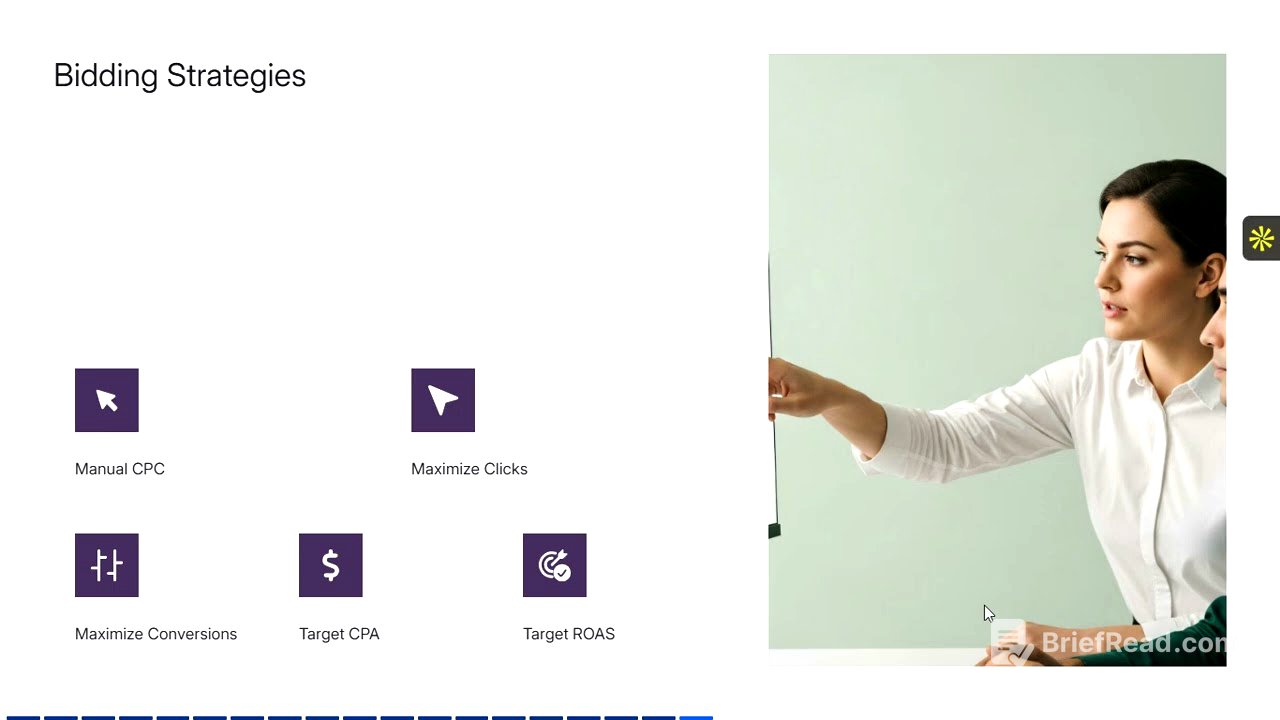
Google Ads offers various bidding strategies, allowing advertisers to control costs and target specific outcomes. Conversion tracking is essential for evaluating campaign performance, as it measures key actions like leads and purchases.
Landing Page Optimization [12:19]
Landing pages play a critical role in converting visitors into leads or customers. An effective landing page should feature a strong headline, clear benefits, testimonials, and compelling calls to action to maximize conversion rates.
Performance Metrics and Audience Targeting [13:19]
Metrics such as impressions, clicks, click-through rates (CTR), and conversion rates help assess campaign effectiveness. Google Ads allows for precise audience targeting based on demographics and interests, enhancing relevance and potential conversion rates.
Remarketing and AI in Advertising [13:54]
Remarketing strategies target users familiar with the brand, boosting the chances of conversion. Performance marks utilize AI for automated delivery of campaigns across channels, enhancing efficiency.
E-commerce and YouTube Advertising [14:41]
Google Shopping ads cater to e-commerce by integrating product feeds and displaying detailed product information. YouTube advertising includes various formats designed to meet different marketing objectives, from brand awareness to engagement.
Common Mistakes and Continuous Optimization [15:32]
Advertisers often fail by neglecting conversion tracking, targeting too broadly, or using poorly designed landing pages. Continuous optimization of campaigns through regular analysis and adjustments is vital for sustained success.
Effective Campaign Structuring [16:10]
Well-structured campaigns around specific services, such as digital marketing or recruitment, allow for precise targeting and performance measurement. The Google Ads funnel outlines the journey from keyword research to customer conversion, underscoring the importance of each stage for success.
The Future of Google Ads [17:18]
The future of Google Ads will increasingly rely on AI, automation, predictive analytics, and privacy-focused strategies. Advertisers who adapt to these trends will be better positioned for success in a rapidly changing landscape.
Conclusion [17:50]
Successful Google Ads campaigns require an understanding of the fundamentals, effective campaign structures, keyword alignment with user intent, accurate tracking of conversions, and ongoing performance optimization.



![Baray Bhaiya Episode 74 - [Eng Sub] - Aijaz Aslam - Maya Khan - Rabya Kulsoom - 28th August 2025](https://wm-img.halpindev.com/p-briefread_c-10_b-10/urlb/aHR0cDovL2ltZy55b3V0dWJlLmNvbS92aS9vdHFoeWxDV01ERS9ocWRlZmF1bHQuanBn.jpg)