
TLDR;
This video explains the extraction of DNA from strawberries, detailing the structure of DNA and the process involved in isolating it. Key points include:
- DNA is a double helix formed by four nucleotide bases: adenine, cytosine, thymine, and guanine.
- The extraction process involves breaking down cell components using a mixture of soap, salt, and alcohol.
- The final isolated DNA shows unique properties and texture, leading to a taste test where the flavor is described as salty and slimy.
Introduction to DNA [0:00]
DNA, or deoxyribonucleic acid, carries genetic information in all living organisms. It is structured as a polymer made of four sub-units: adenine (A), cytosine (C), thymine (T), and guanine (G). These sub-units consist of a nitrogenous base, a phosphate group, and a sugar, linking to form long chains of DNA. The sequence of these sub-units is crucial for genetic information storage.
Structure of DNA [0:08]
DNA consists of two strands held together by hydrogen bonds—adenine pairs with thymine, and cytosine pairs with guanine. The distinct double helix shape is formed through these interactions. Each cell reads genetic information from one strand while the other acts as a backup, allowing repair during mutations.
DNA Packaging [1:36]
In cells, DNA is tightly packed with proteins into structures called chromosomes. Humans have 23 pairs (46 total), but the chromosome number varies among organisms and does not correlate with complexity. For example, a potato has 48 chromosomes, more than a human.
DNA Extraction Process Overview [2:23]
The video uses strawberries for DNA extraction due to their ease of processing. Essential materials include strawberries, dish soap, non-iodized salt, and cold isopropyl alcohol. Preparation involves chilling the alcohol and creating a soapy salt solution to aid in the extraction process.
Preparing the Strawberries [4:09]
Ten strawberries are placed in a sealable bag and crushed to break down the cell walls and membranes. This step is crucial for exposing cells and aiding in the subsequent extraction of DNA.
Understanding Cell Structure [5:15]
The cell is composed of a rigid cell wall, a cell membrane, and a nuclear membrane. The first barrier, the cell wall, is destroyed during the crushing of strawberries. The addition of soap disrupts the cell and nuclear membranes, releasing the DNA stored in the nucleus.
Filtration of Extract [7:50]
After mixing the extracted solution, the solid remnants must be filtered out using a strainer followed by a coffee filter. This step requires patience, with multiple filter changes due to clogging.
Isolating the DNA [8:24]
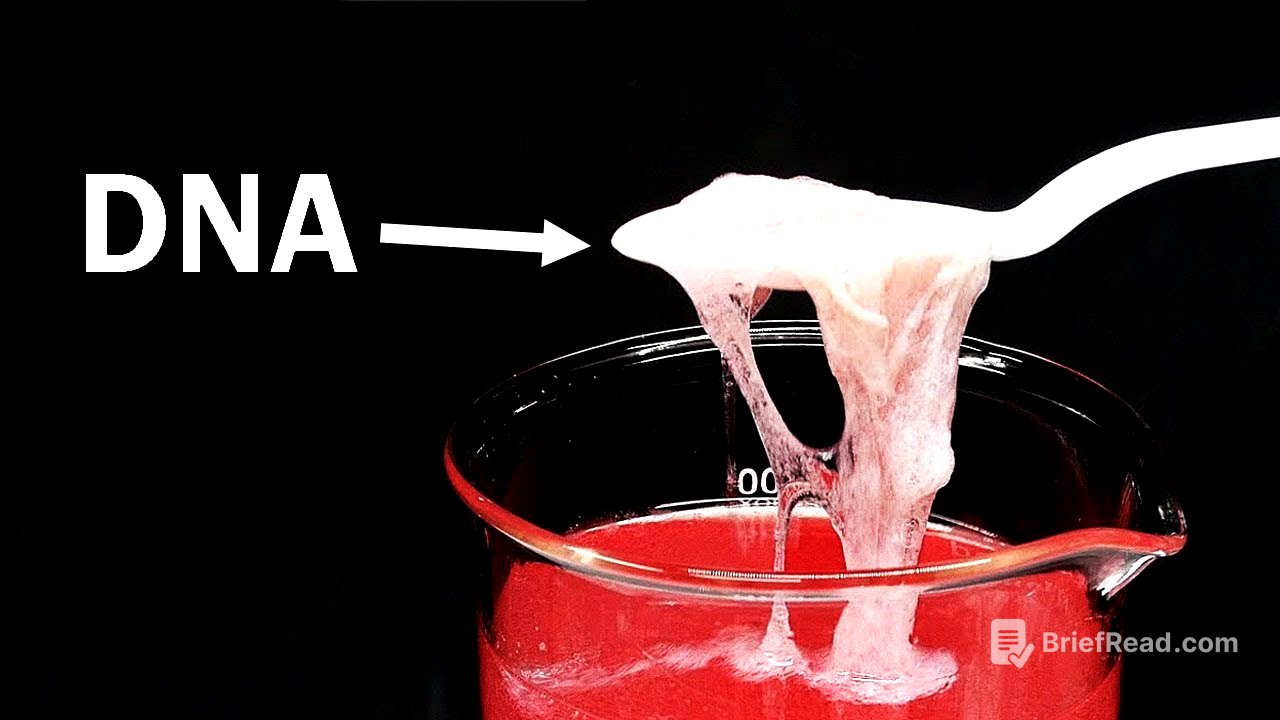
Ice-cold isopropyl alcohol is added to the filtered solution, causing white stringy DNA to precipitate. After allowing the DNA to gather for a few minutes, it is scooped out, rinsed with cold alcohol, and left to dry.
Examining the Extracted DNA [9:43]
The isolated DNA, weighing about 250 milligrams, has a slightly brown hue due to oxidation. Despite its strength, it can be torn with fingers. The author prepares to taste the extracted DNA.
Taste Testing the DNA [10:36]
Upon tasting, the DNA is found to have a terrible texture, described as hard and slimy, with a subtle salty flavor. This taste is influenced by residual salt in the extraction process or sodium ions associated with the DNA.