TLDR;
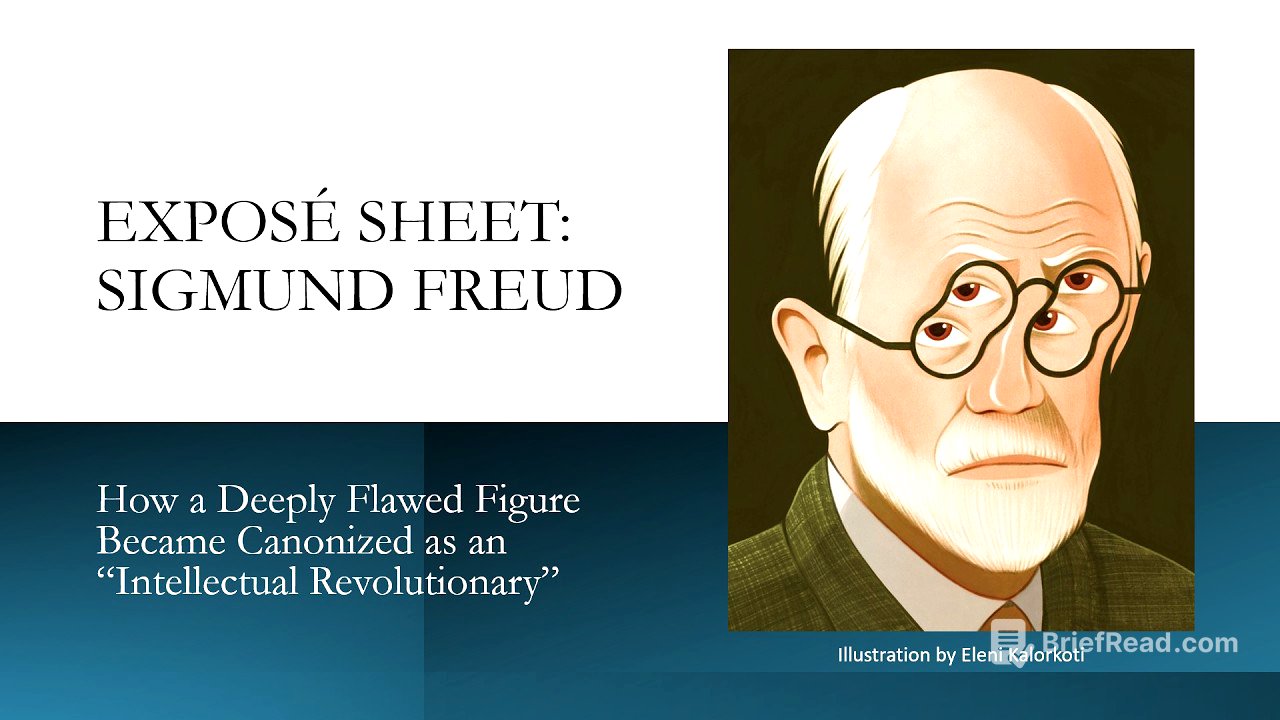
This video provides an in-depth critique of Sigmund Freud's contributions to psychoanalysis and highlights various controversies related to his methods and theories. Key points include:
- Freud's influence on psychology and intellectual thought despite his questionable practices.
- The introduction and later abandonment of the seduction theory, which proposed that hysteria originated from real childhood sexual abuse.
- Various cases showcasing Freud’s problematic treatment of female patients and reliance on male-centered theories.
Introduction to Freud's Influence [0:00]
Sigmund Freud is regarded as a significant figure in psychology, known for developing a systematic theory around the unconscious mind, repression, and childhood trauma as core drivers of adult behavior. Freud’s ideas contributed to a paradigm shift in understanding the self, emphasizing that individuals are motivated not only by rational thought but also by subconscious factors.
Documented Issues in Freud's Practice [4:10]
Critics point out Freud's professional shortcomings and controversial practices, including his handling of cases like that of Emma Extin, where he displayed malpractice by blaming her for surgical complications resulting from a botched procedure. Freud's theories often attributed women's physical suffering to hysteria, avoiding responsibility for the actions of his male colleagues.
Promotion of Cocaine and Its Consequences [9:10]
Freud openly promoted cocaine as a safe treatment for various conditions, despite its addictive properties. His encouragement of Dr. Ernst von Fleischl-Marxow to use cocaine as a cure for morphine addiction led to severe health repercussions for his friend, and Freud continued to advocate for cocaine even as evidence of its harm proliferated.
Reversal of the Seduction Theory [12:10]
Originally, Freud proposed that hysteria stemmed from actual childhood sexual abuse. However, he later abandoned this theory, suggesting instead that patients’ accounts of abuse were fantasies rooted in infantile sexuality. This reversal has been interpreted as an attempt to avoid addressing uncomfortable truths about powerful men in society who might be implicated in abuse.
Freud's Gendered Theories [15:30]
Freud's notion of "penis envy" suggested that women are inherently jealous of male anatomy, positioning female psychological development as a deviation from the male norm. Critics, including feminist scholars, argue that these theories reflect patriarchal biases rather than scientific evidence.
The Case of Dora [18:50]
Dora, a young female patient known as Ida Bower, was brought to Freud after she rejected sexual advances from a family friend. Freud misinterpreted her justified refusal and anger as manifestations of her own unconscious desires, exemplifying his tendency to pathologize women’s resistance to unwanted advances.
Authoritarianism in the Psychoanalytic Movement [22:00]
Freud maintained tight control over the psychoanalytic movement, requiring loyalty from his followers and expelling those who challenged his theories, including notable figures like Alfred Adler and Carl Jung. This suppression of dissent is cited as evidence that psychoanalysis functioned more as an ideological movement than a scientific discipline open to critical inquiry.
Scientific Criticisms and Ethical Concerns [24:10]
Philosophers, including Karl Popper, have criticized psychoanalysis for its unfalsifiability, labeling it as pseudoscience. Freud's personal analysis of his daughter Anna Freud raises ethical concerns due to the conflict of interest in analyzing family members.
Conclusion [29:00]
Freud's legacy is complex, marked by significant contributions to psychology despite documented misconduct. His theories have shaped various fields but are often delved into without sufficient scrutiny of his questionable methods. The historical importance of Freud's ideas remains essential for understanding their cultural and disciplinary impact, but endorsement of his practices or theories, especially those related to women, is unwarranted.