TLDR;
This video provides an overview of various fishing lures, detailing their structures, functions, and the types of fish they attract. Each type of lure is designed to mimic different prey or behaviors in the water, making them effective for anglers targeting species like bass and walleye.
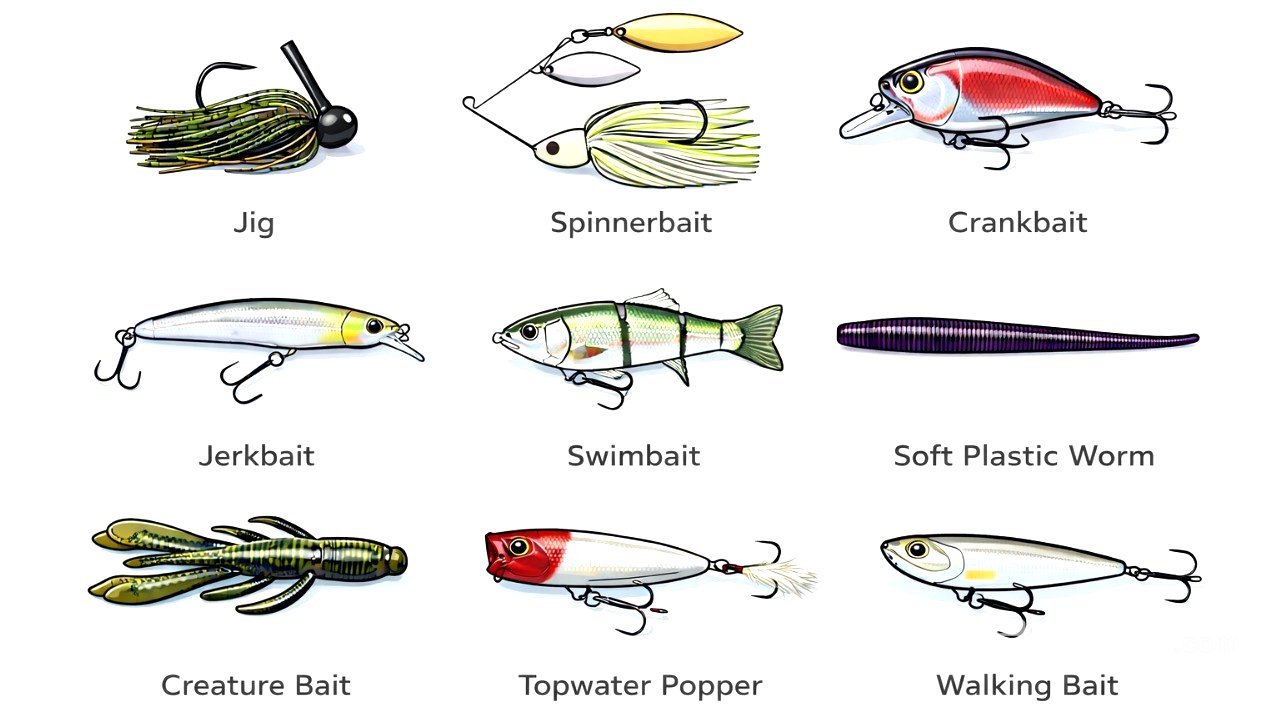
- Jigs imitate crawfish and baitfish, making them effective for many freshwater species.
- Spinnerbaits use spinning blades to create vibrations and flashes that attract fish.
- Crankbaits dive and wobble to mimic injured fish, appealing to predator instincts.
- Jerkbaits dart and pause to resemble stunned baitfish, particularly effective in colder seasons.
- Swimbaits aim for realistic movement to attract larger fish.
- Soft plastic worms provide a subtle motion through cover.
- Creature baits resemble multiple prey types with moving appendages for versatility.
- Topwater poppers create surface disturbances to mimic struggling insects.
- Walking baits glide back and forth, simulating injured baitfish.
Jig [0:00]
A jig consists of a weighted head molded onto a hook, allowing it to sink to the bottom where fish feed. It often pairs with a soft plastic trailer or a skirt that pulses underwater. When lifted and dropped, the jig hops along the bottom, imitating prey like crawfish or small baitfish. This lure is highly reliable for targeting bass, walleye, and other freshwater species.
Spinnerbait [0:35]
A spinnerbait features a bent wire frame with spinning metal blades that create flashes and vibrations in the water. These movements help fish detect the lure even in murky conditions. The skirt behind the hook mimics the shape of a baitfish, making it effective for navigating through weeds and wood while minimizing snags. This lure gained popularity in American bass fishing during the mid-20th century.
Crankbait [1:10]
Crankbaits are hard-bodied lures designed to resemble small fish. A plastic lip at the front forces the lure to dive and wobble when retrieved, simulating an injured baitfish, which attracts predatory fish. The depth of the dive varies based on the shape of the lip, allowing it to be effective in various water depths. Many include rattles for added auditory attraction.
Jerkbait [1:40]
Jerkbaits are slender hard lures that are moved with quick rod twitches, causing them to dart side to side with pauses in between. Many jerkbaits are designed to suspend in the water during the pause, resembling a vulnerable baitfish. This technique is effective in colder seasons when fish are less active but still willing to strike at easy prey.
Swimbait [2:09]
Swimbaits aim to imitate the natural swimming motion of fish. They can be made from soft plastic with moving tails or jointed hard lures. The focus here is on realism rather than noise or vibration, making them suitable for anglers targeting larger fish by representing a substantial meal.
Soft Plastic Worm [2:36]
Soft plastic worms are flexible lures shaped like worms or leeches, typically rigged to conceal the hook. Their soft material allows for subtle movements, mimicking real prey. Since their introduction in the 1950s, they have revolutionized bass fishing by allowing anglers to fish slowly and quietly in heavy cover.
Creature Bait [3:07]
Creature baits feature multiple appendages like claws and legs, simulating various underwater prey. As they move, the appendages create an action that draws fish, particularly around submerged structures where they might expect to find crawfish or other natural prey.
Topwater Popper [3:35]
Topwater poppers are floating lures designed to remain at the surface of the water. They have a cupped face that generates a splash and popping sound when twitched, mimicking struggling insects or baitfish. This disturbance often leads to sudden strikes from fish that are attracted to the apparent vulnerability of the lure.
Walking Bait [3:59]
Walking baits are elongated floating lures crafted to glide back and forth on the surface in a zigzag motion. Anglers create this movement by rhythmically twitching the rod while keeping slack in the line. This action imitates a wounded baitfish, drawing in fish from a distance due to its visible pattern and movement.