TLDR;
The video narrates the story of the notorious "ILOVEYOU" virus, created by Filipino computer student Onel de Guzman in the year 2000, which caused extensive global damage estimated at over $10 billion. It began with a simple email that attracted users to open a malicious attachment, allowing the virus to spread rapidly. The investigation to trace its origin involved multiple agencies, leading to de Guzman's identification. His case also prompted significant legal and technological changes regarding cybersecurity in the Philippines.
- The "ILOVEYOU" virus caused destruction worldwide, spreading through an email with a loving subject line.
- Onel de Guzman's thesis proposal, which involved unethical computer practices, was rejected prior to the virus's creation.
- The incident highlighted the need for cybersecurity laws, leading to the introduction of the Electronic Commerce Act of 2000.
Ang Nakamamatay na "I Love You" Email [0:00]
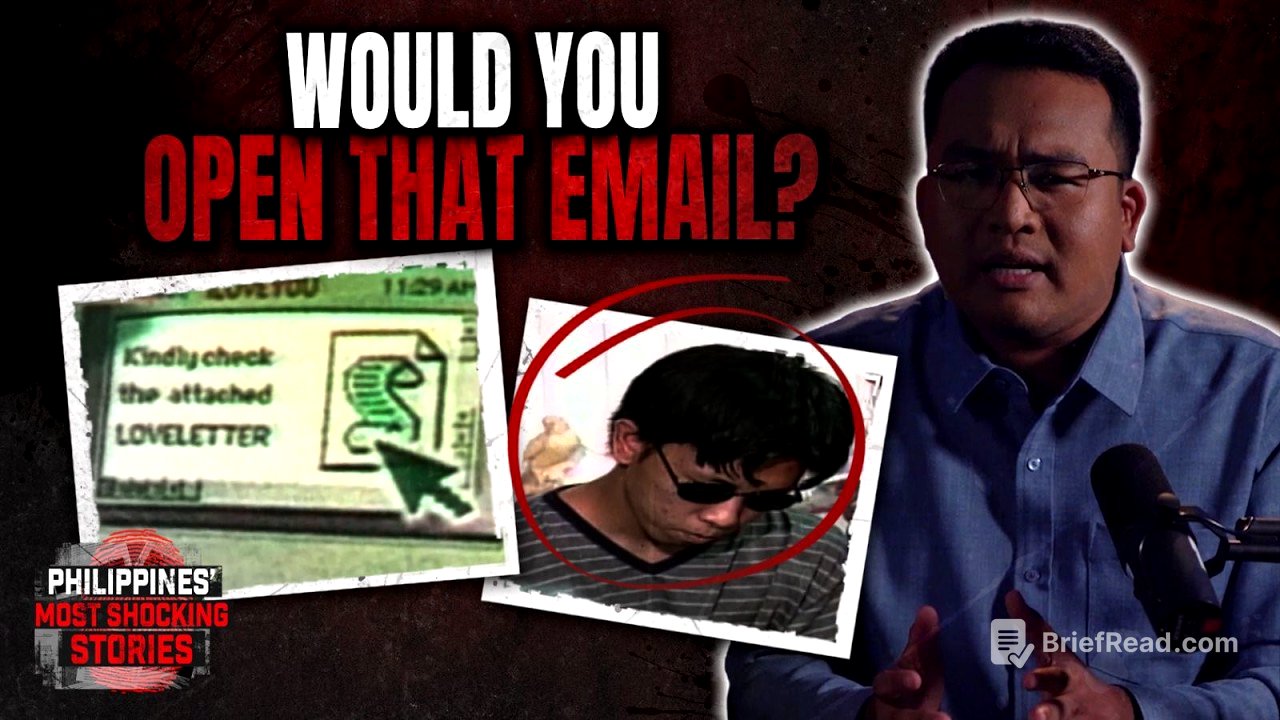
In the year 2000, an email with the subject line "I LOVE YOU" circulated, enticing users to open it. Many did not hesitate to click, leading to the rapid spread of the "ILOVEYOU" virus that crashed millions of computers worldwide. The virus caused severe damage estimated over $10 billion, affecting various sectors and reaching multiple countries in mere hours. The video sets the scene of the internet environment at the time, illustrating how the simplicity of the email's title played a crucial role in its viral propagation.
Ang Rejected Thesis Proposal ni Onel de Guzman [2:55]
The narrative shifts to Onel de Guzman's history as a computer college student who proposed a thesis for a program aimed at hacking into others' internet accounts to provide free access. His professor rejected the proposal on the grounds of legality and ethics, stating, "We do not produce burglars." Following this setback, Onel dropped out of school, setting the stage for his later involvement in creating the destructive virus.
Balik-tanaw: Ano ang Dial-up Internet ng 2000s? [4:38]
The video explains the dial-up internet experience of the 2000s, characterized by slow speeds and connection issues via telephone lines. The delays and difficulties users faced fostered a level of care in email interactions, making people less wary of potential threats. This context adds depth to understanding how the "ILOVEYOU" virus personified a significant breach of trust among internet users, who were less aware of viruses and online scams.
Ang Pagsabog at Global Damage ng I Love You Virus [6:38]
The global repercussions of the "ILOVEYOU" virus are discussed, detailing how rapidly it spread to significant institutions and agencies worldwide. High-profile targets included government and military servers, resulting in the shutdown of email operations to contain the outbreak. The scale of disruption exemplified the vulnerability of networked systems and highlighted the consequences of a single malicious email attachment.
Pag-imbestiga ng FBI at Philippine NBI [10:02]
As investigations commenced, both the FBI and Philippine National Bureau of Investigation explored the code of the virus, uncovering clues suggesting the Philippines as the origin. Elements within the virus code pointed to local affiliations, thus prompting further investigation into computer networks in Manila. This launched a significant manhunt for the creator of the virus, demonstrating the urgency in addressing cybersecurity threats.
Pagsalakay sa Pandacan at Pagkakatukoy kay Onel [11:22]
Investigators traced the origin of the "ILOVEYOU" virus to a computer in an apartment in Pandacan, Manila. A raid led them to floppy disks housing the virus's code, despite the absence of the computer itself. Initially suspecting an apartment resident, they eventually identified Onel de Guzman due to his previously abandoned thesis proposal that aligned with the virus's operation, establishing a direct connection to the incident.
Pilipinas at ang E-Commerce Act of 2000 [14:17]
The fallout from the virus ultimately prompted the establishment of new laws in the Philippines, including the Electronic Commerce Act of 2000. This law aimed to hold individuals accountable for their actions online, signaling an essential legislative shift toward addressing computer crimes and unauthorized access to electronic data.
Mga Tsismis, Quiapo Repair Shop, at Nasaan na si Onel? [15:18]
After the events unfolded, rumors about Onel's whereabouts and activities circulated widely, with reports suggesting he might have worked for major tech companies or even government agencies abroad. These speculations contributed to ongoing intrigue surrounding his life post-arrest, as the public remained curious about the notorious figure behind the viral incident.
Exclusibong Paghahanap kay Onel de Guzman Ngayon [18:20]
In a twist, the video provides an update about locating Onel de Guzman two decades after the virus incident. An investigation revealed he was operating a small mobile phone shop in Quiapo, Manila. In an exclusive interview, de Guzman reflected on his experiences, admitting that he had originally intended to target only local users with his virus before it spiraled out of control.
Hacking, Scams, at ang Aral ng Love Bug Virus [21:29]
The video concludes by highlighting lessons learned from the "ILOVEYOU" virus incident, emphasizing the ongoing dangers posed by cyber threats in today's digital landscape. It serves as a cautionary tale about the importance of cybersecurity awareness and being vigilant against scams targeting unwary internet users.