TLDR;
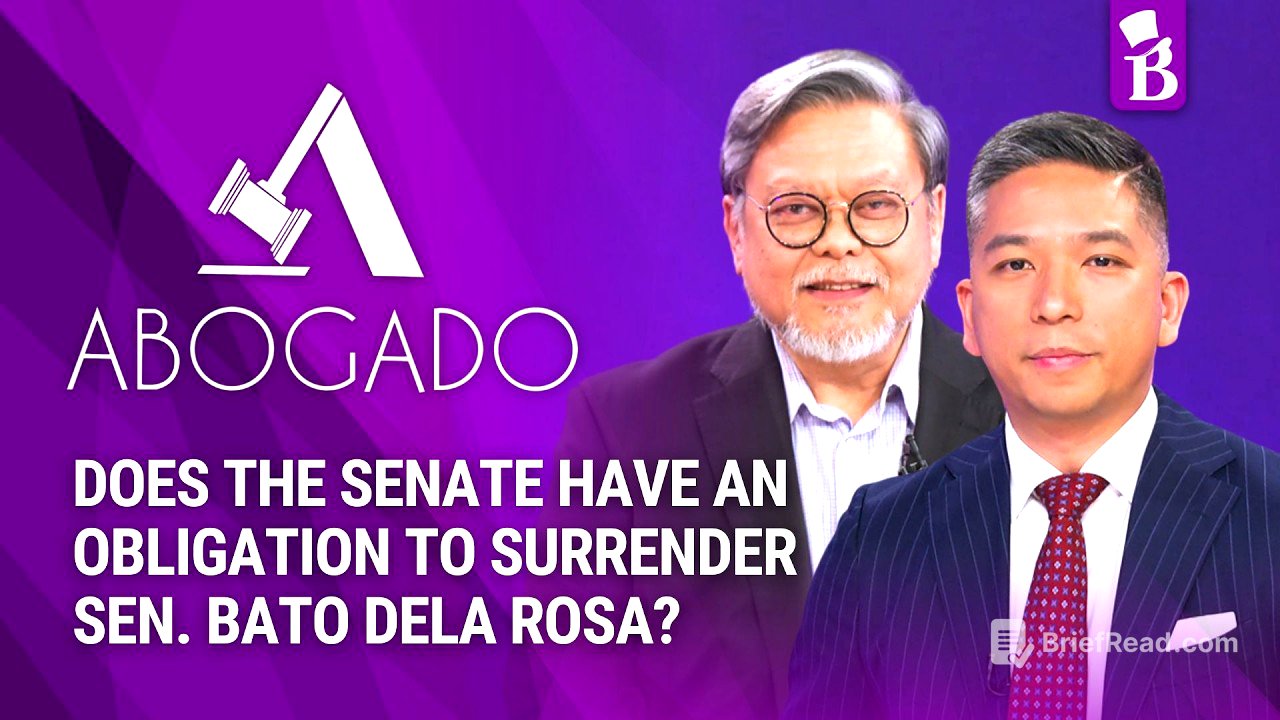
The video discusses the tension between the Philippine Senate's protective custody of Senator Ronald Bato dela Rosa and the International Criminal Court (ICC) arrest warrant issued against him for alleged crimes related to the Duterte administration's drug war. Key points include:
- The constitutional obligations of the Senate regarding an ICC arrest warrant.
- The implications of the Philippines' withdrawal from the Rome Statute on ICC jurisdiction.
- The debate over parliamentary privilege and its limits related to serious crimes such as crimes against humanity.
Constitutional Power and the ICC Arrest Warrant [1:07]
Attorney Mike Toledo and Attorney Karen Jimeno introduce the topic of constitutional power, discussing the scrutiny the Senate faces after placing Senator Ronald Bato dela Rosa under protective custody despite an ICC arrest warrant. They raise questions regarding accountability, jurisdiction, and the Senate's obligations under international law.
Senate's Duty and ICC Authority [5:13]
The discussion centers on whether the Senate has the constitutional duty to surrender Senator Bato to the ICC. Attorney Mel Santa Maria argues that the Senate must comply with the ICC warrant, citing the separation of powers and international law commitments. He highlights that the Philippines recognizes crimes against humanity, bolstered by Republic Act 9851. Conversely, Attorney Paolo Panelo contends that the Senate acts within its rights to ensure legal remedies for Senator Bato before any extradition or surrender.
International Law vs. Local Courts [11:48]
The discussion shifts to the implications of the Philippines having withdrawn from the Rome Statute. Both attorneys highlight that while the ICC claims jurisdiction for crimes committed during the time the Philippines was a signatory, local laws, particularly Republic Act 9851, may complicate the application of ICC orders. Attorney Panelo insists that an ICC warrant must receive interpretation and enforcement through Philippine courts, aligning with local legal standards.
Parliamentary Privilege and Protective Custody [29:37]
The conversation proceeds to discuss the Senate's exercise of parliamentary privilege concerning Senator Bato. Attorney Santa Maria asserts that protective custody is an unconstitutional shield against lawful arrest, arguing that it cannot be weaponized for personal immunity. Attorney Panelo counters that the situation is unprecedented and necessitates careful consideration of the senator’s rights and legal remedies.
Concluding Reflections on Justice [43:06]
In their final thoughts, Dean Mel Santa Maria criticizes how traditions may be misused to protect individuals accused of serious crimes, reflecting on the state of justice in the Philippines. Attorney Paolo Panelo emphasizes the importance of Philippine sovereignty in legal matters, advocating for domestic processes over international dictates in addressing alleged crimes against Filipinos.