TLDR;
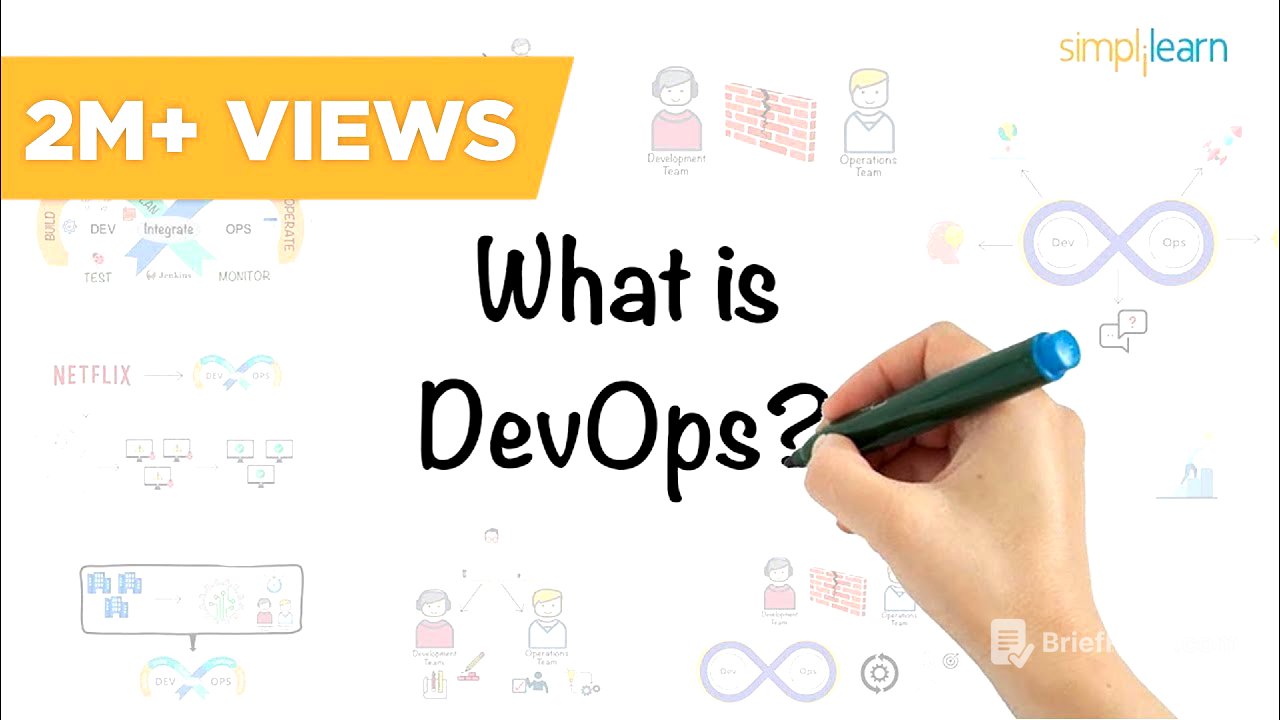
This video explains the DevOps approach, which bridges the gap between software development and operations teams to improve efficiency and speed up the software development cycle. It describes the traditional separation of development and operations, the problems it caused, and how DevOps addresses these issues through collaboration and automation. The video also outlines the different phases of the DevOps lifecycle, the tools used in each phase, and provides a real-world example of Netflix's implementation of DevOps.
- DevOps promotes collaboration between development and operations teams.
- The DevOps lifecycle includes planning, coding, building, testing, deployment, monitoring, and integration.
- Tools like Git, Maven, Selenium, Ansible, Docker, Kubernetes, Nagios, and Jenkins are used in different phases of the DevOps lifecycle.
Introduction to DevOps [0:00]
Traditionally, software development involved separate development and operations teams. The development team was responsible for planning, designing, and building the system, while the operations team handled testing and implementation. This separation often led to delays, as the development team waited for feedback from the operations team, extending timelines and slowing down the entire software development cycle. Sometimes, the development team would move on to new projects while the operations team was still providing feedback on the previous code, causing further delays in project completion.
The DevOps Approach [0:45]
The DevOps approach brings the development and operations teams together to work in collaboration, breaking down the "wall of confusion." The DevOps symbol, resembling an infinity sign, represents a continuous process of improving efficiency and constant activity. This approach enables companies to adapt faster to updates and development changes, delivering quickly with more consistent and smooth deployments. While communication challenges may arise, DevOps streamlines the flow between teams, making the software development process more successful.
DevOps Lifecycle Phases [1:22]
The DevOps culture is implemented in several phases with the help of various tools. The first phase is planning, where the development team creates a plan based on the application objectives. Next, the coding phase involves the development team working on the same code, with different versions stored in a repository using version control tools like Git and merged when necessary. The code is then made executable in the build stage using tools like Maven and Gradle. After a successful build, the code undergoes testing for bugs and errors, with Selenium being a popular tool for automation testing. Once the code passes manual and automated tests, it is ready for deployment by the operations team. Tools like Ansible, Docker, and Kubernetes are used to automate these phases. After deployment, the product is continuously monitored, with Nagios being a top tool for automating this phase. The feedback received is then sent back to the planning phase, forming the core of the DevOps lifecycle, which includes an integration phase. Jenkins is used to send the code for building and testing, and if the code passes the tests, it is sent for deployment, a process known as continuous integration.
Real-World Example: Netflix [2:52]
Many tech giants and organizations have adopted the DevOps approach, including Amazon, Netflix, Walmart, Facebook, and Adobe. Netflix, which introduced its online streaming service in 2007, estimated in 2014 that an hour of downtime would cost them $200,000. To address such issues, Netflix implemented DevOps effectively by developing a tool called the Simeon Army. This tool continuously created bugs in the environment without affecting users, motivating developers to build a resilient system that could withstand such incidents.
Conclusion [3:52]
More and more companies are leaning towards automation to reduce delivery time and bridge the gap between their development and operations teams. DevOps serves as the gateway to achieving these goals.