TLDR;
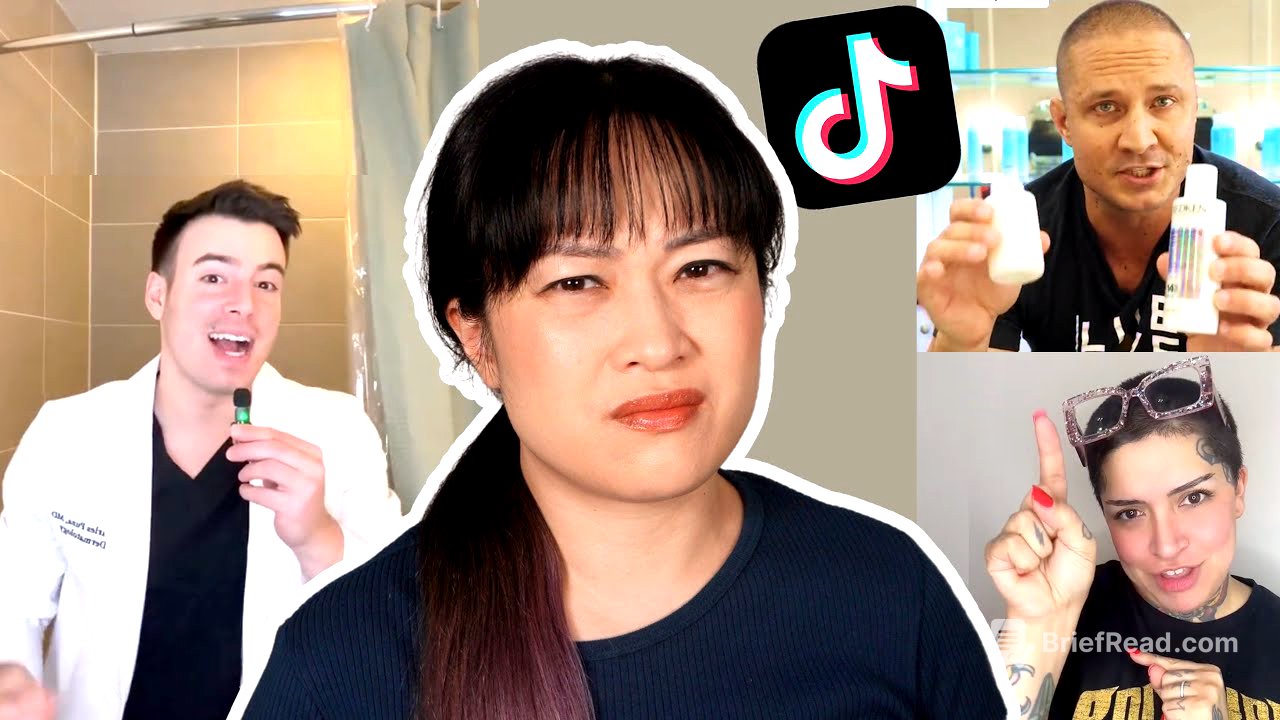
Michelle, a chemistry PhD and cosmetic chemist, addresses common hair care misinformation found on social media. She covers topics such as brushing hair, the effects of water temperature, heat protectants, lawsuits against shampoo brands, the impact of mineral oil, the quality of sulfates, the "no-wash" movement, and differences between professional and drugstore products. She also critiques advice from unqualified influencers and dermatologists, emphasizing the importance of fact-checking and understanding the science behind hair care.
- Brushing hair before showering is good for detangling, but doesn't prevent hair loss.
- Cold water rinses don't seal hair cuticles.
- Heat protectants are effective.
- Lawsuits don't equal scientific fact.
- Mineral oil is not harmful.
- "Natural" shampoos aren't always better.
- Doctors aren't always right about cosmetic products.
Brushing and hair loss, cold water, heat protectants [0:00]
Brushing hair before showering is beneficial for detangling, especially for straight hair, as wet hair is weaker and more prone to breakage. Brushing removes loose hairs, preventing them from all falling out in the shower. Conditioner helps detangle hair, and its primary function is to coat the surface of the hair. The idea that cold water seals hair cuticles is a myth, as water, regardless of temperature, causes the cuticle scales to lift. Shiny hair is attributed to factors like hair color, straightness, and age, which affect light reflection. Heat protectants work by distributing heat evenly and conditioning hair to prevent damage from hot tools. Picking at the scalp can spread oil, but scalp oil can also act as a natural conditioner.
Lawsuits, mineral oil, watered down products, sulfate quality [8:32]
Lawsuits against shampoo brands do not necessarily indicate scientific fact, and hair loss lawsuits may be linked to COVID-19-related telogen effluvium. Mineral oil is a cheap and stable ingredient with environmental benefits as a byproduct of petroleum extraction. The claim that water as the first ingredient indicates a watered-down product is false, as water is a primary component in most shampoos. The idea that drugstore shampoos contain low-quality sulfates is also untrue, as salon and drugstore products are formulated by the same professionals using the same ingredients. Shampoo effectiveness depends on the overall formulation and the interaction of ingredients, not just individual components like sulfates.
Don’t wash hair, surgeons [15:34]
The advice from a cosmetic surgeon to avoid washing hair is challenged, as it promotes the unscientific idea that "natural" is inherently better. While sebum can condition hair, it also feeds Malassezia yeast, potentially leading to dandruff and hair loss. Modern conditioners offer easier and more effective ways to condition hair. It's important to consider the qualifications of people giving advice, as authority bias can lead to the acceptance of misinformation.
Professional vs drugstore products, washing hair twice [18:42]
The claim that professional shampoos clean hair better and prevent oiliness for longer is debunked. Hair oiliness is primarily determined by genetics, hormones, and environmental factors. The idea that drugstore shampoos are designed to lather on the first wash while professional shampoos don't is false. Cosmetic formulators are not taught to formulate professional and drugstore products differently, and many brands are owned by the same umbrella companies.
Using your shampoo wrong (from a dermatologist) [23:17]
A dermatologist's advice to leave shampoo on for 3-5 minutes for maximum efficacy is challenged. The thickness of the scalp doesn't determine how long a product should be left on, and the effectiveness depends on the specific formula. A study cited to support this claim is outdated and not relevant to current shampoo formulations. For anti-dandruff shampoos, washing twice is more effective than leaving the shampoo on longer. It's important to read and follow product instructions rather than relying on blanket rules.
Dry shampoo is worse than cigarettes, debunking experts, factchecking [27:55]
The claim that dry shampoo is as harmful as cigarettes due to benzene content is refuted. Medical doctors are not necessarily experts in consumer product safety, and the experts in this area are toxicologists and safety assessors. While there were recalls of dry shampoo due to benzene contamination, the amounts were small and not a significant risk. The comparison to cigarettes is dishonest, as the amount of benzene in dry shampoo is much lower and not inhaled in the same way. Some independent testing labs may stretch the truth and make things sound scarier than they are. It's important to double-check information and consider the source.
Natural shampoo, parabens [37:52]
The idea that "natural" shampoos are better and that sulfates and parabens damage hair is challenged. Shampoos are designed to be used on hair, and companies have access to extensive research and testing. The conspiracy that companies purposely damage hair to sell more products is often promoted by smaller brands trying to compete. Parabens are used in low amounts and are not harmful to hair. A "natural" shampoo with water and no preservatives is a red flag. Synthetic surfactants were developed to avoid problems associated with soap, such as soap scum in hard water.
Box dye conditioner dupes [41:23]
The reason why conditioners in box dyes are better is explored, focusing on the ingredient amodimethicone. Amodimethicone is positively charged, which helps it stick to damaged hair and seal in color. While it's not a common ingredient in regular conditioners, it can be found by searching ingredient lists online. Comparing ingredient lists is a good starting point for finding cheap alternatives, but it's important to be aware of potentially unsafe recommendations.