TLDR;
The video explores the philosophical teachings of the Bhagavad Gita and emphasizes the importance of truth over the timing and context of statements. It critiques the obsession with historical details and geographical locations in the context of spiritual truths. The speaker asserts that the essence of teachings lies in their eternal truth rather than the circumstances around their revelation. The narrative frames life as a journey guided by the divine presence within, urging listeners to recognize this inner connection to attain peace and clarity.
- The value of truth is paramount, regardless of when or by whom it is spoken.
- The essence of spiritual teachings transcends historical and geographical concerns.
Philosophical Prelude [0:00]
The video begins with a musical interlude, followed by references to universal themes reflected in the Bhagavad Gita. It suggests that the world is a mirror displaying the self, as participants in a philosophical discourse explore fundamental truths. They emphasize that understanding the nature of reality and the eternal essence of information is more significant than temporal or contextual details.
Truth and Perception [0:04]
A participant recounts an interaction regarding the timing of the Gita’s creation. They argue that whether a statement is made now or years ago, its truth or falsity holds its significance. This conversation transitions into a critique of the superficial exploration of texts based on their historical context, advocating instead for a focus on their philosophical value.
The Nature of Dialogue [1:26]
The speaker discusses the importance of discerning genuine wisdom irrespective of the speaker's age or status. They point out the folly in blindly accepting traditional beliefs based solely on their origin. This urges a thoughtful investigation into the truthfulness of statements and ideas, highlighting how the Gita promotes philosophical inquiry over dogmatic adherence.
Seeking Deeper Understanding [3:40]
The discourse analyzes the necessity of distinguishing between material pursuits and the deeper spiritual insights offered by texts like the Gita. Emphasizing the internal journey, the speaker stresses the importance of recognizing the divine presence within oneself rather than relying on external validation from societal norms or historical conventions.
Navigating Life's Path [7:10]
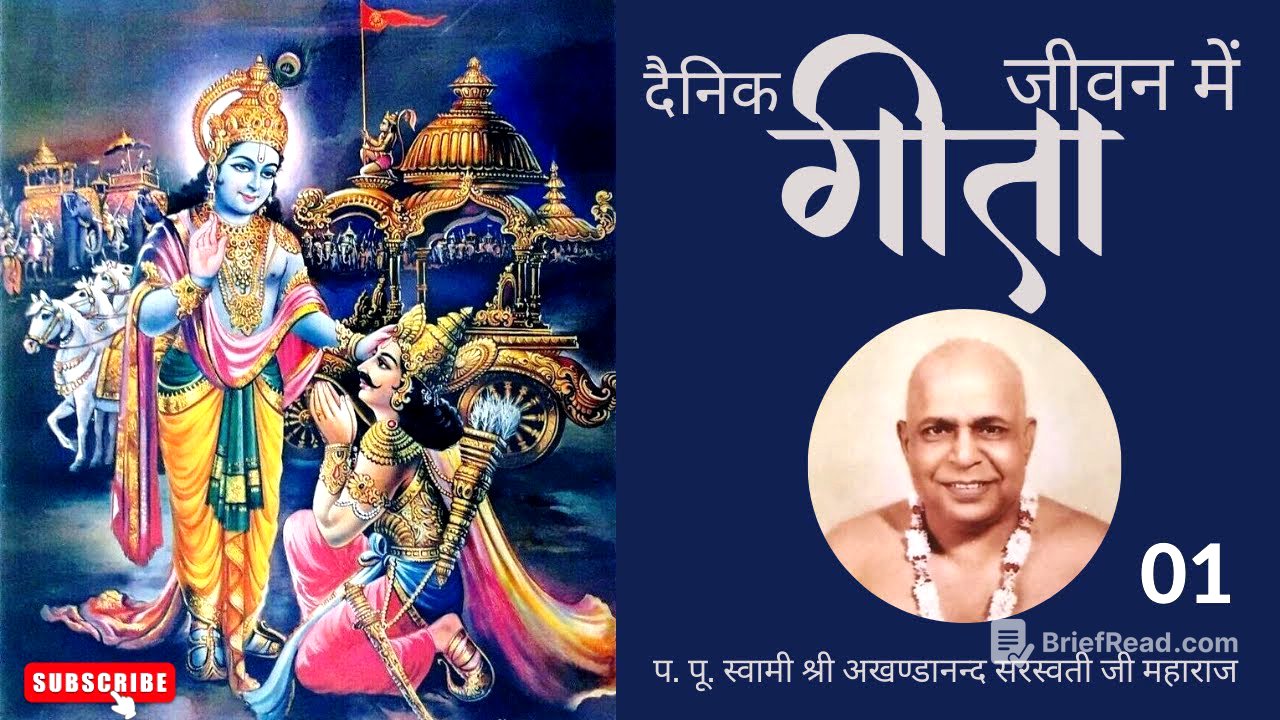
As life is framed as a journey, the speaker encourages listeners to allow the divine to guide their path. Using the metaphor of a chariot, they illustrate how one's life requires an inner spiritual driver (represented by the divine) to steer through the challenges of existence. This emphasizes awareness of the divine's presence in daily actions.
Arjuna and Duryodhana - Moral Choices [16:08]
This chapter contrasts Arjuna and Duryodhana, representing different moral perspectives in the battle of Kurukshetra. Duryodhana embodies self-serving motives, while Arjuna showcases a readiness to sacrifice for others' welfare. The discussion encourages examining ethical decisions in life beyond mere self-interest and striving for the collective good.
Philosophy of Action [27:58]
Emphasis is placed on the Gita's teachings regarding action and ethics. The speaker notes that many fall into the trap of acting solely based on personal gain or societal expectations, contrasting this with the ideal of selfless action that benefits others. This leads to discussions about finding purpose beyond one's desires.
The Paradox of Existence [38:20]
The narrative delves into the paradoxes of life, especially regarding the transient nature of existence and the importance of aligning one's actions with eternal truths. It invites reflection on how societal roles and pressures can cloud individual understanding of one's purpose in the broader cosmic order.
Wisdom and Knowledge [46:19]
At this point, the speaker highlights the value of wisdom and knowledge as essential tools for navigating life's complexities. They emphasize that true enlightenment comes from understanding rather than mere acceptance of dogma. Knowledge serves as a pathway to liberation from the cycles of birth and death.
The Role of Intellect [42:40]
Here, the video addresses the significance of cultivating intellect within spiritual practice. The speaker argues that intelligence should not be dismissed in pursuit of spirituality; rather, it should complement one's spiritual journey, providing clarity and insight into deeper existential questions.
The Essence of the Gita [0:00]
In the conclusion, the speaker encapsulates the essence of the Gita as a guide for living a life imbued with purpose and spiritual alignment. The teachings encourage individuals to embrace the divine connection within themselves and navigate their duties with wisdom, aligning personal actions with the universal truths underscored in the scripture.