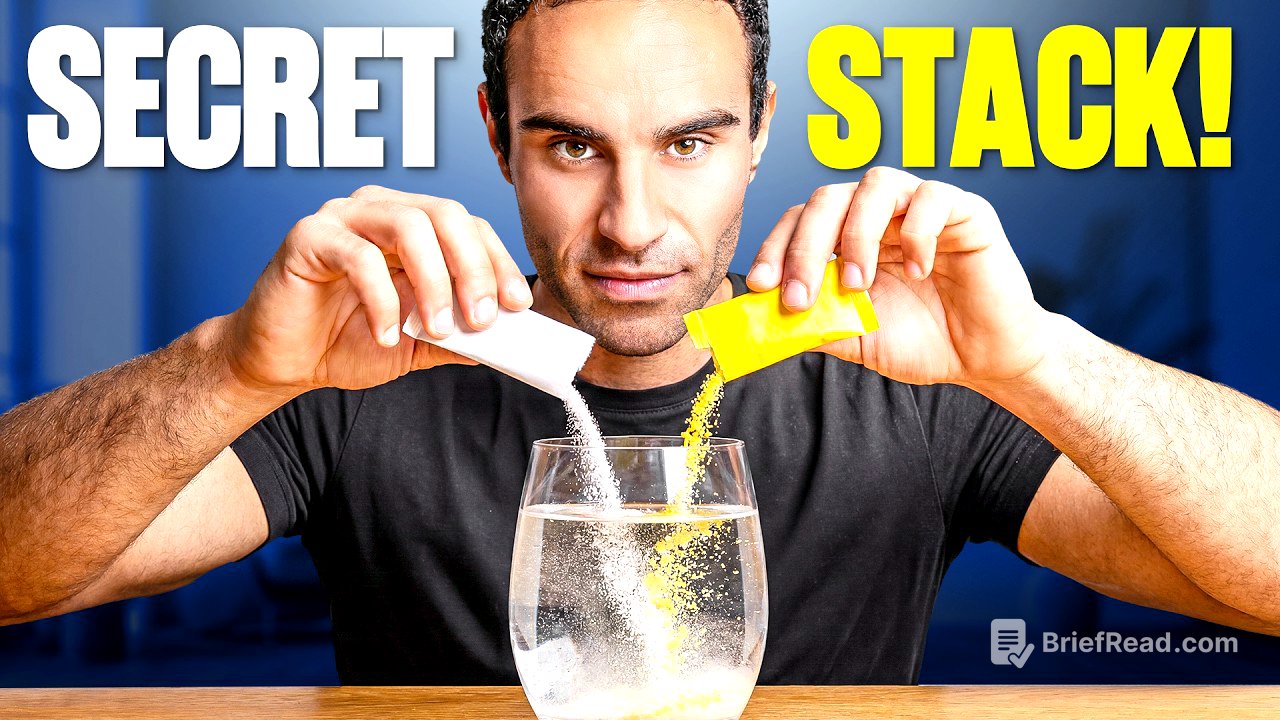
TLDR;
This video focuses on enhancing the effectiveness of creatine supplementation through the inclusion of guanidinoacetic acid (GAA). Creatine monohydrate is praised for its research-supported benefits, but combining it with GAA can supercharge its effects by boosting the body’s natural creatine production and improving physical performance.
- Creatine monohydrate is a well-researched ergogenic aid.
- Combining creatine with guanidinoacetic acid enhances its effectiveness and supports better physical performance.
Introduction to Creatine and GAA [0:00]
The video begins by discussing the growing popularity of creatine on social media and its acclaim as a top ergogenic aid. The presenter introduces a new approach to increase creatine's effectiveness by examining the GAA pathway and guanidinoacetic acid, the body's natural precursor to creatine.
Understanding the GAA Pathway [0:35]
The presenter explains the role of guanidinoacetate in the body’s creation of creatine. The conversion occurs in the liver via specific pathways, highlighting that GAA is integral to creatine synthesis. Combining creatine monohydrate with GAA significantly boosts creatine levels, thus improving muscle performance and recovery.
Proper Storage of Creatine [2:14]
Listeners are cautioned about the importance of proper storage for creatine supplements. A loose lid can cause creatine to degrade into creatinine, reducing its effectiveness. Since creatine is hygroscopic, it can absorb moisture, affecting its quality over time.
Transport Saturation Issues with Creatine [2:59]
The video highlights challenges in creatine supplementation, particularly the SLC6A8 transporter that becomes saturated, leading to non-responsiveness in some individuals. The presenter asserts that GAA can enhance creatine transport dynamics and increase natural creatine production, making it valuable for effective supplementation.
Benefits of the GAA and Creatine Combination [3:57]
Research indicates that the combination of GAA and creatine leads to increased muscle creatine levels and better upper body strength with reduced water retention compared to creatine alone. GAA supplementation alone has been shown to enhance serum creatine levels significantly.
Complementary Ingredients and Formulations [5:50]
The presenter discusses a specific creatine formulation that combines various components, including creatine HCL and GAA alongside high-performance ingredients like beta-alanine and TMG (trimethylglycine), which support overall gym performance.
Brain Health and Cognition Benefits of GAA [5:58]
The potential cognitive benefits of GAA are addressed, noting that creatine's effects extend beyond muscle and include brain energy metabolism. It may help improve cognitive performance markers in harder-to-saturate tissues like the brain.
Safety Considerations and Hydration [6:51]
Concerns about GAA's impact on homocysteine levels due to its methylation requirement are mentioned, but research shows no significant rise in homocysteine with GAA and creatine use. Maintaining hydration and balancing electrolytes, especially sodium, is advised for optimal results with creatine supplementation.
Conclusion and Personal Reflection [10:02]
The video wraps up by inviting viewers to share their thoughts on creatine and express personal experiences with supplementation. The presenter hints at an upcoming testosterone booster product and encourages audience engagement.