TLDR;
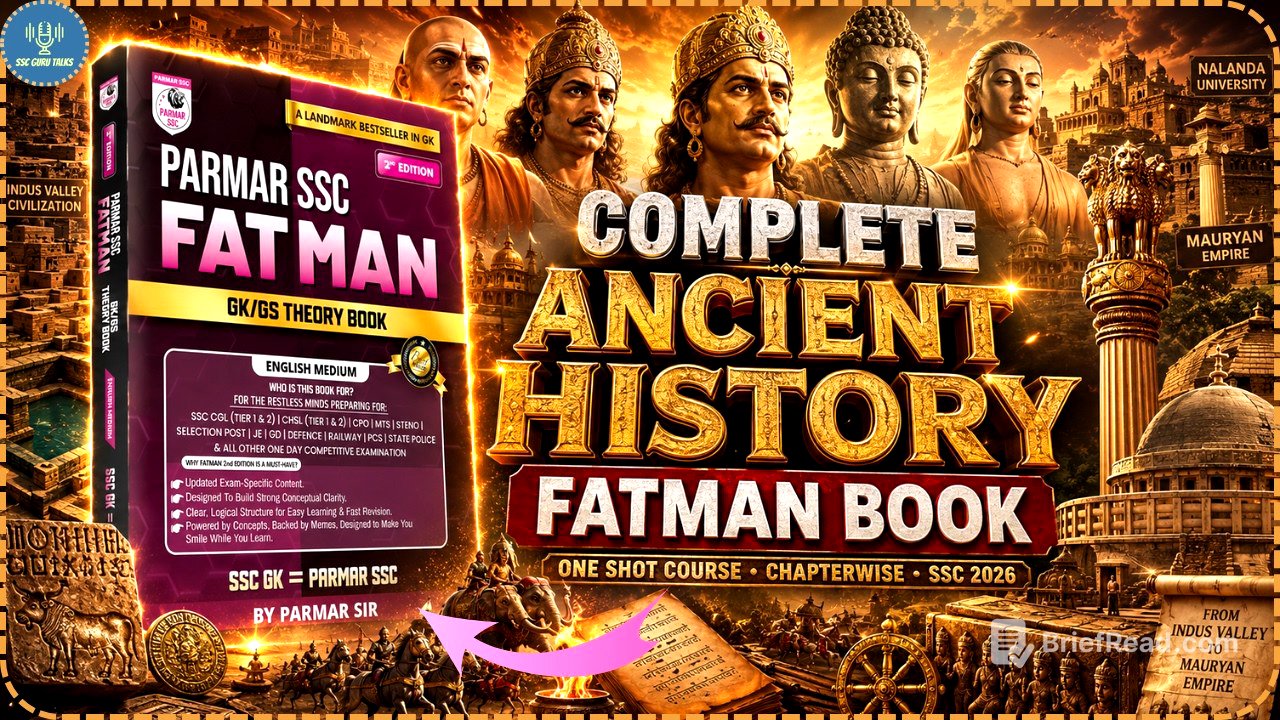
This video discusses ancient Indian history chapter by chapter, providing detailed insights into significant eras and civilizations.
- The timeline of ancient history spans from the Stone Age to the Gupta Dynasty and beyond.
- Key topics include the Indus Valley Civilization, Vedic Age, rise of Jainism and Buddhism, and the emergence of powerful dynasties such as the Mauryas and Guptas.
- The video emphasizes understanding the chronology and specific facts related to these periods, crucial for competitive exams.
Introduction [0:00]
The video begins with an introduction to the ancient history discussion, explaining its significance for SSC, Railway, and UPSC exams. It outlines the organization of history into three main parts: Pre-history, Proto-history, and Modern History. The narrator highlights confusion regarding BC and AD timelines and provides clarity on the evolution and historical periods leading up to ancient civilizations.
Chapter 1: Stone Age [0:06]
In this chapter, the speaker details the Stone Age and its three stages: Paleolithic, Mesolithic, and Neolithic. The Paleolithic Age is marked by the use of stone tools, with significant sites such as the Son Valley and Bhimbetka being mentioned. The speaker emphasizes the importance of understanding specific dates relevant to SSC exams, noting the technological advancements and the eventual transition to a settled lifestyle in the Neolithic Age, where agriculture began.
Chapter 2: Indus Valley Civilization [13:49]
The focus shifts to the Indus Valley Civilization, known for its urban planning and advanced culture. The timeline of this civilization is set between 2500 BC to 1750 BC. Key sites like Harappa and Mohenjo-Daro are discussed, including their discovery and significance. The chapter elaborates on agriculture, trade systems, and the lack of evidence regarding the use of horses, with cotton being a significant crop that showcased advanced agricultural practices.
Chapter 3: Vedic Age [36:06]
This chapter explores the Vedic Age from 1500 BC to 600 BC. It is divided into Early Vedic and Later Vedic periods, showcasing the transition from pastoral communities to agriculture. Evidence of Aryan migration and the significance of the Vedas are discussed, including the four texts (Rigveda, Samaveda, Yajurveda, and Atharvaveda) that define this period. The chapter details societal hierarchy, ritual practices, and the essence of Vedic beliefs.
Chapter 4: Jainism and Buddhism [55:22]
In this segment, Jainism and Buddhism’s origins and teachings are discussed. It portrays their rise as a response to Brahmanical dominance and ritualism. Mahavira and Buddha are depicted as reformers advocating for non-violence and equality. The chapter outlines the major figures in Jainism, including the 24 Tirthankaras, and highlights key teachings and philosophies, contrasting the two religions' perspectives on divinity.
Chapter 5: Mahajanapadas [1:12:53]
This chapter discusses the emergence of the Mahajanapadas, large states formed from earlier tribal units. It details the political structure and the shift from tribal governance to organized states, with a total of 16 Mahajanapadas being identified. The source material for this information includes Vedic texts and Buddhist literature like the Anguttara Nikaya. It emphasizes the dynamics of internal and external conflicts among these states.
Chapter 6: Maurya Dynasty [1:35:03]
The Maurya Dynasty is examined next, highlighting Chandragupta Maurya and his rise to power with the assistance of Chanakya. Key events such as battles against the Nandas and the significance of the Arthashastra are highlighted, along with the introduction of a centralized administration. The chapter further elaborates on Ashoka’s reign, his promotion of Buddhism, and the impact of his edicts on society.
Chapter 7: Post-Maurya Dynasties [1:48:37]
In this section, the political landscape after the Maurya Dynasty is analyzed, discussing the rise of the Shunga, Kanva, and other regional powers. Key figures such as Pushyamitra Shunga and the challenges posed by foreign invasions are mentioned. The role of trade, agriculture, and societal structures in sustaining these dynasties is also examined.
Chapter 8: Gupta Dynasty [2:01:57]
This chapter deals with the Gupta Empire, often referred to as the Golden Age of India. The founding of the dynasty by Sri Gupta and major rulers like Chandragupta I and Samudragupta are discussed. Their contributions to culture, literature, and administration, including important texts like the Arthashastra, are highlighted. The chapter discusses the architectural achievements and the role of trade in the empire's prosperity.
Chapter 9: Post-Gupta Dynasties [2:19:36]
The focus here shifts to the emergence of various dynasties after the Gupta period, detailing the rise of the Maitrakas, the Chalukyas, and the Pandyas. It discusses their political systems, economic structures, and cultural contributions, emphasizing how these dynasties redefined the socio-political landscape of India after the fall of the Gupta Empire.
Chapter 10: Sangam Age [2:34:29]
In this chapter, the Sangam Age, a crucial period in South Indian history, is explored. It examines the culture, literature, and societal structures of the Tamil kingdoms, highlighting the significance of the Sangam assemblies and key literary works. The chapter emphasizes the ecological divisions of Tamil Nadu and their impact on the lives of the people during this age.
Chapter 11: Tripartite Struggle and Cholas [2:46:14]
The video discusses the Tripartite Struggle between the Palas, Pratihara, and Rashtrakutas for control over Kannauj. It emphasizes the significant rulers from each dynasty, their achievements, and the dynamics of their conflicts. The rise of the Chola Empire is highlighted, detailing their military conquests, trade networks, and patronage of arts and culture.
Ending & Final Revision [3:04:16]
In the conclusion, the video recaps the entire ancient history journey, focusing on key points, timelines, and historical figures. The importance of understanding these details for competitive exams is reiterated, with a strong emphasis on revising the content systematically to ensure retention and comprehension.