TLDR;
In this video, Ricky Comiskey emphasizes the importance of understanding the cycle of thirds for beginner guitar players, highlighting it as a foundation for learning chords and music theory. He illustrates how to use the cycle to identify chord components and incorporates memorable mnemonics for easy recall. Additionally, he touches on extending chords to include sevenths, ninths, and beyond, providing ways to deepen musical knowledge and application.
- Cycle of thirds is essential for beginners.
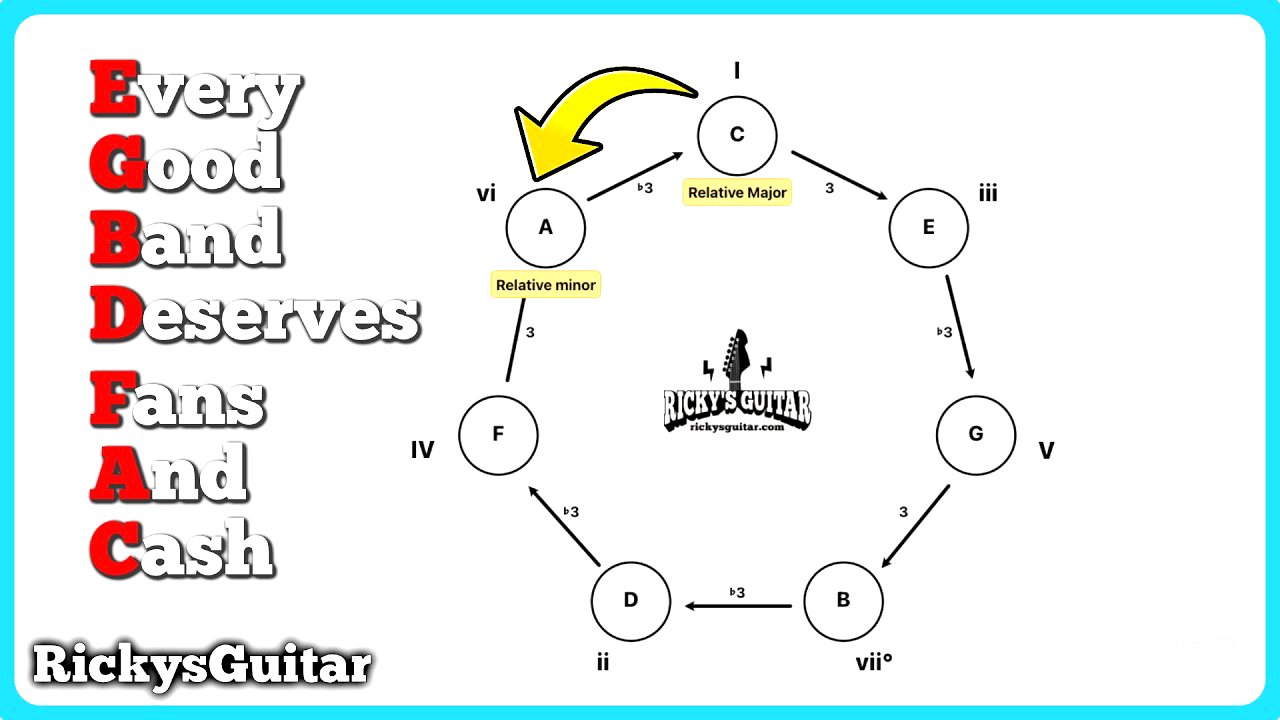
- Mnemonics like "Every Good Band Deserves Fans and Cash" aid in memorizing chord structures and components.
Importance of the Cycle of Thirds [0:00]
Ricky starts by explaining that while the cycle of fifths is valuable, beginners should focus on the cycle of thirds first. This foundational knowledge aids in understanding how chords function within a key, specifically the primary triads used in many pop songs. He uses the metaphor of building a rocket ship without knowing the destination to underline the need for a strong theoretical base before progressing.
Understanding the Cycle of Thirds [1:00]
He shares that starting from the note E makes sense due to guitar tuning. In the key of C major, he lists the notes (C, D, E, F, G, A, B) and demonstrates how to construct the cycle by moving through the notes in thirds. Throughout this section, he engages the audience by promising they will gain significant musical benefits from mastering this concept.
Mnemonic Devices for Chord Structure [2:20]
Ricky introduces a mnemonic to remember the cycle of thirds: "Every Good Band Deserves Fans and Cash." He illustrates the construction of chords in the key of C using this mnemonic, explaining how to quickly identify the root, third, and fifth of each chord. This method simplifies the understanding and recall of chord structures for the viewer.
Chord Components in Key of C Major [4:00]
He proceeds to outline each chord in the key of C major, including C, D minor, E minor, F, G, A minor, and B diminished. For each chord, he identifies the root, third, and fifth based on the mnemonic, emphasizing how this approach allows for effortless chord identification and reinforces musical theory.
Extending Chords with Sevenths [6:20]
Ricky explains how to extend chords by adding the seventh, demonstrating this on the C major chord to produce a major seventh sound. He continues with the D minor chord and the process for E minor and G chords, reiterating the mnemonic. This method not only aids in identifying chords but elevates their complexity by teaching how to layer additional notes.
Complete Chord Spelling and Music Theory [7:40]
He summarizes how the cycle of thirds can lead to complete chord spelling in C major by systematically applying the mnemonic. The video reinforces the concept that knowledge of these musical foundations can significantly enhance a guitarist's ability to recognize and play various chords.
One Mnemonic to Rule Them All [9:10]
Ricky introduces the concept of using a single mnemonic for various aspects of music theory, particularly in reading sheet music. He contrasts it with more common but less relatable mnemonics, advocating for a straightforward approach to learning musical notation across different clefs, including treble and bass.
Closing Remarks and Resources [10:50]
He encourages viewers to download a PDF resource related to the cycle of thirds and asks them to engage with the video by liking and subscribing for more lessons. The closing section reiterates the significance of understanding the cycle of thirds and its practical applications for guitar players, helping them to deepen their musical skills.