TLDR;
Peter Schiff discusses the potential decline of the US dollar as the world reserve currency, driven by factors such as excessive debt, weaponization of the dollar through sanctions, and the rise of China as an economic power. He suggests that the US has been exploiting the dollar's reserve status to live beyond its means, leading to trade and budget deficits. Schiff warns of potential consequences including inflation, soaring interest rates, and economic collapse. He also touches on topics such as gold, Bitcoin, and investment strategies, advocating for global investing and precious metals as safe havens.
- China's efforts to establish the yuan as a global currency alternative.
- The unsustainability of the US debt and the potential for economic crisis.
- The manipulation of gold prices by the US government.
- The risks associated with Bitcoin and the benefits of tokenized gold.
- The importance of global investing and diversifying away from US assets.
Introduction [0:00]
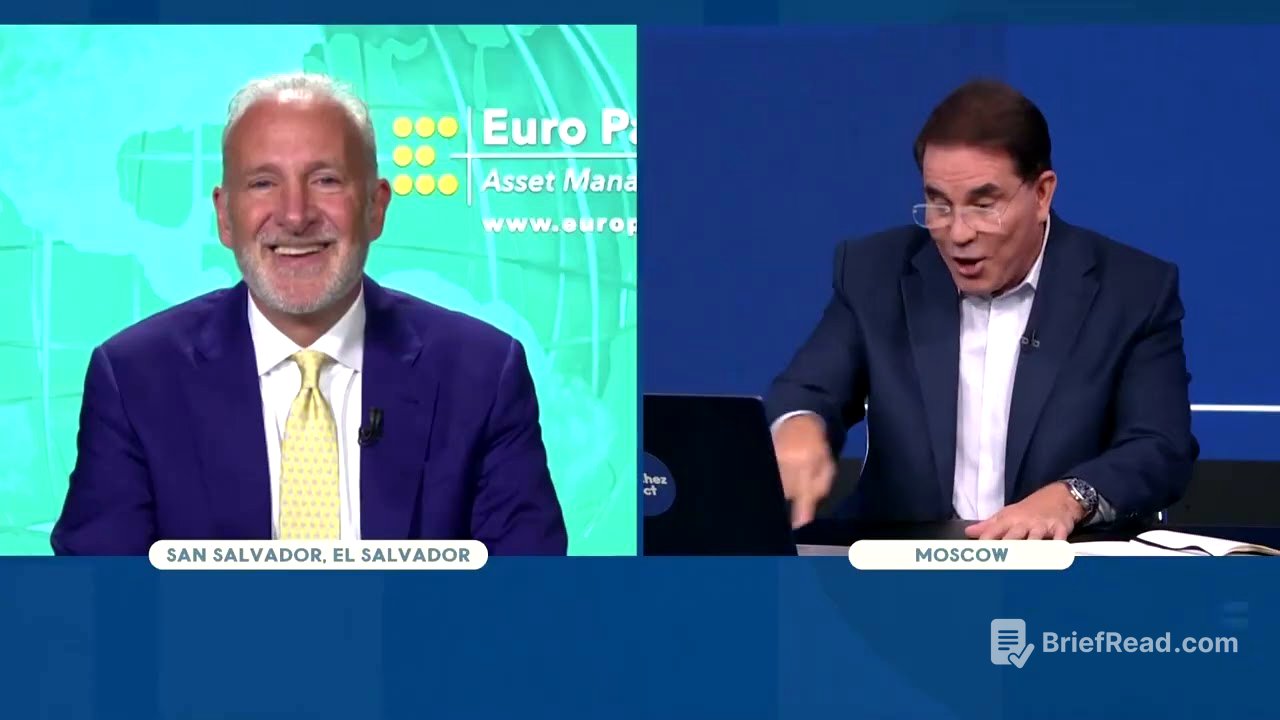
Peter Schiff is introduced as an economist and strategist who has accurately predicted economic trends, particularly concerning currency, the US economy, and gold. The host mentions a recent interview Schiff did where he signaled upcoming economic troubles related to US monetary policy.
China's Challenge to the US Dollar [2:20]
Xi Jinping is intensifying efforts to establish the yuan as a global currency, aiming to diminish the US dollar's dominance. China plans to enhance currency swap agreements, introduce a cross-border interbank system to rival SWIFT, and promote the use of the yuan in oil trade. Schiff says that this move poses a significant threat to the dollar's reserve status, which is crucial for the US economy and standard of living.
The Consequences of Losing Reserve Status [3:58]
The dollar's reserve status allows the US to spend, consume, and borrow beyond its means, leading to trade and budget deficits. Losing this status would cause the dollar to collapse, prices to skyrocket, interest rates to soar, and the consumer economy to collapse. The US would struggle to afford imports due to the dollar's diminished value.
Trump's Role and the Weaponization of the Dollar [4:56]
Trump's policies, including threats of sanctions and tariffs, exacerbate the situation by pushing other countries to seek alternatives to the dollar. The weaponization of the dollar, particularly after the Ukraine war, has prompted other nations to consider alternatives. Trump's fiscal policies have worsened the debt situation, signaling to the world that the US is unlikely to address its debt issues.
China's Strategy and the Rise of BRICS [8:40]
China should back the yuan with gold and make it convertible, severing the Hong Kong dollar's tie to the US dollar and pegging it to the yuan. This would give China a significant advantage, given its production capabilities and savings. The BRICS countries (Brazil, Russia, India, China, and South Africa) are coming together to create an alternative economic system, and they may not fully trust China, but they also don't trust the US.
The Impact of Sanctions and Tariffs [12:00]
Sanctions and tariffs are pushing countries away from the US and towards China. Trump's actions and rhetoric have alienated other nations, leading them to seek alternative markets and trading partners. Japan, a major creditor of the US, may start selling US Treasuries to address its own debt, further exacerbating the US's financial problems.
The Inevitability of the Yuan's Rise and US Debt [14:21]
The shift away from the dollar is already happening, with central banks increasing their gold reserves. The US has a massive $39 trillion debt, but the bigger problem is the unfunded liabilities, such as Social Security and government pensions. The US government is essentially running a Ponzi scheme, as it doesn't have the reserves to cover its liabilities.
Gold as a Safe Haven and Government Manipulation [17:53]
The rise in gold prices indicates a loss of confidence in the Fed and the dollar. The recent decline in gold prices may have been orchestrated by the White House to control the narrative and prevent further loss of confidence in the dollar. The new Fed chair will likely drop rates to avoid a financial crisis, despite any initial appearances of being an inflation hawk.
Investment Advice and the Role of CNBC [23:19]
Schiff advises investing in gold, silver, and foreign stock portfolios, particularly dividend-paying foreign stocks. He criticizes CNBC for not covering gold and for promoting Bitcoin as digital gold, leading viewers to lose money. CNBC is a contrarian indicator, and its audience should not listen to it.
Digital Assets and Tokenized Gold [26:13]
There is a place for both metals and digital assets, especially if the digital assets are tied to metal. Tokenized gold, where a token is backed by physical gold, is a viable alternative to the US dollar. Bitcoin, on the other hand, is worse than the dollar because it is backed by nothing and is essentially a decentralized Ponzi scheme.
Bitcoin vs. the Dollar and Offshore Accounts [29:43]
Bitcoin and the dollar share similarities, as both are based on nothing. However, the dollar is legal tender and is used effectively as a medium of exchange. Schiff recommends using dollars for transactions but not holding them as a store of value. He advises investing in offshore accounts and foreign markets, particularly China, as they offer better opportunities than the US.
Global Economic Power Shift [32:42]
China's GDP could exceed the US if it succeeds in establishing the yuan as a global currency. The unification and business interests of countries like China, Russia, and others could lead to a significant shift in global economic power. Schiff advises abandoning ship and diversifying away from US assets to avoid the coming economic downturn.