TLDR;
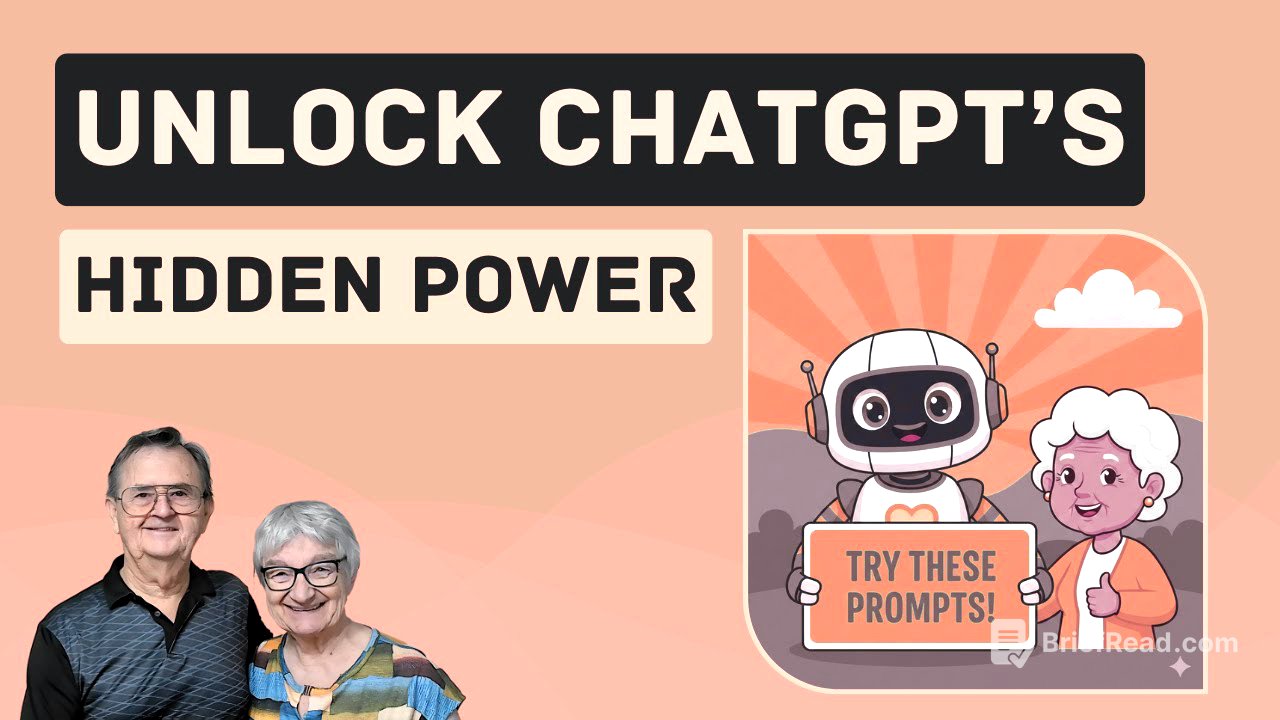
This video introduces two powerful AI prompting techniques, "Flip & Discover" and "Learning Loop," designed to enhance the user's ability to effectively use AI tools like ChatGPT. It emphasizes breaking habitual thinking, uncovering hidden assumptions, and efficiently processing information for better learning and application.
- Flip & Discover: This technique involves reversing questions to uncover hidden assumptions and generate unexpected solutions.
- Learning Loop: This method transforms a single learning source (like a video transcript) into multiple learning aids, such as summaries, discussion questions, quizzes, and social media posts.
What Most People Get Wrong About Prompts [0:00]
Many users treat AI tools like ChatGPT as simple "magic eightballs," posing questions and hoping for useful answers. While AI is improving, well-crafted prompts still yield superior results. The video introduces AI discovery pathways, which are guided approaches to explore, reflect, and create with AI effectively. Two techniques are covered: "Flip & Discover" (prompt reversal) and "Learning Loop," both aimed at strategically directing AI, improving outputs, saving time, and making users more sophisticated AI users.
AI Discovery Pathways [1:20]
AI discovery pathways are guided approaches designed to help users explore, reflect, and create with AI in meaningful ways. These pathways are adapted from advice on using AI productively. The video focuses on two main techniques: "Flip and Discover" and "Learning Loop". These techniques aim to strategically direct AI, improve the quality of outputs, save time, and make users more sophisticated in their AI usage.
The “Flip & Discover” Prompting Method [2:10]
The "Flip & Discover" method is effective because it breaks habitual thinking, reveals hidden assumptions, and generates unexpected solutions. By exploring the opposite side of a question or problem, users can uncover strategies they might not find through direct thinking. For example, when asked for ways to stay mentally sharp with age, ChatGPT initially provides generic advice. However, flipping the question to focus on behaviors that dull the mind yields more interesting and actionable insights.
Reversing the Question for Better Insights [5:32]
Flipping the question again to create an "anti-dulling checklist" can reveal fresh ideas not initially apparent. This technique transforms routine prompting into discovery-driven thinking. For instance, the checklist includes practical tips like using your brain instead of outsourcing it, eating colorful foods, and laughing daily. The goal is to create a "to feel alive" list rather than just a to-do list, making the advice more engaging and relevant.
Creating a Reusable Master Prompt [6:20]
To make the "Flip & Discover" method reusable, the presenter asks ChatGPT to reverse engineer the conversation and create a master prompt. This master prompt teaches others how to use the technique to explore personal topics like fitness, nutrition, memory, or relationships. The master prompt includes step-by-step instructions and an example, providing a complete, reusable tool for users to apply the "Flip & Discover" method independently.
Quick Review of “Flip & Discover” Prompting [7:50]
The "Flip & Discover" technique aims to break habitual thinking. Start with a standard prompt, then intentionally reverse it to explore the opposite viewpoint. Use the reversed answer to uncover hidden assumptions. Ask AI to flip it again or synthesize both views, and finally, request a reusable master prompt to facilitate future applications of the technique.
Introducing the Learning Loop [8:45]
The "Learning Loop" technique addresses information overload by multiplying the value of what you learn. It boosts memory, encourages sharing, saves time, and builds confidence. This method transforms a single video or article into various learning tools, such as notes, quizzes, discussion prompts, and social media posts. The "Learning Loop" keeps users curious and connected, enabling them to lead AI in creating powerful learning tools quickly.
Video-to-Prompt: The Easiest Way to Learn Anything Faster [9:38]
To use the "Learning Loop," start with digital content, such as a YouTube video transcript. Copy and paste the transcript into a document, save it, and upload it to ChatGPT. This allows ChatGPT to respond to questions about the video content. This process is quick and sets the stage for creating multiple learning tools from a single source.
How to Turn Any Video Into 6 Learning Tools [11:45]
Using a video transcript loaded into ChatGPT, users can create six different learning tools: a 200-word summary for reinforced understanding, six thoughtful discussion questions for group engagement, a five-question multiple-choice quiz to check retention, personal reflection questions for journaling, a short talk script for teaching others, and a concise social media post to share insights and encourage connection. Each tool serves a unique purpose in deepening learning and facilitating sharing.
Real-Life Uses for Lifelong Learners [14:15]
The "Learning Loop" can be applied to various topics beyond health, including courses, history, art, language learning, and book clubs. For courses, lectures can be turned into study notes, quizzes, and explainer slides. For history or art, create museum-style summaries, timeline quizzes, and discussion guides. Language lessons can become flashcards, dialogues, and comprehension quizzes, while book clubs can benefit from summaries, discussion questions, and character quizzes. The "Learning Loop" helps transform learning into a versatile toolkit.