TLDR;
This video discusses the cell theory and the various methods cells use to transport substances to maintain life and homeostasis. Key methods include diffusion, facilitated diffusion, passive transport, and active transport, each with different mechanisms and energy requirements.
- Cells are alive and must move substances to maintain homeostasis.
- Diffusion is the movement of particles from high to low concentration without energy.
- Active transport requires ATP and includes membrane pumps and vesicle movements like endocytosis and exocytosis.
Cell Theory and Homeostasis [0:00]
The video begins by introducing the cell theory, which states that cells are alive and must transport substances to ensure they function properly. To maintain homeostasis, cells must move objects such as oxygen and carbon dioxide in and out, primarily through a process known as diffusion.
Diffusion and Passive Transport [0:35]
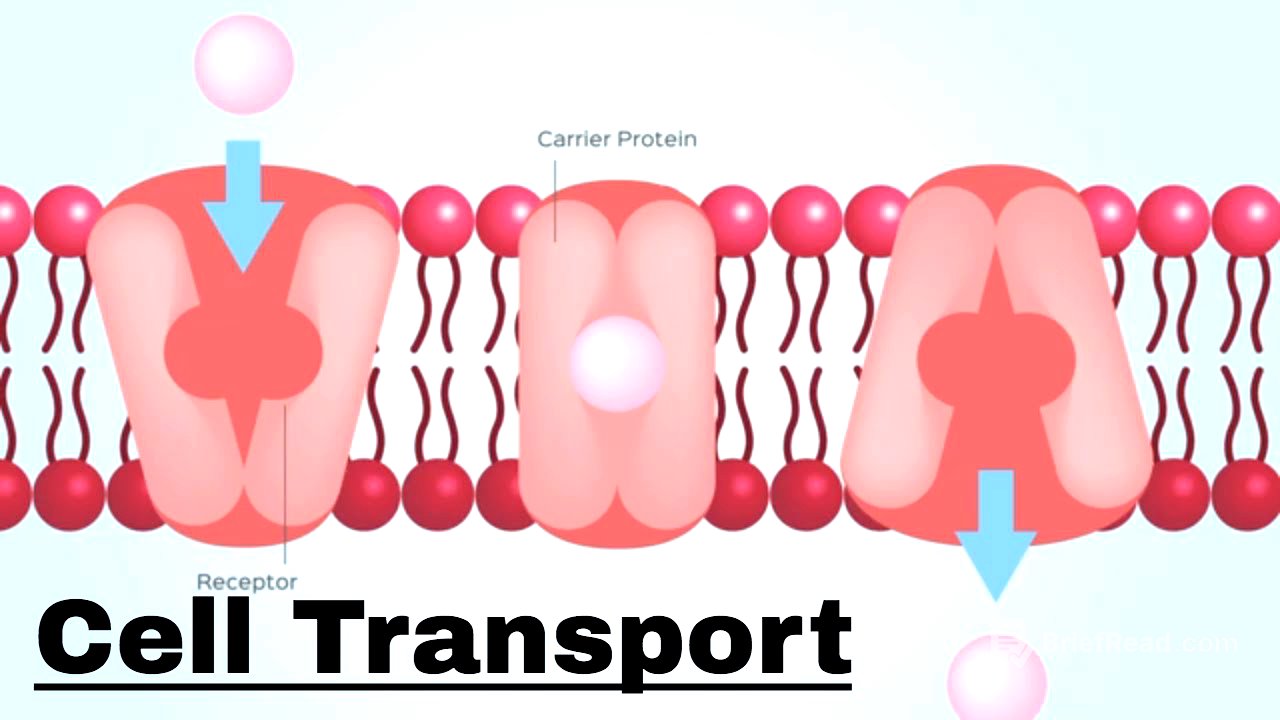
Diffusion happens when particles move from an area of high concentration to an area of low concentration, requiring no energy from the cell. The cell membrane, made up of a phospholipid bilayer with polar heads and non-polar tails, allows some substances to pass through easily. There’s also facilitated diffusion, which uses channel proteins to transport larger molecules like glucose without requiring ATP.
Active Transport [1:11]
When substances are too large or need to move against the concentration gradient, active transport is utilized. This process requires energy in the form of ATP and can be accomplished through methods such as membrane pumps, endocytosis, and exocytosis.
Membrane Pumps [1:45]
One example of active transport is the sodium-potassium pump. This process moves sodium ions out of the cell and potassium ions into the cell against their respective concentration gradients by changing the shape of the transport protein with the help of ATP.
Endocytosis and Exocytosis [3:02]
Endocytosis allows cells to ingest larger particles by engulfing them. It has three types: phagocytosis for solids, pinocytosis for liquids, and receptor-mediated endocytosis for targeted molecules. Exocytosis is the process through which cells expel substances by packaging them in vesicles that pinch off from the inside of the cell and release their contents outside.