
TLDR;
This video explores the structure and function of cell membranes, focusing on transport mechanisms and homeostasis. It describes how cells regulate their internal environment through various transport processes, including passive and active transport, along with endocytosis and exocytosis.
- Cells maintain homeostasis by controlling what goes in and out through the cell membrane.
- Transport mechanisms include simple diffusion, facilitated diffusion, and active transport, requiring energy for movement against concentration gradients.
Introduction to Cell Structure [0:00]
Cells contain essential components such as genetic material, cytoplasm, and ribosomes. Eukaryotic cells also have membrane-bound organelles, all interacting with their environment to maintain a stable internal condition known as homeostasis.
The Cell Membrane and Homeostasis [0:35]
The cell membrane is crucial for regulating homeostasis and is composed of a phospholipid bilayer with polar heads and nonpolar tails. This structure allows certain molecules to pass through easily, contributing to the maintenance of the cell's internal environment.
Passive Transport: Simple and Facilitated Diffusion [1:11]
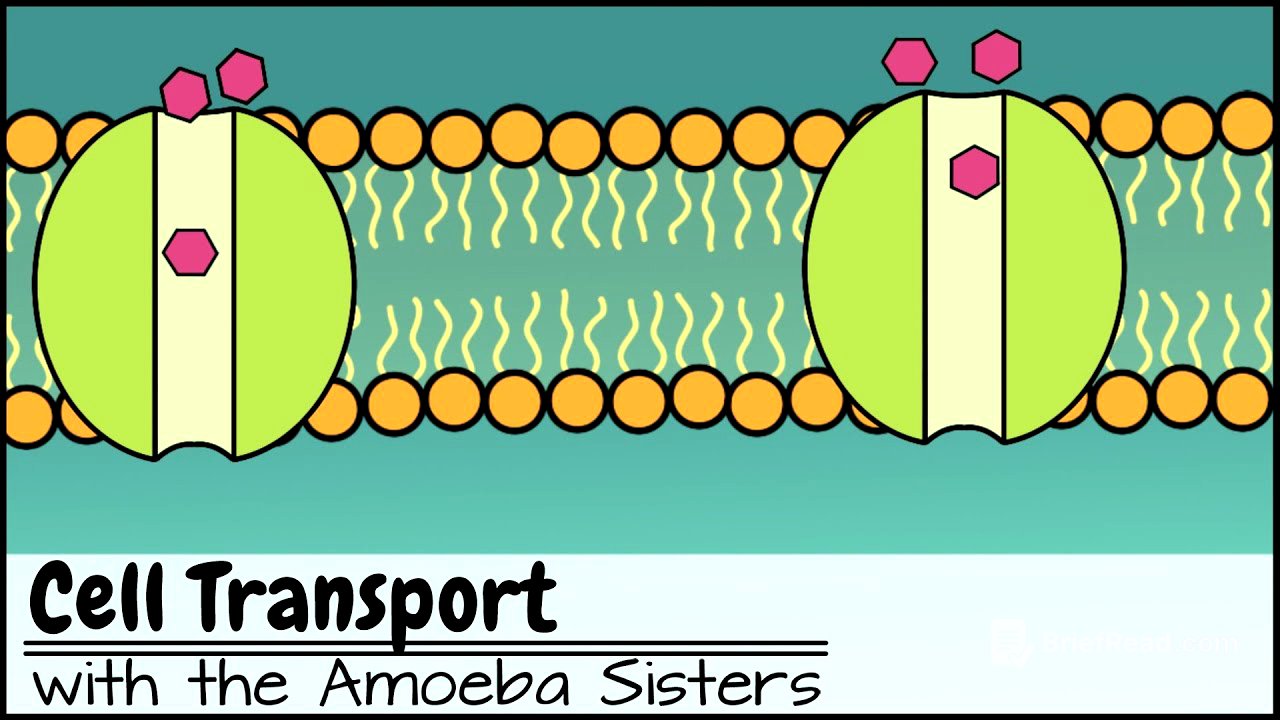
Molecules can move across the cell membrane through simple diffusion, which does not require energy and occurs from high to low concentration. Small non-polar molecules like oxygen and carbon dioxide can diffuse directly. Larger or polar molecules use transport proteins in the membrane through facilitated diffusion, which also does not require energy but aids in moving substances across the membrane.
Active Transport Mechanisms [3:57]
Active transport requires energy to move molecules against their concentration gradient. ATP (adenosine triphosphate) provides the necessary energy, exemplified by the sodium-potassium pump. This process is vital for transporting glucose and other essential nutrients into cells, particularly when concentrations inside are higher.
Endocytosis: Bringing Materials In [5:01]
Endocytosis occurs when a cell engulfs large molecules or substances. This process can form vesicles that transport materials into the cell. Various types of endocytosis exist, such as receptor-mediated and pinocytosis, further specifying how substances are brought into the cell.
Exocytosis: Releasing Materials [6:07]
Exocytosis is the process of expelling materials from the cell, important for removing waste and exporting substances such as polysaccharides necessary for plant cell walls. This mechanism ensures cells can manage their internal environment and facilitate interactions with their surroundings.






![Dan Guido - 200 Bugs/Week/Engineer: How We Rebuilt Trail of Bits Around AI | [un]prompted 2026](https://wm-img.halpindev.com/p-briefread_c-10_b-10/urlb/aHR0cDovL2ltZy55b3V0dWJlLmNvbS92aS9rZ3d2QXlGN3FzQS9ocWRlZmF1bHQuanBn.jpg)