TLDR;
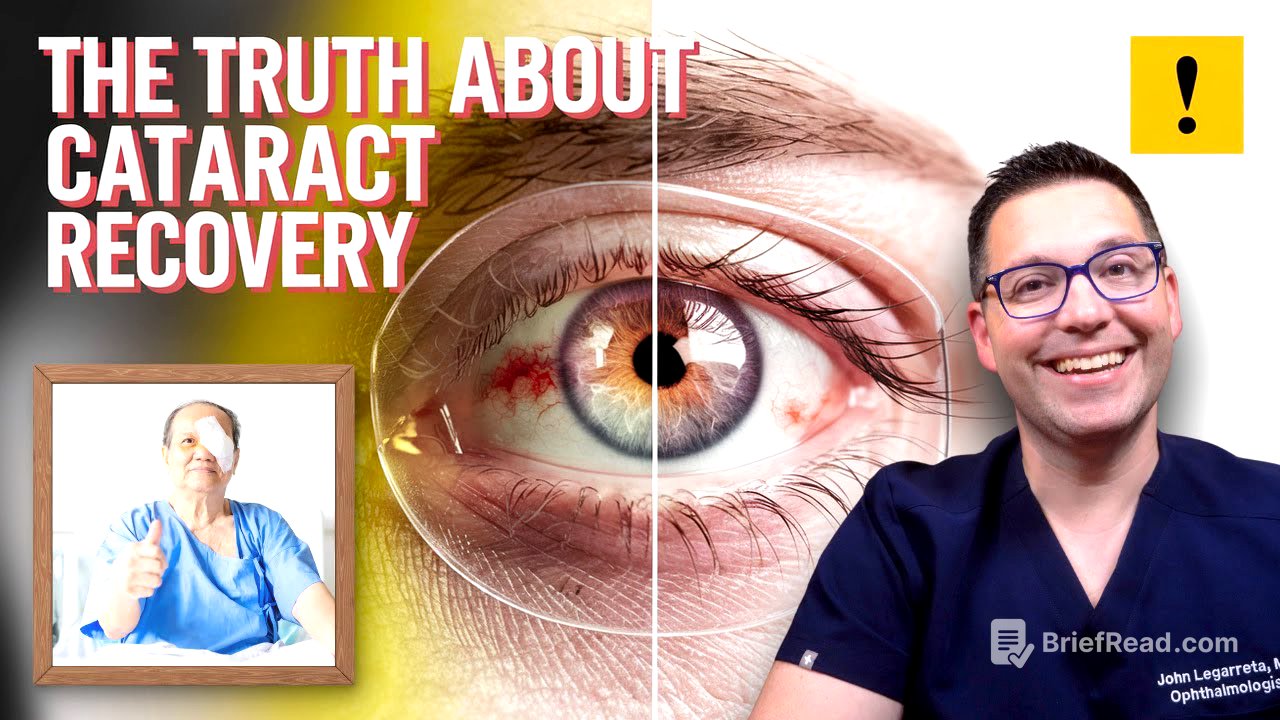
This video provides a comprehensive guide on what to expect during cataract surgery recovery. It covers common post-operative experiences such as blurry vision, light sensitivity, and depth perception issues, as well as less common but important complications. The guide emphasizes the importance of following prescribed eye drop routines, protecting the eye, and recognizing warning signs that require immediate medical attention.
- Blurry vision and light sensitivity are normal initially.
- Eye drop compliance is crucial for healing.
- Depth perception can be temporarily affected.
- Glasses may still be needed, especially for reading.
- Know the warning signs that are not normal and require immediate attention.
Initial Post-Surgery Vision [0:42]
Immediately after cataract surgery, it's common to experience blurry or hazy vision for days or weeks due to normal swelling and inflammation as the eye adjusts to the new artificial lens. Colors may appear brighter because the cloudy cataract that caused dullness is now gone. While most people can resume normal visual activities within a day or two, fine details may take longer to sharpen. It's important to avoid driving until cleared by a doctor and to remember that the eyes are healing and adjusting.
First Day After Surgery [1:41]
Following cataract surgery, patients typically wear a protective eye shield or patch to prevent accidental rubbing or bumping of the eye. Upon removing the patch or shield, foggy vision is common and generally clears up. The pupil may still be dilated from surgery drops, causing additional blurriness and light sensitivity, particularly affecting close-up vision. Mild pain or discomfort is normal, but severe pain or dramatically worsening vision is not and requires immediate contact with the eye surgeon. The first day should be spent resting to allow the eye to heal.
Common Discomforts and Irritations [2:51]
After cataract surgery, it's normal for the eye to feel scratchy, red, and sensitive. Many patients report a gritty sensation, as if there's sand or an eyelash stuck in the eye, due to the procedure disrupting the eye's surface and tear film. Dryness is extremely common, affecting a majority of patients. To alleviate these symptoms, use prescribed eye drops to keep the eye moist and avoid rubbing the eye, which can disrupt healing and increase infection risk. Redness and swelling, including bloodshot eyes or red spots, are also common due to broken or swollen blood vessels, typically fading within a few days to weeks.
Eye Drop Regimen [5:12]
Following cataract surgery, a strict eye drop routine is essential for healing and preventing infection. This typically includes antibiotic drops to prevent infection, anti-inflammatory drops (often steroids) to reduce swelling, and possibly drops for pain or eye pressure. Adhering to the prescribed schedule is crucial, as missing doses can slow healing or increase complication risks. Side effects like eye irritation, temporary blurry vision, or a bitter taste in the mouth are common but manageable. Steroid drops can sometimes raise eye pressure, necessitating regular monitoring by the eye doctor.
Light Sensitivity and Night Glare [7:38]
Increased light sensitivity is a common issue after cataract surgery, where bright sunlight or even indoor lighting can feel harsh. Wearing quality sunglasses when stepping outside is essential, and dimming indoor lights can also help. Many patients also experience halos or starbursts around lights at night, known as positive dysphotopsia, which can make night driving challenging. These effects usually improve over time as the brain adapts to the new lens. Limiting night driving and using anti-glare glasses can help manage these symptoms.
Depth Perception Issues [10:44]
After cataract surgery, especially if only one eye has been operated on, depth perception can be affected. The difference in vision between the corrected eye and the uncorrected eye can cause difficulty judging distances, making tasks like climbing stairs or pouring coffee challenging. To manage this, it's important to be extra cautious with steps and uneven ground. An eye doctor might provide a temporary plane lens for the surgical eye in glasses to avoid distortion. This imbalance typically resolves once the second eye is corrected or as the brain adapts over time.
Need for Glasses After Surgery [13:40]
Many patients still need glasses after cataract surgery, especially for reading. While cataract surgery replaces the cloudy lens, the new lens is often set for distance vision, requiring reading glasses for close-up work. Multifocal lens implants can reduce dependence on glasses but may still be needed in certain conditions. Difficulty reading without glasses after surgery is expected and not a complication. Good lighting can help compensate for near focus issues, and an eye doctor can suggest appropriate reading glass strength.
Posterior Capsular Opacification (Secondary Cataract) [16:24]
Months or years after cataract surgery, some patients experience cloudy or blurry vision again, known as posterior capsular opacification (PCO) or secondary cataract. This is a haze that develops on the lens capsule behind the eye implant and is a common long-term complication. Fortunately, it's easily fixed with a quick, painless laser procedure called a YAG laser capsulotomy, which creates an opening in the hazy capsule to restore clear vision.
Warning Signs and Complications [18:18]
While cataract surgery is generally low risk, it's important to be aware of warning signs that require immediate medical attention. These include worsening vision instead of improvement, increasing pain, marked redness, or discharge from the eye. Severe pain could indicate high eye pressure or an infection. Sudden vision loss, new floaters, or flashes of light may signal a retinal detachment. It's crucial to contact the surgeon immediately if any of these symptoms occur. Normal recovery involves steady improvement, while abnormal symptoms include sudden or worsening pain or vision.