TLDR;
This video addresses the confusion surrounding blue light glasses, clarifying their effectiveness and dispelling common myths. It explains the different types of blue light and the new ANSI standard (HEV lenses) for classifying blue light glasses. The video also discusses the scientific evidence regarding their impact on eye strain and sleep cycles, and offers advice on optimizing sleep hygiene.
- Blue light is a shortwavelength high energy type of light that comes from the sun, digital screens and indoor LED lighting.
- There is a new ANSI standard for blue light glasses called HEV lenses.
- Blue light glasses have no significant benefit of helping eye strain versus just placebo.
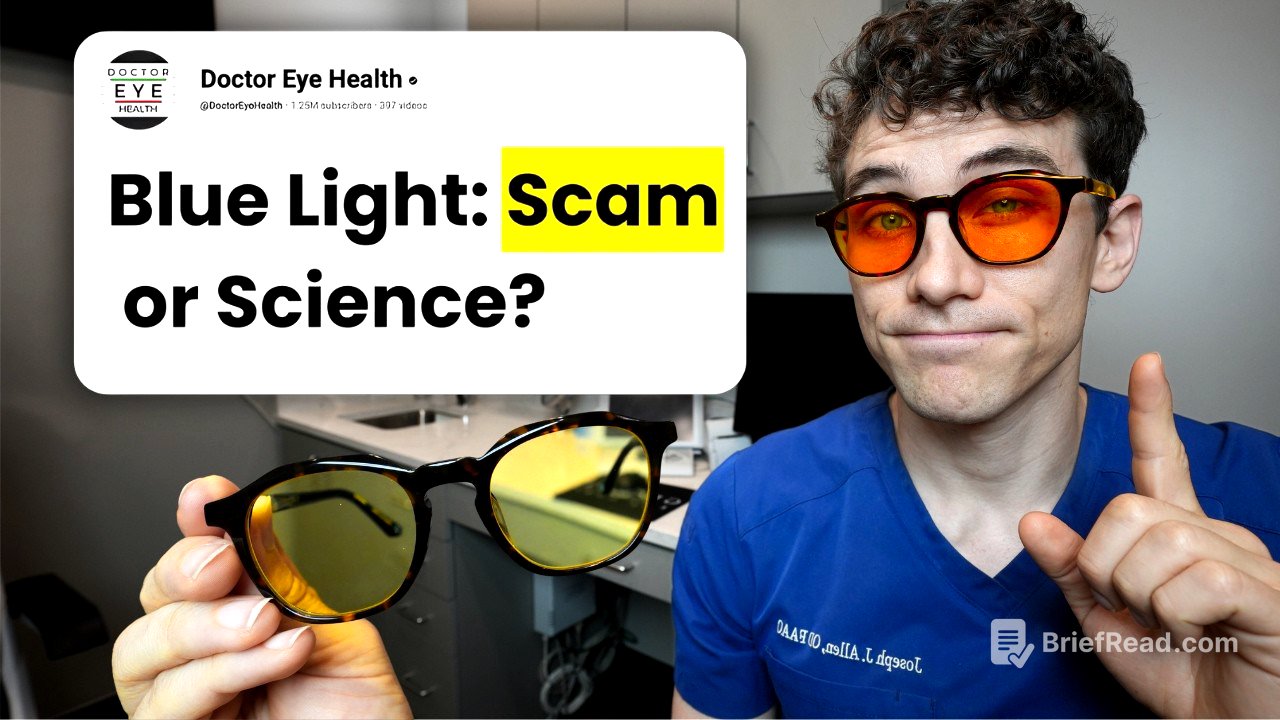
Blue Light Glasses: Scam or Science? [0:00]
The video aims to clarify the effectiveness of blue light glasses, addressing whether they are a marketing scam or a scientifically-backed solution. It will break down the different types of blue light glasses, explain the new classification system for them, and share situations where they might be effective. The video also intends to dispel common myths about blue light.
What is blue light? [0:40]
Blue light is part of the visible light spectrum, characterized by its short wavelength and high energy. It is emitted from various sources, including the sun, digital screens (computers, smartphones, laptops), and indoor LED lighting. These devices emit a higher intensity of blue light compared to other visible wavelengths, raising concerns about potential issues such as eye strain, sleep disturbances, and long-term eye damage. Companies have responded by developing blue light blocking glasses as a potential solution.
Are blue light glasses regulated? [1:31]
Until recently, there was no standardized way to classify blue light glasses, leading to inconsistent product quality. Now, an ANSI standard classifies them as HEV (high energy visible light) lenses, which block blue, violet, and blue-turquoise light. HEV1 lenses block 455-500 nm, affecting sleep cycles and melatonin, and are typically darker yellow or orange. HEV2 lenses block 400-455 nm, potentially reducing oxidative stress to retinal tissues, and are often clear with a subtle yellow tint and anti-reflective coating. HEV3 lenses block 380-400 nm, bordering the UV light zone.
What does the science say? [3:55]
Blue light glasses became popular due to increased digital eye strain during 2020. However, research indicates that blue light glasses do not provide a significant benefit for eye strain compared to a placebo effect. Despite this, many companies still market their products as a solution for digital eye strain, possibly based on their own research. Anecdotally, some patients and colleagues have reported that blue light glasses help with their eye strain, which could be due to the placebo effect, the calming effect of the yellow tint, or the anti-glare coating. Eye strain is often related to dry eye issues caused by reduced blinking in front of screens.
Having a good sleep cycle [7:16]
Darker orange or amber-colored blue light glasses may help optimize sleep cycles. Intrinsically photosensitive retinal ganglion cells (IP RGCs) in the eye, which regulate sleep cycles and alertness, are most sensitive to light around 470-480 nm (HEV1 zone). When evaluating blue blockers, it's important to check the amount of wavelength they suppress, particularly at the 455 nm zone (HEV1 cutoff). Wearing blue light blockers all day is not recommended, as blue light is stimulating and helps with alertness, especially in the mornings. Digital devices have blue light filter modes, and increasing the distance from devices reduces blue light exposure. Indoor lights also emit blue light, so dimming lights and avoiding stimulating activities in the evenings is beneficial.
Final thoughts [11:36]
Blue light glasses may not be a complete scam, but many marketing claims are not supported by clinical science. If struggling with sleep, blue light glasses labeled for sleep cycles might help. For eye strain, there is less clinical evidence to support their effectiveness. The intensity of blue light from computer screens is much lower than from the sun; 24 hours of computer screen exposure equals one minute of sunlight exposure. It's not standard for eye doctors to recommend these glasses unless patients are at high risk of developing aging eye diseases.