TLDR;
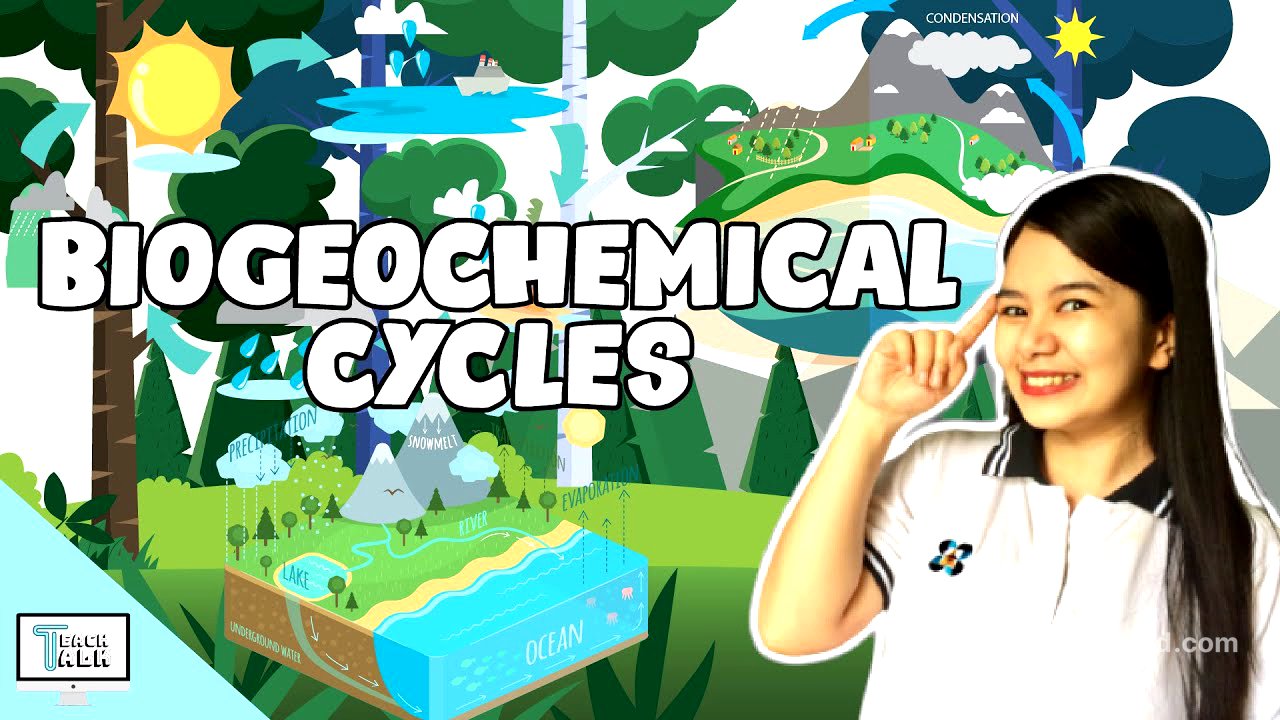
This video by TeachTalk explains the four major biogeochemical cycles: water (hydrologic), oxygen-carbon dioxide, nitrogen, and phosphorus. It details how these cycles ensure the continuous supply of essential materials to sustain life in ecosystems. The video also includes a short quiz to test viewers' understanding of the concepts discussed.
- Water cycle involves evaporation, condensation, precipitation, infiltration, and transpiration.
- Oxygen-carbon dioxide cycle details how plants and animals exchange these gases through respiration and photosynthesis.
- Nitrogen cycle explains nitrogen fixation, nitrification, and denitrification with the help of bacteria.
- Phosphorus cycle describes how phosphorus moves from rocks to soil, plants, animals, and back to rocks.
Introduction to Biogeochemical Cycles [0:50]
The video introduces biogeochemical cycles as processes where materials from living organisms return to the physical environment and are reused. These cycles ensure a continuous supply of essential materials needed to sustain life in ecosystems. The video focuses on four major cycles: water (hydrologic), oxygen-carbon dioxide, nitrogen, and phosphorus.
Water (Hydrologic) Cycle [1:44]
The water cycle begins with evaporation, where water from bodies of water turns into water vapor and enters the atmosphere. Condensation then turns this water vapor back into liquid, forming clouds. Precipitation occurs when water returns to Earth as rain or snow. Infiltration is the process where water on the ground seeps into the soil. Surface runoff happens when excess rainwater flows over the land. Transpiration, the evaporation of water from plant leaves, also contributes to atmospheric water vapor.
Oxygen-Carbon Dioxide Cycle [3:24]
Humans and other living organisms, including plants, use oxygen for bodily processes. Plants take in carbon dioxide from the air and produce oxygen through photosynthesis, which occurs in the chloroplasts. Plants also need oxygen for metabolism, which fuels bodily activities through cellular respiration in the mitochondria. Gases like oxygen and carbon dioxide enter and exit plants through tiny holes called stomata, mostly found on the underside of leaves. Animals exhale carbon dioxide, which plants use for photosynthesis to create sugars and release oxygen. This oxygen then returns to the atmosphere for animals to inhale, continuing the cycle.
Nitrogen Cycle [6:21]
The air consists of about 78% nitrogen gas, which is essential for living things to make proteins. Nitrogen-fixing bacteria and algae convert nitrogen into nitrates through nitrogen fixation. Plants absorb these nitrates through their roots, and animals obtain nitrogen by eating plants. When plants and animals die, they release nitrogen compounds. Nitrifying bacteria convert these compounds into nitrites (NO2) and then into nitrates, which plants and animals can use again. Denitrification bacteria release nitrogen from nitrates back into the atmosphere, completing the cycle.
Phosphorus Cycle [8:26]
Rocks contain phosphorus, and their weathering leads to the formation of underground phosphate reserves. Plants absorb this phosphate, and animals incorporate it when they eat plants. When plants and animals decompose, the phosphate is released back into the environment, adding to the phosphate reserve on land. Phosphate can leach into bodies of water, and phosphate-containing fertilizers can run off from farmlands. Weathered rocks can also carry phosphate through water, contributing to phosphate sediments underwater. These processes contribute to the formation of new rocks, which then undergo weathering, releasing phosphate back into the environment.
Importance of Biogeochemical Cycles [10:04]
Biogeochemical cycles are pathways of matter, circulating essential elements for living organisms. These cycles recycle matter, ensuring that essential elements are brought back and reused by living organisms.
Quiz [11:07]
The video concludes with a short quiz to test viewers' understanding of the material. The quiz covers key concepts such as evaporation, surface runoff, nitrogen fixation, stomata, and photosynthesis.