TLDR;
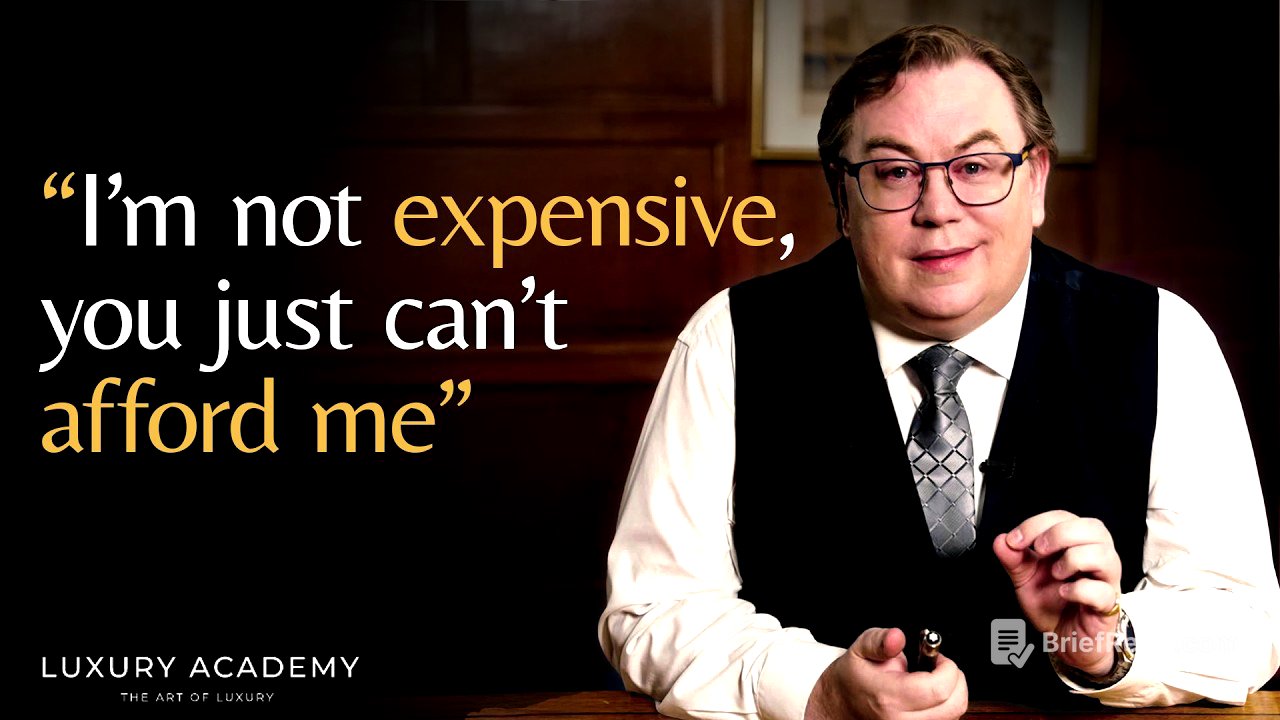
This video explains how price influences perceived value in the luxury market. It argues that customers often justify a price after seeing it, rather than judging value first. The video advises luxury professionals to use price strategically to create belief in their value, rather than over-explaining or defending it. By understanding price quality bias, businesses can establish authority and attract the right clientele.
- People construct value to justify price, not the other way around.
- Over-explaining price undermines authority.
- Higher prices can enhance perceived credibility and attract desired clients.
Introduction: The £14 Sandwich [0:00]
The author shares an anecdote about paying £14 for an average sandwich in a fashionable cafe. Despite the sandwich's mediocrity, the high price led the author to rationalize its value, illustrating that people often build value to justify a price. This highlights a key principle in luxury: customers decide if something is supposedly expensive, and the price influences their perception of its worth.
The Mistake Luxury Professionals Make [0:56]
Many luxury professionals try to justify their prices by listing features, benefits, or heritage, such as materials, craftsmanship, or historical anecdotes. However, this over-explanation is counterproductive because it implies the price needs defending. Clients are not convinced by these justifications; instead, they assess whether the price aligns with their perception of the brand or product's inherent value.
Price Quality Bias Explained [1:52]
Behavioral psychology introduces the concept of price quality bias, where the brain assumes higher prices indicate better quality. A Stanford study demonstrated that people perceived the same wine as better when told it was more expensive, with brain activity in pleasure centers increasing. This shows that value is constructed to avoid buyer's regret, and the brain enhances the experience to match the price.
Strategic Use of Pricing [2:42]
The author advises luxury professionals to never defend their prices but rather state them confidently, allowing customers to determine the perceived value. An example is given of a therapist who, despite having a large following and authority, was undercharging. By raising her rates from £60 to £300 per hour, she attracted higher-paying clients who valued her services more. The price communicates how clients should perceive the service provider.
Conclusion: Stating Your Price [3:39]
The video concludes that the key is to state the price without justification and let the customer decide what it signifies. The difference between questioning "Why is this so expensive?" and believing "This must be excellent" often lies solely in the price itself.