TLDR;
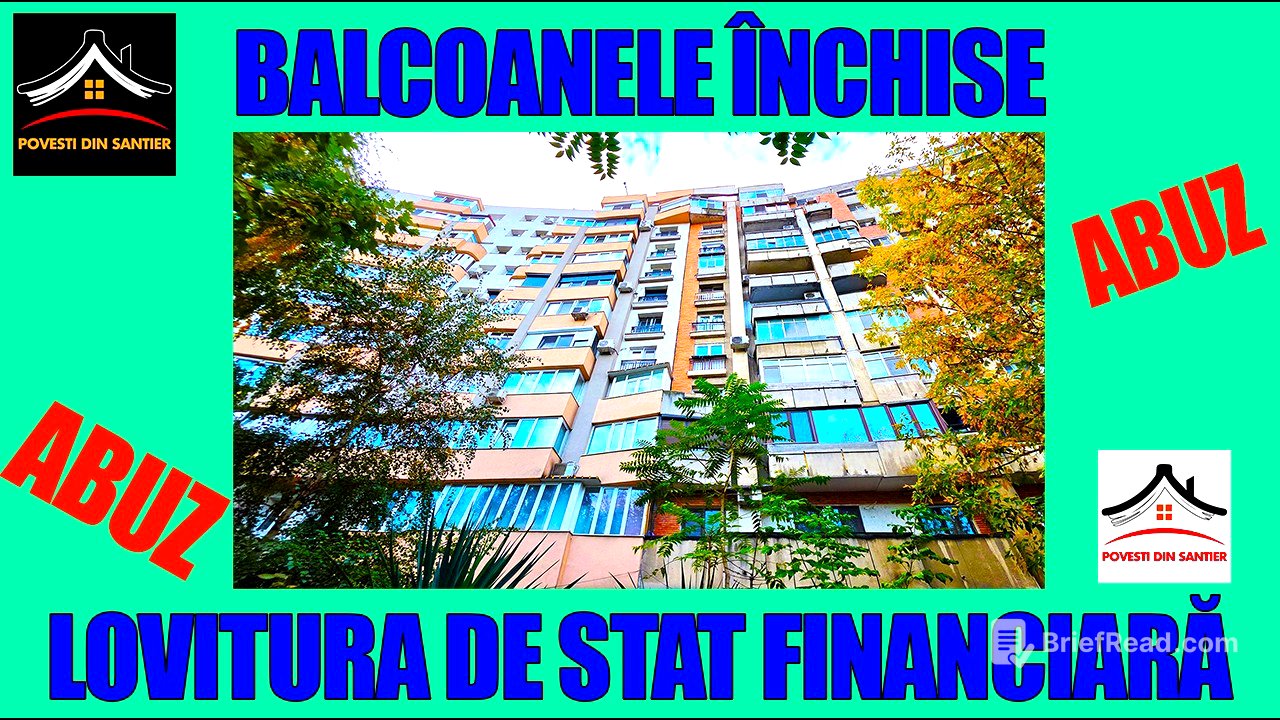
The video discusses the implications of the enclosure of balconies in Romania, focusing on the newly enacted Law 169/2026 and the associated tax increases. It highlights the historical context of balcony enclosures, presents the financial burden they now face under this law, and critiques the bureaucratic processes involved in legalizing such modifications.
- The enclosure of balconies has become a significant issue due to new regulations and increased taxes.
- Many owners face heavy fines and legal challenges regarding unauthorized constructions.
Intro: Balconul Închis de la istorie la nota de plată de la FISC [0:00]
The video introduces the history of balcony enclosures in Romania, explaining how these spaces evolved from mere extensions of homes to functional areas for storage and leisure. The speaker reflects on how these enclosures represented a fight for privacy and personal space against the backdrop of communist-era constraints. However, in 2026, state authorities began to scrutinize these enclosures, not for their architectural integrity or urban planning values, but rather as opportunities for financial gain through penalties and taxes.
Ce prevede Legea 169/2026 & Noul Cod al Urbanismului (CATUC) [1:30]
The chapter outlines Law 169/2026, which introduces significant ramifications for owners of enclosed balconies. The law stipulates a 100% increase in property taxes for those who have enclosed their balconies without necessary permits. Furthermore, it imposes fines and mandates that unauthorized constructions be dismantled unless they are regularized through proper channels. This process complicates the sale and legal status of properties with unpermitted modifications and affects almost a million apartments in Romania.
Marele Zid al Termopanului: 15.000 km de balcoane închise în România [3:15]
The speaker presents a staggering statistic regarding the number of enclosed balconies in Romania, estimating around 2.5 million such structures. This has led to the metaphorical creation of a "Great Wall of double-glazing," measuring approximately 15,000 km - enough to encircle Romania multiple times. The government sees these structures as a new source of revenue, which has stirred public outrage and debate.
Scenariul Orwellian: Procedura F_AR_01, MLPAT și hârțogăria de 1.400 € [5:45]
In this section, the speaker details the bureaucratic procedure (F_AR_01) introduced by the law for legitimizing enclosed balconies. This process requires several expert assessments, architectural plans, and approvals from both homeowners' associations and local authorities. The financial burden for this compliance can total around 1,400 euros per apartment, which is criticized for being a tactic to generate revenue rather than promote safety or legality.
Impozitul Dublat pe TOȚI metrii pătrați ai apartamentului [8:30]
This chapter addresses the doubled tax implications that owners face due to enclosed balconies. Rather than just increasing the tax on the area of the enclosure, the law stipulates that all apartment square meters are subject to this tax increase. The repercussions for many apartments could mean significant financial strain, as local administrations could generate millions through this tax without enhancing local services or infrastructure.
Paradoxul Primăriilor: Cine a pus termopanele la anvelopare? [11:10]
The speaker discusses the role of local governments that previously authorized many of these balcony enclosures during thermal rehabilitation projects. It highlights the contradiction where the same authorities that once endorsed the enclosures now impose penalties, leaving homeowners caught in a bureaucratic limbo, further exacerbated by missing documentation from municipal archives.
Concluzia de pe Șantier: Pericol seismic real vs. Vânătoare de bani [13:40]
In concluding remarks, the speaker emphasizes the urgency of addressing real seismic risks posed by unauthorized modifications to buildings. However, the new urban legislation is critiqued as being more focused on financial penalties rather than safety improvements. The chapter calls into question the true motives behind the law, framing it as a financial exploitative measure rather than a genuine public safety initiative. It concludes with a call for action among homeowners regarding their rights and the implications of the new regulations.