TLDR;
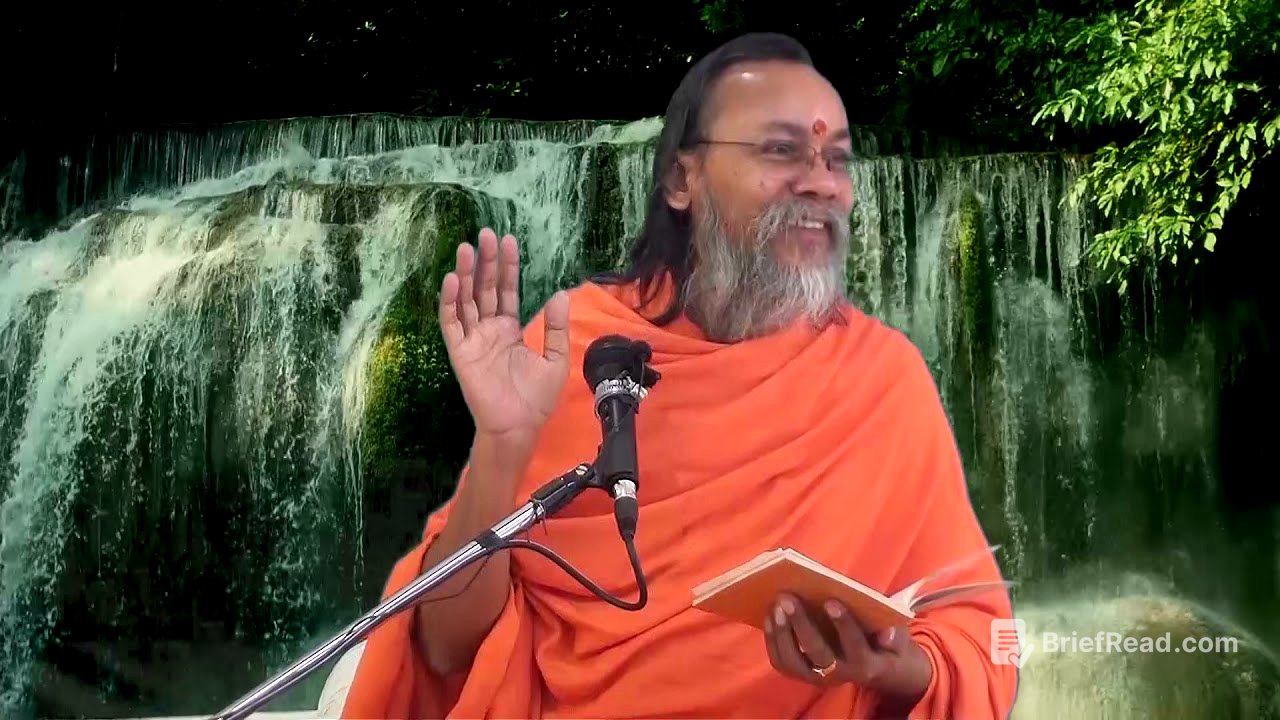
This video features a discourse by Mahamandleshwar Swami Abhayanand Saraswati, focusing on spiritual teachings derived from the Ashtavakra Gita. Key points covered include understanding the nature of the self, the practice of spiritual discipline, and the importance of renunciation to attain liberation (moksha). Swami Saraswati emphasizes the need for inner transformation, shedding attachments to worldly desires, and cultivating virtues essential for spiritual growth.
- The importance of seeking guidance from enlightened beings to resolve life's challenges.
- Three types of spiritual practices: traditional, external, and internal, leading to self-realization.
Introductory Remarks [0:00]
Swami Saraswati begins with devotional chants and praises that set a contemplative tone for the discourse. The introduction emphasizes the significance of spiritual teachings and the path towards self-awareness.
Querying Realization [2:47]
The narrative transitions to a dialogue where Janak Maharaj questions Ashtavakra on achieving knowledge and liberation. He expresses a desire to understand how to cultivate detachment (vairagya) and attain deep wisdom. This chapter highlights the challenges faced by seekers in their spiritual journeys.
Three Essential Teachings [5:24]
Ashtavakra responds to Janak's questions by discussing the three forms of spiritual practice. He explains that true renunciation involves leaving behind attachments and focusing on the eternal self. The importance of temporary and eternal values is underscored in the context of spiritual fulfillment.
Different Forms of Renunciation [7:47]
Swami Saraswati elaborates on the three kinds of renunciation: traditional (through family and heritage), external (through disciplined practices), and internal (through meditation and self-inquiry). Each practice leads to deeper spiritual understanding and the ultimate goal of moksha.
Seeking Inner Peace [8:07]
In this segment, the narrator discusses the pursuit of inner peace and the significance of overcoming distractions caused by sensory experiences. Swami Saraswati encourages attention to the inner world of thoughts and emotions to attain a deeper understanding of self.
The Nature of Reality [14:43]
Key teachings underline the non-dual nature of reality, prompting the seeker to understand that the self remains unstained by worldly interactions. Swami Saraswati discusses the concept of witnessing versus attachment, stating that true liberation comes from recognizing one’s identity with the eternal self, free from physical or sensory identification.
Practical Application of Teachings [21:03]
This part includes practical advice on integrating spiritual concepts into daily life. The speaker advises that renunciation includes cultivating qualities like compassion, humility, and truthfulness while equipping oneself to handle life's adversities without attachment to outcomes.
Conclusion: Embracing Liberation [1:00:46]
The discourse concludes with a reiteration of the essential teachings, encouraging practitioners to remain steadfast on the path of self-realization. The teachings stress that enlightenment is an intrinsic realization, emphasizing the power of inner stillness and the importance of living life with awareness and detachment. Swami Saraswati ends with blessings for the audience, invoking peace and understanding.