TLDR;
This video explores art making as a therapeutic practice, highlighting its use in counseling to help individuals express emotions, cope with problems, and understand themselves better. It covers techniques like drawing, photography, writing, and singing, and discusses how these methods can externalize problems, facilitate emotional release, and promote self-reflection. The video also touches on the benefits of engaging with art as an audience through movie therapy and emphasizes the integration of expressive arts into counseling.
- Art as a form of expression and communication in therapy.
- Techniques include drawing, photography, writing, and singing.
- Benefits: emotional release, organized thoughts, and self-reflection.
Introduction to Art Therapy [0:00]
Art making serves as a therapeutic practice, offering a means of expression and communication for individuals navigating life's challenges. Instead of relying solely on verbal communication, clients can use art forms like drawing, painting, or sculpting to convey emotions that are difficult to articulate. Integrating art into counseling makes the process more accessible, employing simple techniques that don't require specialized training. Counselors can introduce activities such as drawing or doodling during sessions, fostering a more interactive and comfortable environment for clients to express themselves and open up more easily.
Drawing, Painting, and Sculpting [2:33]
Common forms of art therapy include drawing, painting, and sculpting, which use images to express and convey meaning. Creating diagrams, drawings, doodles, patterns, or maps is a cultural universal and developmentally significant, as children often use these media before they can write. Counselors often provide art-making materials to encourage clients to express themselves through drawing or doodling, offering an alternative to traditional verbal communication. This approach allows clients to communicate thoughts and feelings that may be difficult to put into words, providing a different way to communicate.
Photography as Therapy [4:44]
Selecting and taking photographs is a therapeutic technique, sometimes called phototherapy, used in counseling to explore emotions, memories, and relationships. Photos can express things that are hard to say in words, triggering memories, emotions, or stories that are easier to discuss. For example, a counselor might ask a client to bring in family photos to start conversations about relationships, life events, and memories. The presence of the image reduces pressure on the client to express their feelings, making it a safe starting point for discussion.
Photovoice Project [6:14]
A study by Smith and colleagues in 2012 examined a project called Photovoice, where young people in disadvantaged communities used disposable cameras to capture images representing their definition of success. Participants then discussed their photos in group counseling sessions, which led to two key benefits: participants felt more empowered as active agents in their own lives and were able to reflect on and better understand the challenges they faced. This highlights photography as a meaningful therapeutic tool that encourages reflection, self-expression, and personal understanding.
Writing as Therapy [7:44]
Writing is a therapeutic technique that involves expressing thoughts and feelings through words, allowing individuals to discuss stressful, confusing, or emotional experiences in a safe and private way. Many find it easier to write their feelings than to say them aloud, making writing a powerful tool in counseling. This helps individuals become more aware of their thoughts and feelings, which is an important step toward healing and self-understanding. Writing in therapy can be structured, like thought diaries in cognitive behavioral therapy, or open-ended, like journaling or freewriting, allowing for creativity and deeper emotional expression.
Benefits of Writing [9:24]
Writing helps in three important ways: it releases emotions, organizes thoughts, and facilitates reflection on relationships. Keeping feelings inside can create stress, but writing allows for a healthy emotional release. Writing makes it easier to understand experiences by putting them into words, leading to clearer thinking and better decision-making. By writing about interactions and experiences, individuals can see situations from different perspectives and develop a better understanding of themselves and others.
Research on Therapeutic Writing [10:23]
Research by Kerner and Fitzpat Patrick in 2007 indicates that therapeutic writing can be understood along cognitive and emotional dimensions. Cognitive writing helps individuals think, analyze, and make sense of their experiences, while emotional writing allows for the free expression of feelings. Writing therapy involves physiological, cognitive, and social aspects. Releasing suppressed thoughts and emotions reduces stress, writing about stressful experiences helps process difficult events, and reflecting on relationships provides new perspectives.
Singing as Therapy [12:43]
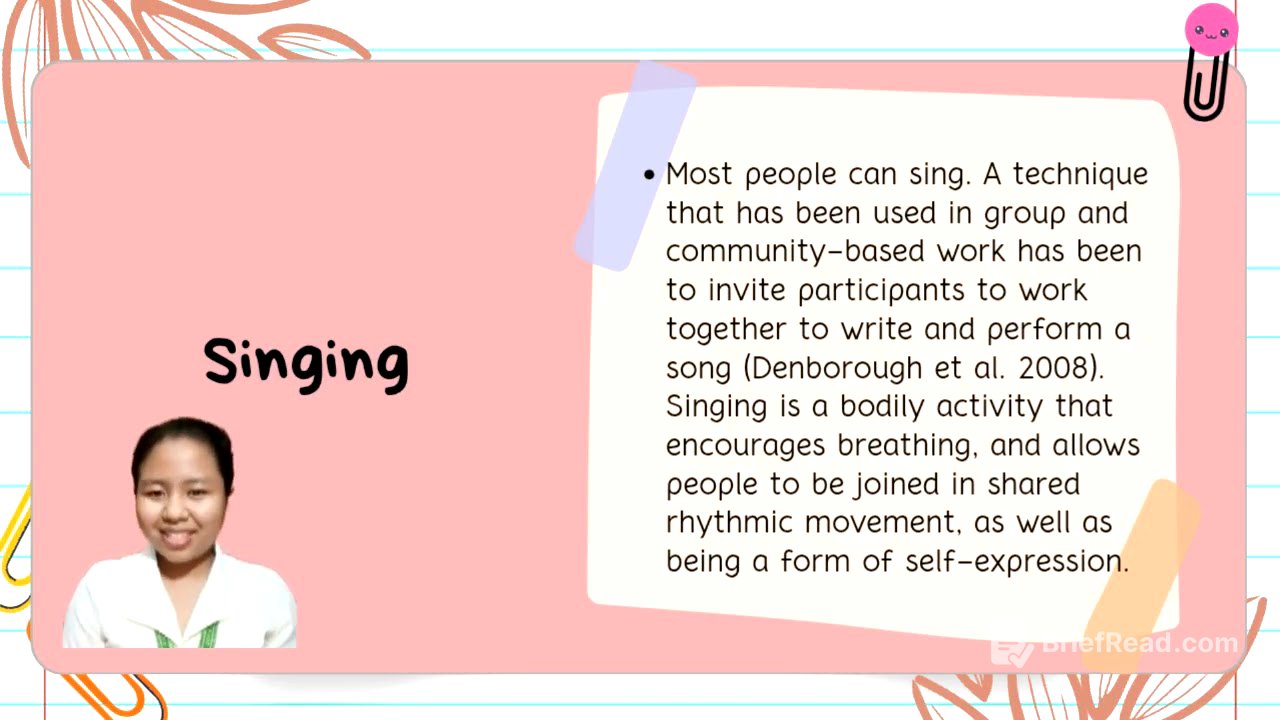
Singing is a physical activity that encourages rhythmic movement and shared expression, often used in group therapy settings. Writing and performing songs together helps participants connect with each other and express their emotions in ways that regular conversation cannot. By singing together, group members realize they are not alone in their experiences, fostering a sense of community and support.
Responding to Art [13:46]
Healing doesn't always require creating art; being an audience can also be beneficial. Movie therapy involves identifying with a character facing similar struggles, leading to emotional release and providing a shared metaphor for discussion. This approach allows therapists and clients to discuss the client's life safely through the lens of the movie's narrative.
Therapeutic Processes Behind Art Activities [14:58]
Art techniques like painting or sculpting often happen without talking, allowing preverbal or hidden thoughts and feelings to emerge. Creating an object helps in externalizing the problem, separating it from the client so it can be examined together. Art making helps clients break out of passive or stuck states of mind, promoting active engagement and expression.
Conclusion on Expressive Arts Methods [16:56]
Expressive arts methods represent the assimilation of cultural traditions and practices into counseling, emphasizing the capacity to symbolize experience in artworks and the motivation to create special objects and moments. This approach brings back an aspect of what it means to be human, often excluded by purely psychological perspectives. Integrating expressive art methods into counseling is relatively straightforward.
Session Example [17:40]
In a counseling session, when a client struggles to articulate their feelings, the therapist suggests using art materials to express themselves. The client, initially hesitant, is encouraged to pick a color representing their current feelings and create something without focusing on artistic skill. By putting their feelings on paper, the client externalizes the problem, making it easier to examine. Using symbols helps explore the relationship between feelings and daily life, uncovering hidden thoughts. The client finds it easier to look at and process their emotions through the artwork. The therapist suggests bringing in a photograph representing a time the client felt light for the next session to explore the contrast. Even a small shift in feeling is significant, and the client is encouraged to sit with and notice what they created.