
TLDR;
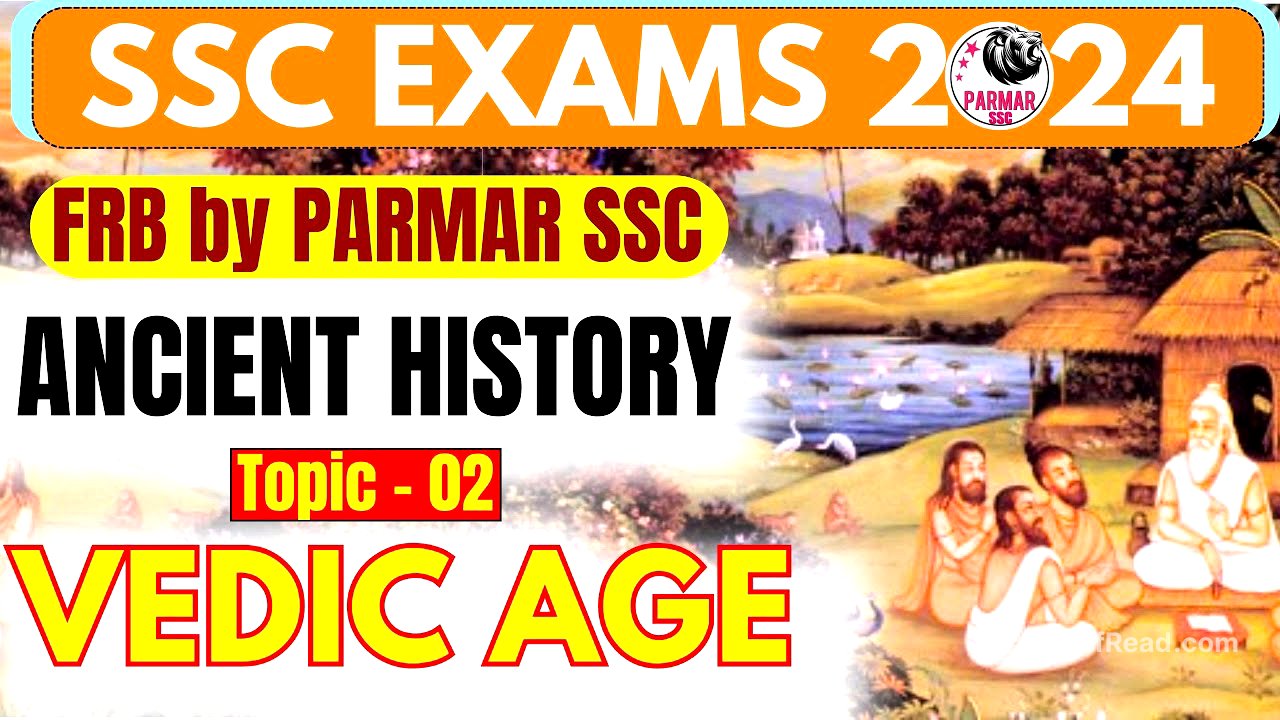
This video provides a detailed overview of the Vedic Age in Indian history, covering the Early and Later Vedic periods. It discusses the Indo-Aryan theory, the Vedas and their divisions, society, politics, religion, and economic changes during this era. The lecture also touches upon the schools of philosophy that emerged and key differences between the Early and Later Vedic periods.
- The Vedic Age is divided into Early Vedic (1500-1000 BC) and Later Vedic (1000-600 BC) periods.
- The Vedas are the primary literary sources for understanding this period, comprising Samhitas, Brahmanas, Aranyakas, and Upanishads.
- Society transitioned from a profession-based Varna system to a hereditary one, with significant changes in agriculture, politics, and religion.
Introduction to Vedic Age [0:00]
The video introduces the Vedic Age as the second lecture in a history series, following the Stone Age, Chalcolithic Age, and Indus Valley Civilization. It emphasizes the importance of watching the lectures in order to understand the linked concepts. The Vedic Age, spanning from roughly 1600 to 600 BC, is divided into the Early Vedic period (1500-1000 BC) and the Later Vedic period (1000-600 BC). The lecture will cover the Vedas, society, politics, religion, and pottery of both periods, as well as the Indo-Aryan theory.
Indo-Aryan Theory and Initial Settlements [2:57]
The Indo-Aryan theory suggests that people living in North India are descendants of Aryans who migrated from Central Asia. This theory is supported by texts like the Bogazköy inscription found in Turkey, which mentions Vedic gods such as Indra and Varun. Similarities between European and Indian languages, such as the word "brother," also support this theory. Bal Gangadhar Tilak's book "Arctic Home to Vedas" further supports the idea of Aryan migration. The theory suggests that Aryans compiled the Vedas and initially settled in the Sapt Sindhu region, which includes the Indus River and its tributaries.
Vedas: Literary Evidences and Divisions [7:37]
The Vedas serve as the primary literary evidence for understanding the Vedic Age. Considered "Apauruseya" (gifted by God), they were initially passed down orally through generations as "Shruti" (to be heard) before being written down. "Veda" means "to know" or "knowledge." The Vedas are divided into four parts: Samhita (collection of hymns), Brahmana (explanations of rituals and sacrifices), Aranyaka (rituals for hermits), and Upanishad (philosophical insights). The Upanishads, added last, are also known as Vedanta, emphasizing knowledge gain for salvation. There are 108 Upanishads, with 10 being the main ones.
Vedanga: Tools to Understand Vedas [11:41]
Vedanga are tools to understand the Vedas, consisting of six parts: Shiksha (phonetics), Kalpa (rituals), Grammar, Nirukta (etymology), Jyoti (astrology), and Chhanda (study of poetic meter). Shiksha involves the study of phonetics and sound, while Kalpa focuses on the practice and performance of rituals. Grammar aids in understanding the language, and Nirukta deals with the meaning of words. Jyoti is the study of light or astrology, and Chhanda involves the study of poetic matter.
Rigveda: Oldest Veda and its Structure [13:21]
The Rigveda is the oldest and largest Veda, divided into 10 books called Mandalas. The hymns are recited by priests, with mentions of gods like Indra (God of Rain and Destroyer of Forts), Vishnu, and Varun (God of Sea or Water). The Gayatri Mantra, dedicated to Goddess Savitri, is mentioned in the third Mandala, written by Vishwamitra. Lord Som, the God of Plant, is mentioned in the ninth Mandala. The Purusha Sukta, found in the tenth Mandala, explains the four Varna system: Brahmins (from the mouth), Kshatriyas (from the arms), Vaishyas (from the thighs), and Shudras (from the feet).
Samaveda, Yajurveda and Atharvaveda [16:39]
The Samaveda is the Veda of music, containing chants and melodies and is the oldest text on music. The Upanishads associated with it are Chhandogya and Kena. The Yajurveda is divided into Krishna Yajurveda and Shukla Yajurveda, containing the Shatapatha Brahmana, the largest Brahmana. The Kath Upanishad, part of Yajurveda, narrates the story of Nachiketa and Yama discussing the nature of Atman and Brahmin. The Atharvaveda, the latest Veda, focuses on magical formulas, warding off evil spirits, and curing diseases. It is divided into 20 sections and includes the Mundaka, Mandukya, and Maha Upanishads. The phrase "Vasudhaiva Kutumbakam" (the whole world is a family) is taken from the Maha Upanishad.
Schools of Philosophy [19:27]
Several schools of philosophy believe in the Vedas, including Sankhya (propounded by Kapil), Nyaya (Gautam), Vaisheshika (Kanada), Yoga (Patanjali), Uttara Mimamsa (Badarayana), and Purva Mimamsa (Jaimini). Kanada was the first to discuss the concept of the atom.
Early Vedic Age: Society and Economy [20:49]
In the Early Vedic Age, society was divided into four Varnas based on profession rather than heredity. Child marriage was absent, and widow remarriage (Niyog) was allowed. Women had a relatively good status. The cow was highly valued and referred to as "Aghanya" (not to be killed), serving as a wealth decider. Battles were often fought over cows, known as "Gavishti."
Early Vedic Age: Politics and Religion [23:00]
The political system was an elective monarchy with three types of assemblies: Samiti (community of common people), Sabha (community of privileged people), and Vidath (religious or military assembly). The Battle of Ten Kings (Dasharajna Yudh) was fought on the banks of the Purushni River (Ravi), with Sudas leading the Bharata tribe. People worshipped nature gods such as Indra, Prithvi, Agni, Soma, Vayu, and Rudra. Animal worship was not prevalent, and ochre-colored pottery was common.
Later Vedic Age: Expansion and Agriculture [25:52]
During the Later Vedic Age, the Aryans expanded from Punjab to western UP and Bihar. This expansion was facilitated by the use of iron weapons and horses. Iron was referred to as "Aayas" (black metal). Agriculture became the main means of livelihood, and the concept of "Gotra" (place where cows are reared) emerged, influencing marriage customs.
Later Vedic Age: Politics and Society [28:12]
Politics became more centralized, with increased power in the hands of the king. Women were not allowed in the assembly, and the Vidath assembly disappeared. Bali, a voluntary offering to the king, became more common. The Varna system became hereditary rather than based on profession, leading to a stricter social hierarchy. The concept of Ashram emerged, with four stages of life: Brahmacharya (student life), Grihastha (household life), Vanaprastha (retirement), and Sanyasa (renunciation). Painted greyware pottery was characteristic of this period.
Additional Facts and End of Lecture [30:42]
Indra was referred to as the "Lord of the Plough." Marriages were of different types: Anuloma (boy of higher caste, girl of lower caste), Pratiloma (reverse of Anuloma, not accepted), and Gandharva (love marriage). "Gomat" referred to someone with many cattle. The lecture concludes by summarizing the key aspects of the Vedic Age and announcing the next lecture on Jainism and Buddhism. Mind maps in English and Hindi will be available on the Parmar SSC Telegram channel.





![[Midori] Traveler's Notebook- Camel vs Brown](https://wm-img.halpindev.com/p-briefread_c-10_b-10/urlb/aHR0cDovL2ltZy55b3V0dWJlLmNvbS92aS9uV3NFNVBrMXdUYy9ocWRlZmF1bHQuanBn.jpg)