TLDR;
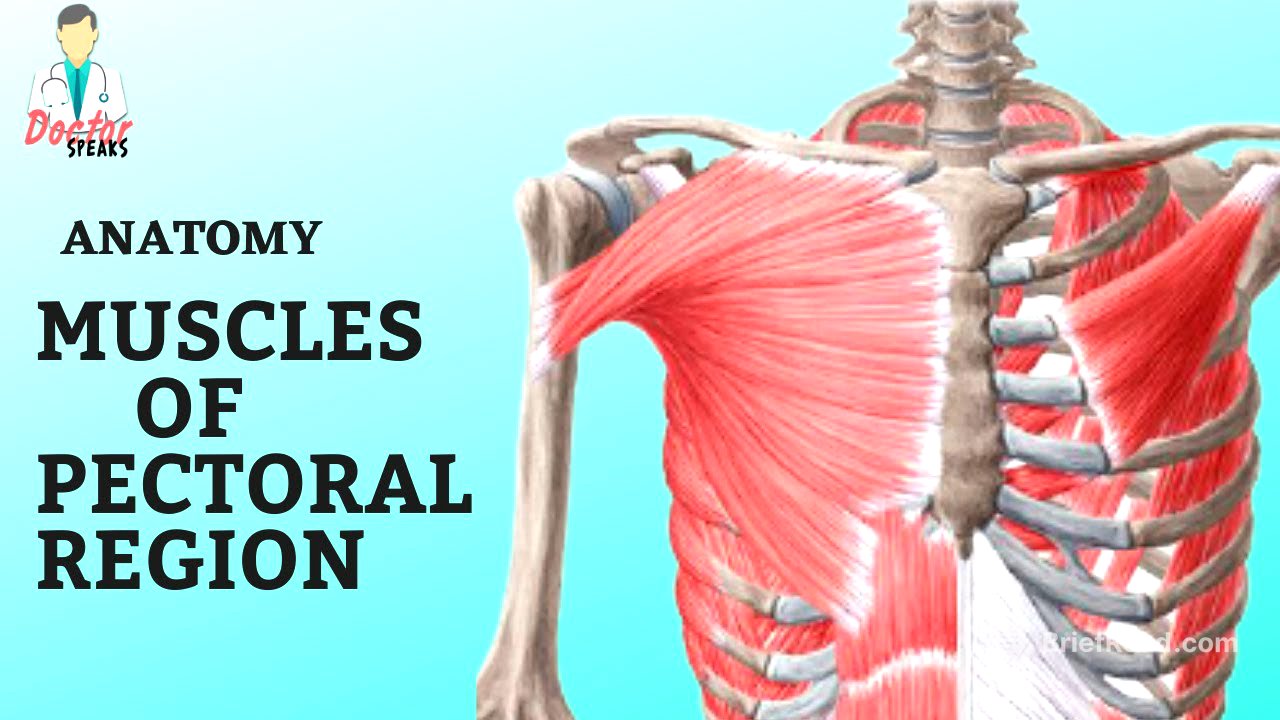
This video provides a comprehensive review of the pectoral region muscles, including the pectoralis major, pectoralis minor, subclavius, and serratus anterior. It details their origins, insertions, nerve supplies, and functions, as well as the blood supply to the pectoral region.
- Pectoralis Major: Clavicular and sternocostal heads, shoulder flexion/depression, adduction, and medial rotation.
- Pectoralis Minor: Shoulder depression and scapular stabilization.
- Subclavius: Clavicle depression, shoulder girdle stabilization, and first rib elevation (inspiration).
- Serratus Anterior: Shoulder protraction, scapular stabilization, and shoulder abduction above 90 degrees.
- Blood Supply: Thoracoacromial, lateral thoracic, and subscapular arteries.
Introduction to Pectoral Region [0:00]
The pectoral region consists of four muscles: pectoralis major, pectoralis minor, subclavius, and serratus anterior. The video aims to provide a quick review of these muscles, building on previous individual studies of each muscle.
Pectoralis Major [0:38]
The pectoralis major is a fan-shaped muscle with two heads of origin: the clavicular head, originating from the anterior surface of the medial two-thirds of the clavicle, and the sternocostal head, originating from the half of the sternum and costal cartilages up to the sixth or seventh rib. The muscle inserts via a single tendon on the lateral lip of the intertubercular groove of the humerus. It is supplied by the medial and lateral pectoral nerves from the medial and lateral cords of the brachial plexus, respectively. The clavicular head produces shoulder flexion, while the sternocostal head produces shoulder depression. Together, they produce shoulder adduction and medial rotation of the arm.
Pectoralis Minor [3:33]
The pectoralis minor muscle, located underneath the pectoralis major, originates from the anterior surfaces of the third, fourth, and fifth ribs near the costochondral junctions. It inserts on the medial side of the coracoid process of the scapula. The muscle is supplied by the medial pectoral nerve, originating from the medial cord of the brachial plexus. The pectoralis minor produces shoulder depression by drawing the scapula downward and stabilizes the shoulder girdle.
Subclavius [5:55]
The subclavius muscle is a small muscle located underneath the pectoralis major. It originates from the first costochondral junction and inserts into the subclavian groove on the inferior surface of the middle third of the clavicle. The subclavian artery, subclavian vein, and brachial plexus pass under this muscle. It is supplied by the subclavian nerve (nerve to the subclavius), originating from the upper trunk of the brachial plexus (C5 and C6 nerve roots). The subclavius depresses the clavicle, stabilizes the shoulder girdle during movements of the sternoclavicular joint, and elevates the first rib, aiding in inspiration.
Serratus Anterior [8:13]
The serratus anterior muscle is a fan-shaped muscle located at the lateral aspect of the thoracic wall, largely under the scapula and pectoral muscles. It originates from the anterior lateral aspect of the first eight or nine ribs and inserts on the interior aspect of the medial border and inferior angle of the scapula. The muscle is supplied by the long thoracic nerve, originating from the C5, C6, and C7 nerve roots of the brachial plexus. The serratus anterior produces shoulder protraction (ventrolateral movement of the scapula around the chest wall) and actively stabilizes the scapula in the shoulder joint. When the scapula is fixed, it lifts the ribs, acting as an accessory inspiratory muscle. It also assists in shoulder abduction above 90 degrees by tilting the scapula and shifting the shoulder joint upward.
Blood Supply of Pectoral Region [11:20]
The pectoral region is supplied by a dense network of arteries. The thoracoacromial artery, arising from the second part of the axillary artery, supplies both the pectoralis minor and major muscles through its pectoral branches. The clavicular branch of the thoracoacromial artery supplies the subclavius muscle. The lateral thoracic artery, also arising from the second part of the axillary artery, supplies the serratus anterior muscle. Additionally, the subscapular artery, arising from the third part of the axillary artery, supplies the serratus anterior muscle through its numerous branches.