TLDR;
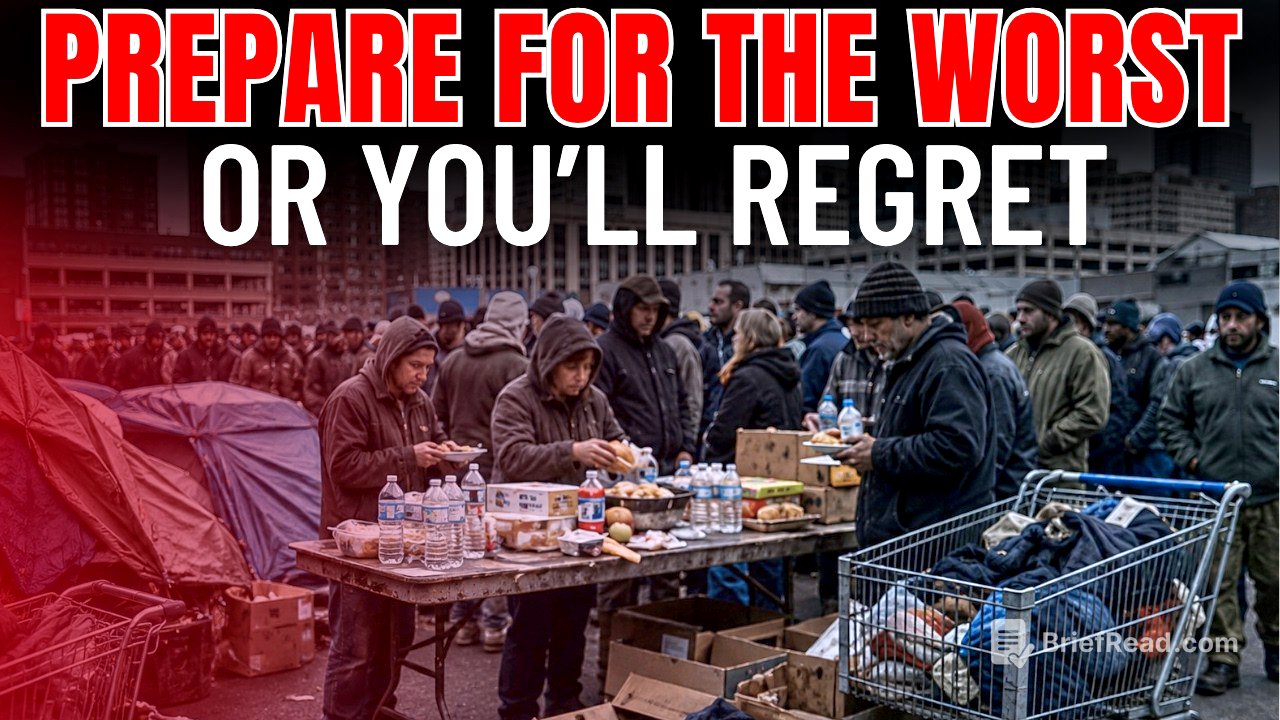
The video discusses the current financial crisis affecting millions of Americans, revealing alarming statistics about financial stress, the rising cost of living, and mental health issues exacerbated by economic instability. It highlights the dire situation, indicating that the breaking point has already been reached, and emphasizes the urgent need for individuals to prepare for worsening conditions.
- 55% of Americans report their finances are deteriorating, the highest level since tracking began in 2001.
- Housing costs, credit card debt, and inflation have skyrocketed, creating a significant financial burden on households.
- Mental health issues are rising among workers, with many feeling pressured to perform at unsustainable levels.
Economic Pressure and Financial Crisis [0:00]
The video opens by stating that America has hit a breaking point as millions of people feel the pressure from financial instability. Statistics reveal that 55% of Americans believe their financial situation is worsening—a figure higher than during the pandemic or the Great Recession. This phenomenon is accompanied by soaring costs of living, including a 40% increase in tomato prices, 54% hike in rent since 2017, and a staggering rise in overall housing prices. The notion of "shrinkflation" and "stringflation" is introduced to show how companies reduce product sizes or split services into multiple tiers, leading to the consumers effectively paying more for less.
Impact on Mental Health [3:52]
The rise in financial stress has extended beyond just monetary concerns; 67% of Americans are actively stressed about money, with many lying to friends and family about their reasons for missing social gatherings. Financial struggles are impacting personal identity, leading to feelings of shame and isolation. The workplace reflects these pressures, as 84% of American workers report burnout, with a significant percentage feeling compelled to work through mental health issues. Increased reliance on AI in the workplace adds to the stress, as employees fear layoffs and face heightened expectations.
Healthcare and Economic Burdens [8:02]
The video highlights healthcare as a major financial burden, with one-third of Americans skipping meals or reducing driving to afford medical care. Rising medical costs are pushing individuals into debt, with 100 million carrying medical debt and many forced to choose between basic needs and healthcare. Analysis shows that medical debt is a leading cause of personal bankruptcy, with exorbitant costs associated with emergencies and hospital stays contributing to financial distress.
Housing and Rental Crisis [15:48]
Housing prices have surged 60% since 2019, effectively trapping many people in homes they can no longer afford while first-time buyers are locked out of the market. Current rental prices have increased by over 54% since 2017, leaving people with no affordable options. This leads to a psychological burden, where those unable to secure housing experience chronic stress and diminished cognitive function due to financial worry. The narrative explores how individuals find themselves in a cycle of debt and anxiety aimed at managing unsustainable living conditions.
The Role of AI and Workforce Anxiety [21:15]
The integration of AI into workplaces raises alarm bells as employees face unrealistic productivity expectations. Two-thirds of workers report heightened stress due to AI usage, while 49% fear job loss due to automation. Managers, bearing the burden of heightened anxiety about their own job security, exhibit decreased effectiveness, which trickles down to their teams, contributing to a culture of fear and ineffectiveness in addressing the overarching issues within the workforce.
Upcoming Economic Shock and Preparedness [25:57]
The video culminates in a warning about impending economic shocks, with experts indicating that the U.S. is at a breaking point with unprecedented levels of debt. The prospect of austerity measures—such as cuts to social services—is presented as the government's emergency plan for when the next crisis hits. Individuals are urged to prepare proactively by seeking financial literacy, building community networks, and taking steps to mitigate personal risks associated with future economic instability.
Conclusion and Call to Action [38:20]
Finally, the speaker emphasizes the urgency for individuals to prepare for worsening conditions now, encouraging them to stock up on essentials, manage debts, and create local support systems, as the breaking point is already here. They stress that those who neglect to prepare will find themselves wishing they had done so amidst the unfolding crisis.