TLDR;
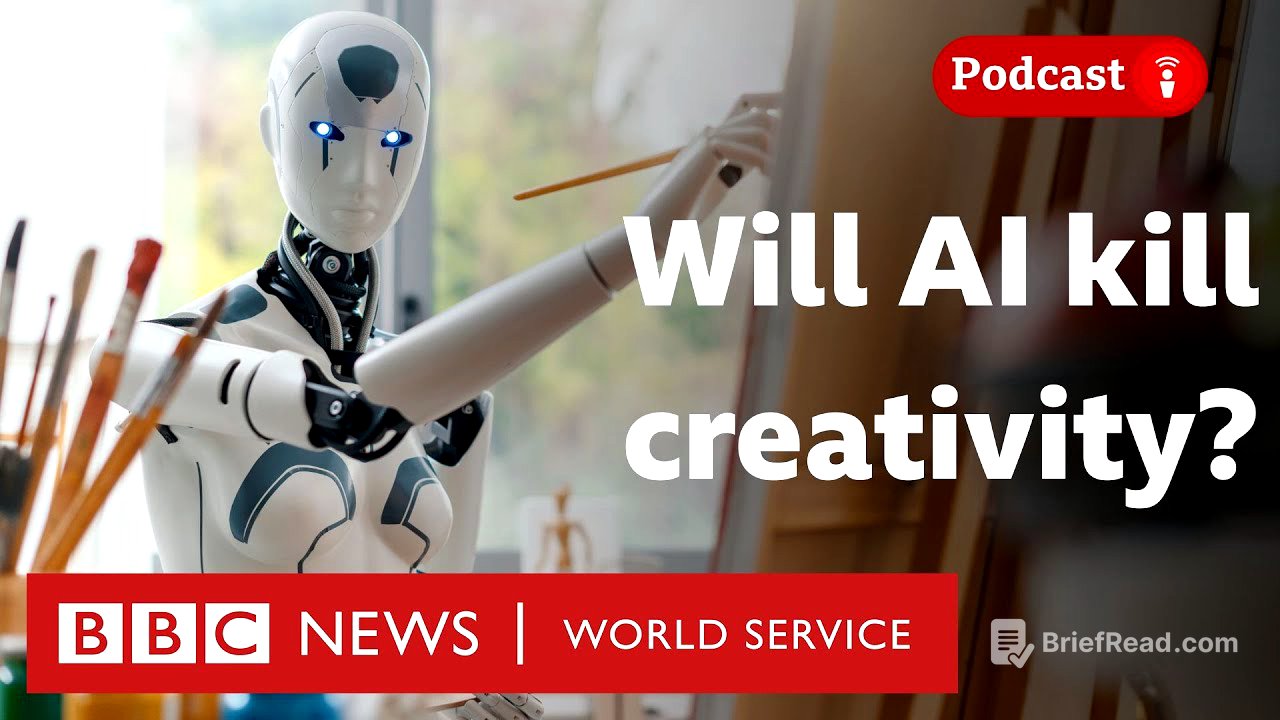
The video discusses the relationship between artificial intelligence (AI) and creativity, exploring various perspectives on how AI affects artistic expression. Key points include the differing definitions of creativity, the ongoing debate about AI's originality, job security concerns among creatives, and the potential for AI to be used effectively as a collaborative tool.
- AI is widely used as a tool for creative inspiration across various fields.
- Concerns about copyright and originality arise from the use of AI in creative processes.
- Artists express fears regarding job security due to AI's capabilities.
- Many creatives find ways to utilize AI tools effectively within their work.
Intro – What does AI mean for creativity? [0:00]
The video introduces the theme of AI's impact on creativity, noting its increasing use in music and other creative fields. The narrator, Iqra, shares her team’s discussion about AI's role in stimulating creativity and the skepticism among artists regarding copyright issues and the authenticity of AI-generated content.
What is creativity? [2:33]
The chapter defines creativity as the ability to generate new and unique ideas, while recognizing that its meaning evolves over time. The discussion highlights a psychological test called the Alternative Use Test, where participants must identify various uses for a common object, illustrating traditional human creative thinking versus AI's rapid idea generation.
Creativity challenge – humans vs AI [3:16]
A group challenge compares human creativity with AI by brainstorming alternative uses for a skateboard. The human participants struggle to generate many ideas in a short time, while an AI achieves a much higher output. This comparison raises questions about the fun and personal engagement in the creative process, which might be lost when relying solely on AI.
Why some creatives are worried [5:19]
This section explores the negative perceptions some creatives have towards AI, focusing on originality and fear of replacement. Nigerian poet Ridwan Fasasi emphasizes that the future of literature lies in human creativity, arguing that originality stems from human emotions and experiences, which AI cannot replicate.
A poet’s view [6:08]
Ridwan Fasasi expresses concern that AI lacks the ability to convey authentic human experiences and emotions that are vital for storytelling. He asserts that creativity must be rooted in originality and authenticity, qualities that differentiate human work from AI-generated creations.
The limitations of AI [7:00]
The video outlines AI's limitations, emphasizing its reliance on existing data and inability to create truly original ideas. It prompts a philosophical discussion about the nature of creativity and questions how original human creations are compared to AI's output.
Job security fears [8:30]
Concerns regarding job security within creative industries are addressed, with references to recent Hollywood strikes where workers opposed the use of AI in scriptwriting. Animation artist Veda highlights issues around AI appropriating the work of original artists and how this impacts employment opportunities in creative fields.
An illustrator's view [9:07]
Veda shares her hesitancy about using AI due to copyright concerns, noting that AI can replicate art from the internet without consent. She reflects on the challenges faced by artists in securing jobs and the fear that AI could further diminish job opportunities within the animation industry.
How creatives use AI as a tool [10:24]
The chapter discusses positive examples of creatives using AI to enhance their work, such as video editing and brainstorming ideas. Music producer Manon describes AI as a valuable collaborator in the music creation process, enabling artists to explore new concepts and streamline their workflow.
A music producer's view [10:59]
Manon emphasizes that AI does not kill creativity but rather acts as a tool that allows human creativity to flourish. He asserts that humans remain inherently creative, using AI to complement their artistic processes rather than replace them.
Closing thoughts [12:52]
The video concludes by reiterating the complexity of AI's impact on creativity, highlighting both the concerns and the opportunities it presents. Iqra encourages viewers to reflect on whether AI threatens creativity or can coexist as an effective tool within creative processes.