TLDR;
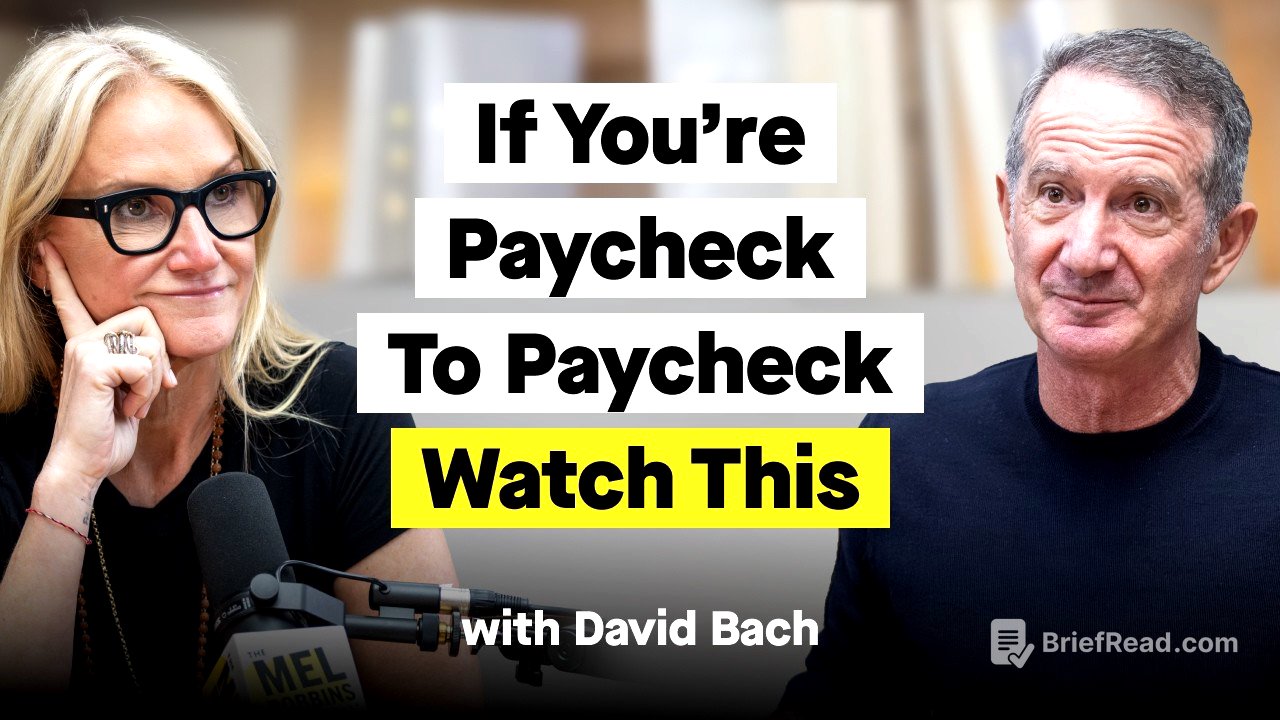
This episode of the Mel Robbins Podcast features David Bach, a renowned personal finance expert, discussing strategies to achieve financial freedom. They emphasize the importance of having a financial plan, automating savings, and understanding the power of compound interest. Bach introduces the concept of the "automatic economy," which either enriches you or impoverishes you, depending on your financial habits. The conversation covers various topics, including overcoming debt, saving for retirement (even without a 401k), and estate planning.
- The importance of having a financial plan and automating savings.
- Understanding and leveraging the power of compound interest.
- Strategies for overcoming debt and building wealth, regardless of current financial situation.
Meet the Guest [0:00]
Mel Robbins introduces David Bach, a personal finance expert with 30 years of experience, highlighting his success in teaching people how to build wealth. Bach believes that everyone deserves financial security and aims to provide hope and practical advice. He emphasizes that either you have a plan for your money, or someone else does, and encourages reducing credit card usage. Bach points out that the financial system is rigged in favor of those who invest in real estate and stocks, urging young people to start investing early.
What Does Automatic Economy Mean? [7:57]
David Bach introduces the concept of the "automatic economy," which either makes you rich or keeps you poor. He asserts that the next decade will see unprecedented wealth creation, particularly for those invested in real estate and stocks. Bach stresses that the system is designed to favor investors through tax laws and incentives. He encourages young people to start investing, even with small amounts, using apps like Acorns to invest spare change in diversified portfolios.
Financial Planning Basics [9:37]
Bach emphasizes that having a financial plan is crucial; otherwise, others will plan for your money. He describes the modern phone as a "money magnet" that can either build or drain wealth automatically. Many companies aim to secure lifetime value from customers through subscriptions and automatic payments. Bach advises using software like Monarch or YNAB to track monthly expenses and identify where money is going. A solid financial plan includes saving for the future, emergencies, and dreams.
What is a 401(k)? [15:35]
The biggest myth about money is that earning more automatically leads to wealth. Bach advocates paying yourself first by automatically saving one hour's worth of your daily income, ideally into a pre-tax deductible retirement account like a 401(k). This approach leverages tax benefits, as the saved money is not taxed initially and grows tax-free until retirement. Saving 12% of gross income is recommended, which equals about one hour of daily earnings.
How to Save for Retirement Without a 401(k) [26:38]
For those without a 401(k), Bach recommends opening an IRA account, such as a Roth IRA, where contributions are made with after-tax money but grow and are withdrawn tax-free. He suggests setting up automatic transfers from a checking account to the IRA. Additionally, he advises building a security (emergency) account in a money market fund for liquidity and a dream account for specific goals, allocating a percentage of income to each. Starting with even 1% and gradually increasing savings can make a significant difference over time.
Should You Invest in Individual Stocks? [33:33]
Bach strongly advises against picking individual stocks, especially for young people who might be tempted by risky investments promoted on social media. He recounts how his grandmother taught him about investing by buying McDonald's stock at age seven, but emphasizes that today, diversification through index funds is the best approach. He recommends the Vanguard Total Stock Market Index Fund (VTI), which includes over 3,600 stocks, providing broad exposure to the American economy.
How to Start Investing [34:10]
Bach shares a personal anecdote about his grandmother teaching him to invest in McDonald's stock at a young age to understand the difference between being a consumer, an employee, and an owner. He emphasizes the importance of teaching children to think like investors. While his children own a few individual stocks they are interested in, he primarily encourages them to invest in index funds for diversification and long-term growth.
Index Funds 101: Best Simple Investing Strategy [35:56]
Bach recommends investing in the Vanguard Total Stock Market Index Fund (VTI), which includes over 3,600 stocks, providing broad exposure to the American economy. He advises young people to avoid risky investments and instead focus on diversified index funds for steady, long-term growth.
Why “High-Risk Investing” for Young People Backfires [37:11]
Bach cautions young people against the myth that they should take high risks with their investments. He explains that many young investors lose money by investing in meme stocks, meme coins, and NFTs, leading them to become discouraged and stop investing altogether. He advises sticking to index funds for stable, long-term growth.
Compound Interest Explained [38:21]
Compound interest is described as the eighth miracle of the world. Bach uses a prop of $10,000 in cash to illustrate how investing $27.40 a day (or $10,000 a year) over 40 years at a 10% rate of return can result in $4,424,000. He points out that many people unknowingly spend this amount on unnecessary expenses, missing out on significant long-term gains.
How to Save More Money [41:09]
To save more money, Bach advises examining your lifestyle and identifying areas where you can cut back on spending, such as food delivery and frequent Ubers. He introduces a 100-day savings challenge, where you save $10 a day to accumulate $1,000. For those in their 50s who feel they've started late, he suggests saving an additional $20 a day, which, with a partner, can amount to a significant sum over 15 years.
Credit Card Debt Payoff Plan [47:07]
Bach introduces the DOLP (Done On Last Payment) system for getting out of credit card debt. The first step is to list all credit cards, their balances, and interest rates. He advises paying off the card with the smallest balance first, regardless of interest rate, to reduce the number of cards and avoid late fees. He also recommends automating minimum payments to avoid late fees and calling credit card companies to coordinate billing dates with your pay schedule.
Estate Planning Checklist: Will, Passwords, Accounts [59:03]
Bach emphasizes the importance of estate planning, including having a will and knowing where all financial accounts and passwords are located. He advises running a "drill" to ensure you know what to do if your spouse dies, including locating important documents and insurance policies. He also warns against hiding wills in safety deposit boxes and stresses the need to update wills regularly. For those considering divorce, he advises knowing where all the money is before initiating the process.