TLDR;
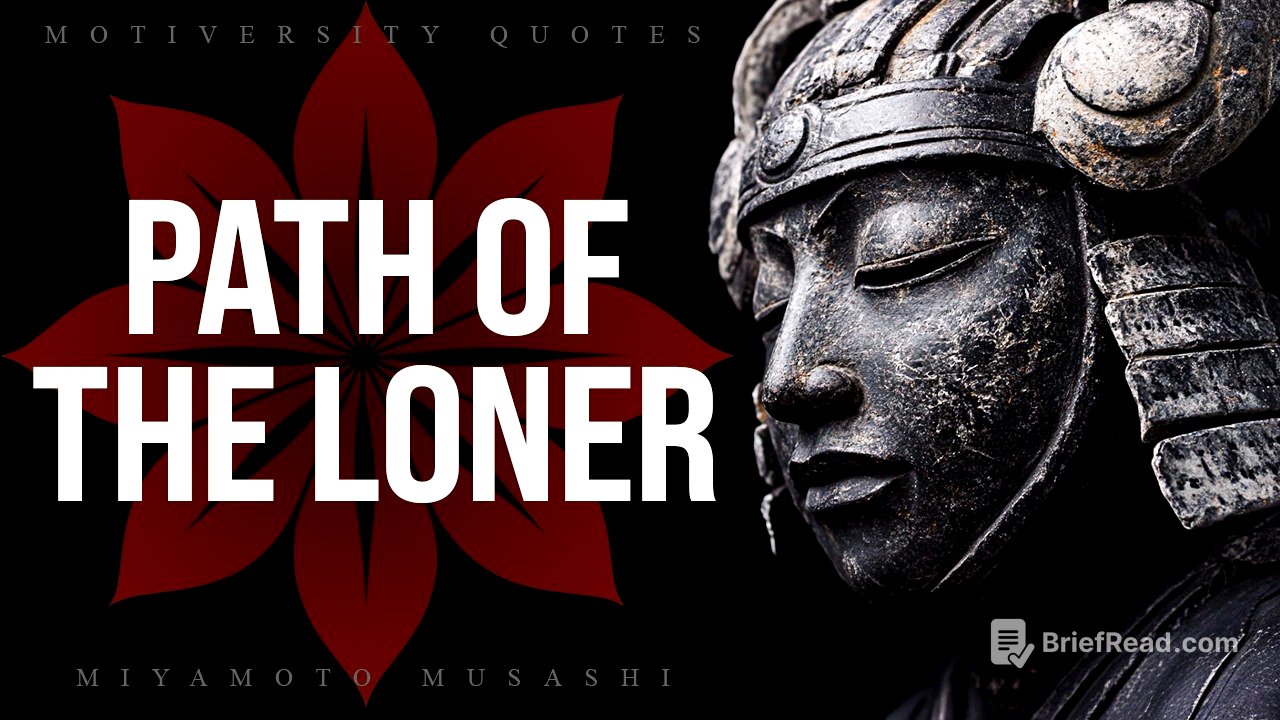
This video presents the 21 principles of Dokkodo, written by Miyamoto Musashi, focusing on self-discipline, mindfulness, and detachment. These principles guide one to live a life of inner peace, free from worldly distractions, emphasizing acceptance, purpose, and personal integrity over fleeting desires and external influences.
- Acceptance of reality
- Prioritizing purpose over pleasure
- Personal integrity
Introduction [0:00]
The video introduces Dokkodo, or "The Way of Walking Alone," a set of 21 principles created by Miyamoto Musashi in his later years. Musashi, a ronin, developed these principles after realizing that true mastery extends beyond swordsmanship to mastering oneself. Dokkodo emphasizes self-discipline, mindfulness, and detachment, guiding individuals toward inner peace and freedom from worldly distractions.
Principle 01 [1:09]
The first principle is to accept everything just as it is. Life flows naturally, and resisting it is futile. The world unfolds as it will, and one should not resist its natural course. Fighting against reality weakens oneself, while acceptance is the initial step toward mastering one's destiny.
Principle 02 [1:38]
The second principle advises against seeking pleasure for its own sake. Pursuing pleasure distracts from the path of discipline. True fulfillment arises from mastering oneself rather than indulging in temporary desires. Instead, one should seek joy in the process of becoming stronger, maintaining balance rather than excess.
Principle 03 [2:07]
The third principle warns against depending on partial feelings. Half-heartedness hinders progress, so one must fully commit to their purpose. Trusting incomplete feelings leads to uncertain actions. Decisions should arise from a calm, whole mind, embracing the entirety of one's experience for clarity.
Principle 04 [2:40]
The fourth principle suggests thinking lightly of oneself and deeply of the world. Avoid burdening oneself with excessive self-regard and focus on understanding the world. A humble heart opens the mind to greater truths, and relinquishing self-importance is necessary to grasp the world's complexities.
Principle 05 [3:09]
The fifth principle advises detachment from desire. Lifelong desire binds the spirit, and to walk freely, one must cast off its weight. Liberation lies in prioritizing purpose over personal cravings. Detachment provides the strength to pursue one's path without distraction.
Principle 06 [3:38]
The sixth principle states not to regret what you have done. Regret weakens the present by chaining you to the past. Face forward, as the past cannot be changed, but the future can. Every misstep is an opportunity for growth and learning, and each step taken is part of your journey, so embrace it fully.
Principle 07 [4:06]
The seventh principle advises to never be jealous. Jealousy stems from insecurity and clouds the spirit. Be content with your own path, as it is yours alone to walk. Instead of envying others, learn from them. Appreciate the success of others as a source of inspiration, not resentment.
Principle 08 [4:39]
The eighth principle says never let yourself be saddened by separation. Separation is a natural part of life's journey. Move forward, carrying no sorrow for what is left behind. Each parting paves the way for new encounters and experiences. Embrace the lessons learned from those you lose, as they strengthen your resolve, and each departure creates space for new beginnings.
Principle 09 [5:13]
The ninth principle states resentment and complaint are inappropriate, neither for oneself nor others. Resentment poisons the mind and hinders clear thought. Rise above petty grievances. True strength lies in letting go and focusing on what truly matters. Release your grievances to find peace.
Principle 10 [5:42]
The tenth principle advises not to let yourself be guided by the feeling of lust or love. Love and lust can obscure judgment and weaken the spirit. Let your path be directed by reason, not fleeting emotions. Maintain a disciplined mind to discern true affection from fleeting desire. Love, when cultivated wisely, can become a source of strength.
Principle 11 [6:19]
The eleventh principle states in all things, have no preferences. Preferences lead to attachment, and attachment leads to suffering. Walk your path without bias, and you will see clearly. Freedom comes from viewing each moment as it is, without judgment. Embracing indifference allows you to respond to life's challenges without hesitation. A mind unshackled by preference is free to explore all avenues.
Principle 12 [6:56]
The twelfth principle advises being indifferent to where you live, whether in a castle or a hut. A warrior's mind remains unchanged. Do not let your surroundings dictate your spirit. Do not be reliant nor take advantage of luxuries. Your true home is where your purpose resides. Cultivate an inner house that no external circumstance can disrupt and can be weathered by no storm.
Principle 13 [7:32]
The thirteenth principle says do not pursue the taste of good food. Nourish the body as necessary, but do not seek excess. True sustenance arrives from the strength you build through discipline. Remember, the warrior's diet is one that fuels the spirit and body alike.
Principle 14 [7:57]
The fourteenth principle advises not to hold on to possessions you no longer need. Possessions are a burden that slow your progress. Keep only what is essential and let the rest fall away. A clear space allows for a clear mind. Letting go opens the door for new opportunities and growth. A true warrior values utility over sentimentality. Simplify your life to sharpen your focus and enhance your practice.
Principle 15 [8:32]
The fifteenth principle states do not act following customary beliefs. Tradition and times will bind you to truths. Act only according to what is right, not what is customary. Trust your intuition and the wisdom you gain from experience. Walk your path based on personal conviction rather than societal expectation.
Principle 16 [9:00]
The sixteenth principle advises not to collect weapons or practice with weapons beyond what is useful. A sword is but a tool in the hands of a warrior. Beyond necessity, additional weapons are burdens. Focus your energy on honing your skills with the tools that truly serve you. Mastery comes from simplicity and focus rather than accumulation.
Principle 17 [9:30]
The seventeenth principle says do not fear death. Death is inevitable for all, so fearing it serves no purpose. Instead, live fully and without hesitation. Embrace each day as a gift, knowing it may be your last. Understand that in acceptance of death, you find the freedom to live fully.
Principle 18 [9:59]
The eighteenth principle advises not to seek to possess either goods or fiefs for your old age. The future is uncertain, and preparing for it only distracts from the present. A warrior lives in the now. Invest your energy in experiences and wisdom, not material wealth. What you gather in life is not as valuable as what you learn along the way and pass down to those who follow in your footsteps.
Principle 19 [10:34]
The nineteenth principle states respect Buddha and the gods without counting on their help. Honor the Divine, but do not rely on them to shape your fate, for they owe you no gift nor reward. Your path is yours to undertake through your own actions. A warrior must stand firm in their own strength and choices. True respect lies in embodying the principles they represent through your actions.
Principle 20 [11:08]
The twentieth principle says you may abandon your body, but you must preserve your honor. Your body is transient, but your honor endures beyond death. Let honor be your highest aim. In the end, it is the legacy of your integrity that will endure. A warrior's true strength is measured not by their physical prowess but by the respect they earn.
Principle 21 [11:30]
The twenty-first principle advises never stray from the way. The path of the warrior is a sacred commitment that demands steadfast dedication. Straying from this path leads to confusion and disarray, ultimately compromising your honor and purpose. Consistency in your actions and thoughts is essential for maintaining the integrity of your journey. In moments of uncertainty, return to the fundamental principles that guide you, for they serve as your compass through life's challenges. Trust in your training and intuition to guide you.