TLDR;
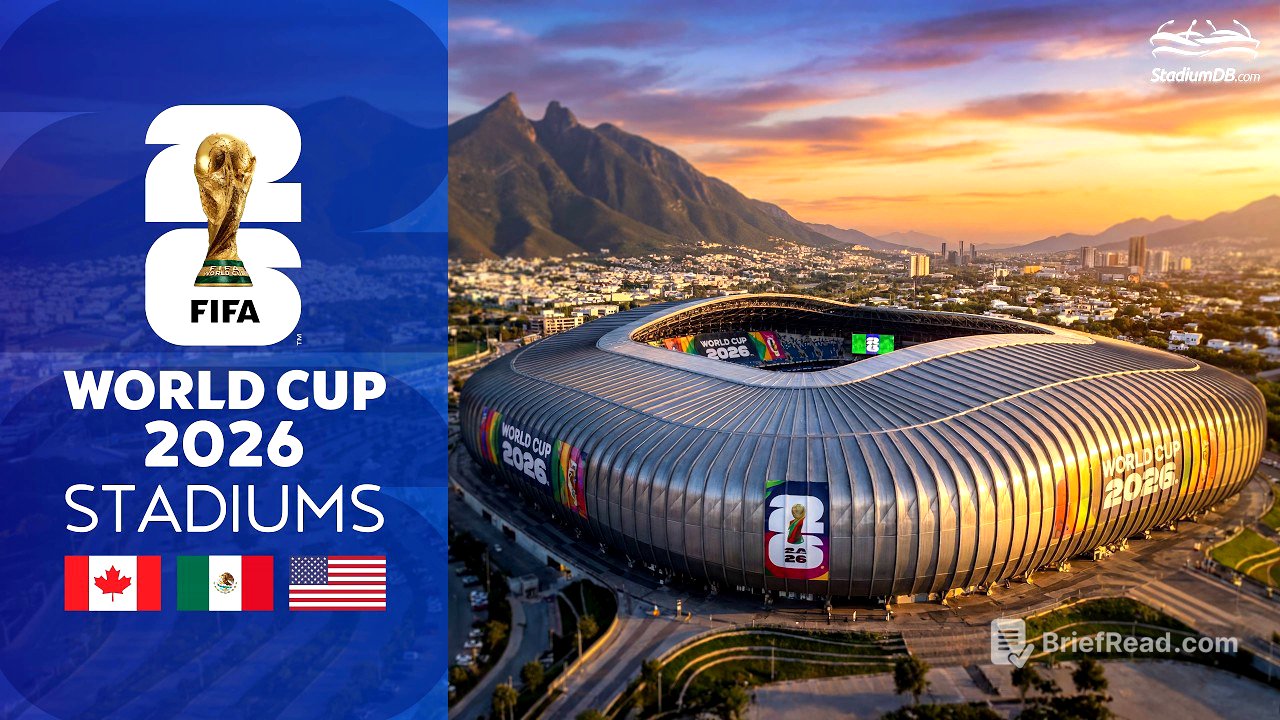
The video discusses the upcoming 2026 FIFA World Cup, which will feature 48 teams for the first time and be hosted across three countries: the United States, Canada, and Mexico. It highlights the 16 stadiums that will host matches, providing insights into their features and capacities.
- 48 teams will participate, marking a new format for the World Cup.
- Matches will be played in 16 stadiums across the U.S., Canada, and Mexico.
Intro [0:00]
The video introduces the 2026 FIFA World Cup, emphasizing its significance as the largest tournament in history with 48 teams. It outlines that it will be held across the United States, Canada, and Mexico, presenting a new knockout bracket and promising more matches. All venues will cater to football fans traveling from around the world.
Canada [1:16]
Canada will contribute two stadiums to the 2026 World Cup. The first is Toronto Stadium, with a capacity of 45,000, located near Lake Ontario, which will host six matches, including Canada and Germany in the group stage. The second is BC Place in Vancouver, with a capacity of 54,000, known for its retractable roof and urban backdrop, hosting two Canadian group matches and matches involving Belgium and Switzerland.
Toronto Stadium, Toronto
Toronto Stadium, also known as BMO Field, is set to be upgraded for the tournament. It will feature expanded capacity and improved facilities, hosting six games in total, including five group matches.
BC Place, Vancouver
BC Place is a prominent venue in downtown Vancouver, hosting matches for Canada. Renovations have modernized this stadium to accommodate large audiences, with features like a retractable roof and significant video screens. It is expected to feature matches involving teams like Belgium and Canada.
Mexico [3:01]
Mexico is home to three World Cup stadiums set in vibrant cities. These venues are known for their cultural significance and all will host matches amidst the excitement of street life and a festive atmosphere.
Estadio Guadalajara, Guadalajara
Estadio Guadalajara, with a capacity of 48,000, captures the essence of traditional Mexican culture. Situated in an area famous for tequila and mariachi, it features a distinct architectural design. It will host four group matches, including Uruguay versus Spain.
Estadio Monterrey, Monterrey
With a capacity of 53,500, Estadio Monterrey represents the industrial heart of northern Mexico. Its modern design includes a metallic shell inspired by local industries. It will host three group matches and one knockout round match.
Mexico City Stadium, Mexico City
Estadio Azteca, with a capacity of 83,000, is one of the world's most iconic stadiums. Located in the capital, it will undergo significant upgrades ahead of the tournament. The stadium will host group matches and knockout stage matches, including the opening match between Mexico and South Africa.
United States of America [5:48]
The United States will host the majority of matches across 11 stadiums, showcasing diverse climates and time zones. This segment explores key venues across the country.
Miami Stadium, Miami
Miami Stadium, also known as Hard Rock Stadium, can accommodate 65,000 spectators. This venue will host numerous matches, including potential games with Brazil and Portugal. Renovations have enhanced its modern capabilities.
Boston Stadium, Boston
Boston Stadium, with a similar capacity of 65,000, will host a mix of group matches and knockout games. Its design incorporates cultural elements reflective of Boston's historical significance, with preparations for major fixtures ahead.
Seattle Stadium, Seattle
Seattle Stadium, hosting 69,000 fans, is known for its vibrant atmosphere and breathtaking views. It will feature matches for high-profile teams, enhancing the coastal city's appeal during the tournament.
Philadelphia Stadium, Philadelphia
Philadelphia Stadium, with a capacity of 69,000, is designed with eco-friendly features. The venue will accommodate multiple group matches and has a strong connection to the city’s rich history.
Los Angeles Stadium, Los Angeles
Sofi Stadium, boasting a capacity of 70,000, is known for its innovative design and features. It will host five group matches and knockout rounds, offering a unique viewing experience combined with modern technology.
San Francisco Bay Area Stadium, San Francisco Bay Area
Levis Stadium in San Francisco will host five group fixtures and one knockout match. The stadium is known for its sustainable design and tech-savvy features, aligning with the innovative spirit of the Bay Area.
Houston Stadium, Houston
Houston Stadium has a capacity of 72,000 and features a retractable roof. It's designed for multiple events and will host several matches, including teams from various nations.
Kansas City Stadium, Kansas City
Kansas City Stadium, known as Arrowhead Stadium, can hold 73,000 fans. The venue will provide an exciting atmosphere for fans and will host a series of thrilling matches, including some of the top national teams.
Atlanta Stadium, Atlanta
Mercedes-Benz Stadium features a retractable roof and a capacity of 75,000. It offers a state-of-the-art experience for spectators, hosting multiple key matches throughout the tournament.
New York New Jersey Stadium, New York/New Jersey
Metlife Stadium in the New York/New Jersey area is set to host 82,500 spectators. It's a key venue for the tournament, poised to showcase leading footballing nations in a highly celebrated location.
Dallas Stadium, Dallas
AT&T Stadium in Dallas will accommodate a remarkable 94,000 fans and is known for its impressive infrastructure. It will host several important matches, allowing fans from across the region to participate in the festivities surrounding the World Cup.
Outro [16:23]
The video concludes by encouraging viewers to engage with the upcoming World Cup and share their thoughts on potential winners. Additional stadium content will follow on the channel.



![[Digimon Podcast] LiT Episode 68 - The Ugly Stick Goes DigiMental](https://wm-img.halpindev.com/p-briefread_c-10_b-10/urlb/aHR0cDovL2ltZy55b3V0dWJlLmNvbS92aS9hRDlVc0hOX29SYy9ocWRlZmF1bHQuanBn.jpg)