TLDR;
The video covers the tragic Love Parade disaster that occurred on July 24, 2010, in Duisburg, Germany, resulting in 21 deaths and over 600 injuries due to a crowd crush. It examines the circumstances that led to the tragedy, including poor venue design and ignored warnings, and the lack of accountability post-event. Expert safety tips for crowd management are discussed, along with the psychological impact on survivors and changes in event planning that followed the disaster.
- The Duisburg Love Parade tragedy occurred due to overcrowding and lack of safety measures, leading to 21 deaths.
- Post-event accountability was limited, with many key figures escaping legal repercussions.
The Duisburg Love Parade Tragedy [0:00]
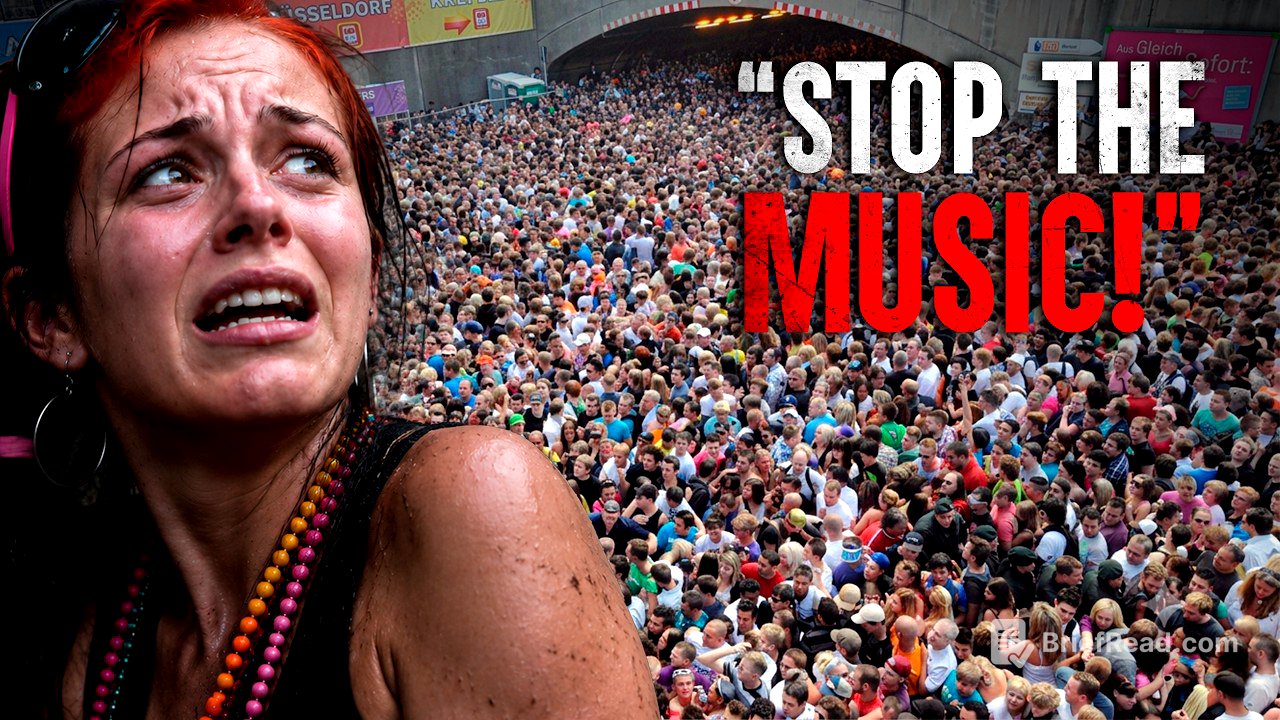
On July 24, 2010, approximately 1.5 million attendees were expected at the Love Parade electronic music festival in Duisburg, Germany. Instead of a day of celebration, the event resulted in a devastating crowd crush, claiming 21 lives and injuring over 600 people. The situation escalated due to profit-driven decisions made by organizers, leading to a tragic outcome where individuals were merely trying to survive in a chaotic environment.
The History of the Love Parade [1:29]
The Love Parade originated as a dance protest organized by DJ Dr. Motte in 1989, aimed to promote peace and unity without traditional political signs. Over the years, it evolved into a major international event, focusing increasingly on commercial profit. By 2010, Duisburg's mayor sought to leverage the festival for economic gain, ignoring safety concerns related to its planning and execution.
The Fatal Design of the Venue [2:20]
The venue chosen for the Love Parade was an abandoned railway station encircled by barriers and legal capacity limits. Official documents indicated that the area could safely hold 250,000 people, yet organizers anticipated over one million attendees. The enclosed structure and restricted entry points directly contributed to the dire conditions that would lead to the disaster.
July 24, 2010: The Crowd Builds [4:36]
As the event day unfolded under sunny skies, attendees arrived in high spirits. However, by mid-morning, the security team struggled to manage the inflow of individuals, outpaced by the arriving crowd from several public transport links. The bottleneck created significant pressure at the entry point, foreshadowing the chaos that would soon ensue.
The Tunnel Bottleneck & Communication Failures [6:39]
As the crowd surged, the single entrance via the Karl-Lehr Tunnel became a critical choke point. Despite warnings and the closure of additional entrances, thousands of people continued to flood into the tunnel, exacerbated by communication failures among authorities. The lack of coordination and clear information further heightened the danger as individuals became trapped.
How a Crowd Crush Actually Happens [8:01]
Experts clarify that a crowd crush occurs when the number of individuals exceeds the available space, leading to increasing pressure and loss of movement control. At the festival, as more attendees joined the dense crowd, panic set in, but not because of irrational behavior—people were suffocating and desperately seeking escape. High-density scenarios quickly evolved to a lethal level, resulting in compressive asphyxia.
Expert Safety Tips: How to Survive a Crowd Surge [8:52]
Crowd control expert Dr. G. Keith Still provided insights on managing crowd dynamics to prevent tragedies. Key takeaways included staying on feet to avoid being trampled, being aware of the surroundings to navigate pressure zones, and understanding the importance of communication and space during dense crowd events. Recognizing the signs of crowd distress can significantly improve survival chances in critical situations.
Rescue Challenges & The Emergency Response [10:51]
As emergency teams responded to the unfolding crisis, they faced formidable challenges in reaching victims trapped in the crowd. Many emergency exits were poorly marked, with insufficient resources available. The scene was chaotic, culminating in a situation complicated by overwhelmed emergency services, all while music continued to play, keeping many attendees unaware of the catastrophe occurring nearby.
The Search for Accountability [12:14]
In the aftermath, questions arose about accountability with charges filed against several individuals involved in organizing the event. However, major figures such as the city's mayor and the event organizer were not charged. The ensuing trial faced numerous delays, revealing systemic issues in holding leadership accountable for the catastrophe.
The Psychological Impact & Legacy [15:37]
Survivors of the Love Parade disaster experienced profound psychological impacts, including PTSD and anxiety triggered by reminders of the event. Many struggled with social situations and loud music, as lingering memories of the traumatic experience resurfaced. The tragedy underscored the need for improved safety oversight in event planning, as it left lasting scars on both the community and the victims' families.
Hillsborough & Why Modern Event Planning Changed [17:11]
The video draws parallels between the Love Parade disaster and the Hillsborough disaster of 1989, where crowd control failures led to fatalities. In response to both tragedies, event planning has seen significant reforms, including real-time crowd monitoring and better assessment of venue capacity to prevent future incidents. The failures highlighted by these events have prompted a greater emphasis on ensuring safety at large gatherings.