TLDR;
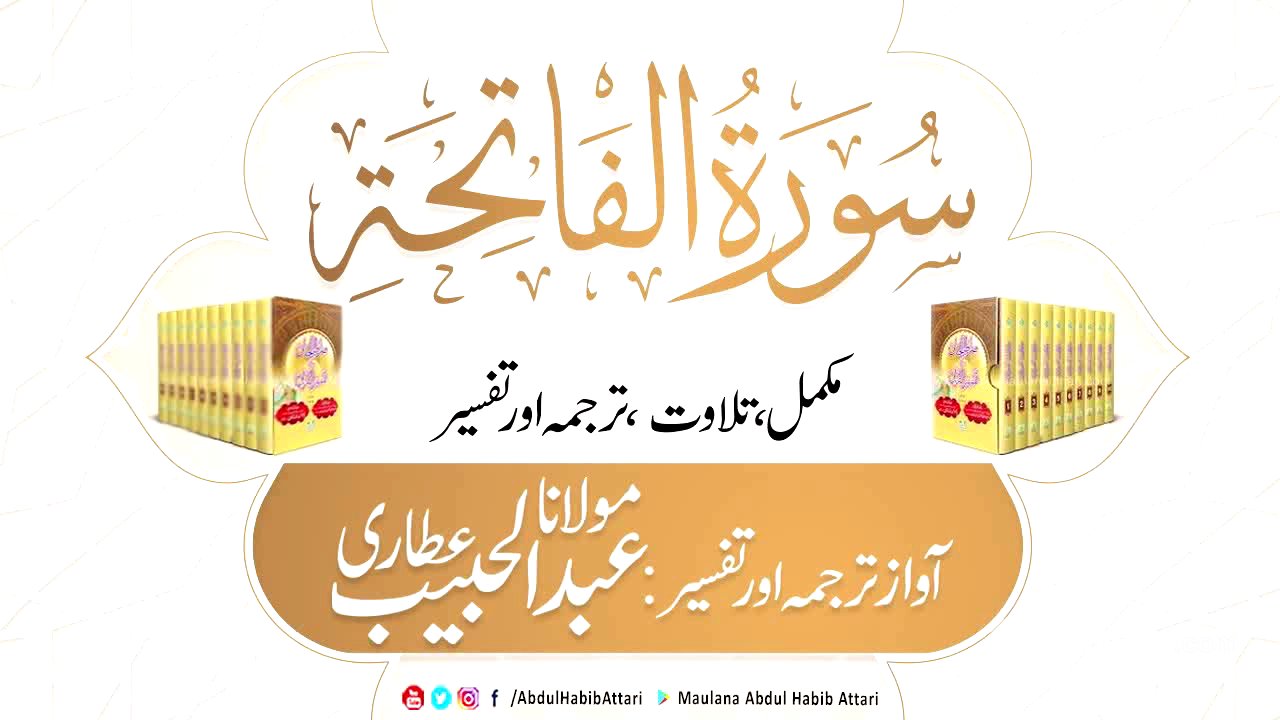
This video provides a detailed explanation of Surah Al-Fatiha, the first chapter of the Quran. It covers its various names, the reasons behind those names, its virtues as mentioned in Hadith, its main themes, and related Sharia issues. The video also includes detailed explanations of each verse of the Surah, drawing from Tafsir Siraj al-Janan and other sources.
- Surah Al-Fatiha's significance and virtues.
- Detailed explanation of each verse.
- Related Sharia issues and rulings.
PART 01 [0:00]
This part introduces Surah Al-Fatiha, noting that most scholars believe it was revealed in Mecca, though some say it was revealed in Medina, or twice in both locations. The Surah consists of one Ruku, seven verses, 27 words, and 140 letters. It has multiple names, indicating its virtue and honor, with 15 well-known names such as Surah Fatiha (the opening of the book), Surat al-Hamd (the chapter of praise), Umm al-Quran (the mother of the Quran), and As-Sab'ul-Mathani (the seven repeatedly recited verses).
The video highlights four virtues of Surah Al-Fatiha from Hadith. First, a Hadith from Bukhari Sharif mentions its greatness, referring to it as the most magnificent Surah in the Quran and Saba Masani. Second, a Hadith from Muslim Sharif tells of an angel bringing the good news of two lights: Surah Al-Fatiha and the last verses of Surah Al-Baqarah. Third, a Hadith from Hazrat Ubay bin Ka'b states that Allah has not revealed a Surah like Umm al-Quran in the Torah and Gospel. Fourth, a Hadith from Hazrat Abdul Malik bin Umair mentions that Surah Al-Fatiha is a cure for every disease.
The content of Surah Al-Fatiha includes the praise of Allah, His attributes as the Lord, the Most Gracious, the Most Merciful, and the mention of the Day of Judgment. It emphasizes the exclusivity of worshipping Allah and seeking His help, along with the etiquette of making Dua and seeking guidance towards the Straight Path. The Surah also touches on the conditions of those who have been granted favors and those who have earned Allah's wrath. Hazrat Ali states that he could fill 70 camels with the exegesis of Surah Al-Fatiha.
Regarding Sharia issues related to Surah Al-Fatiha, it is obligatory to recite Surah Al-Fatiha in prayer. The Imam and the one praying alone should recite it audibly, while the follower should remain silent behind the Imam, listening to the recitation in a loud prayer. The video also mentions a debate of Imam Azam, where Imam Abu Hanifa argued that when one accepts a person as their Imam in prayer, their recitation is considered the recitation of the follower. In funeral prayers, if one does not remember the specific Dua, reciting Surah Al-Fatiha with the intention of Dua is permissible, but not with the intention of recitation.
PART 02 [21:00]
This section begins with "Bismillah Hir Rahman Nir Raheem," translating it as "In the name of Allah, the Most Gracious, the Most Merciful." Allama Ahmad Saawi states that the Quran begins with Bismillah so that Allah's servants follow suit, starting every good deed with it. A Hadith from Abu Hurairah mentions that any important task not started with Bismillah remains incomplete.
Imam Fakhruddin Razi states that Allah has described Himself as Rahman and Rahim, so it is unlike His dignity not to have mercy. The video then discusses several Sharia issues related to Bismillah, such as it being a complete verse at the beginning of each Surah, but not a verse of Surah Al-Namal. It should be written separately to distinguish between Surahs. The Imam does not recite Bismillah aloud in audible prayers, and Hazrat Jibreel did not bring Bismillah in the first revelation.
The video proceeds to "Alhamdulillah Rabbil Aalameen," which translates to "All praise is due to Allah, the Lord of all the worlds." It explains that all forms of praise are for Allah, as He possesses all attributes of perfection. Hamd is defined as praising someone for their chosen qualities, while Shukr is expressing gratitude for a favor received. The virtues of praising Allah are highlighted through three Hadith. First, Allah is pleased when a servant praises Him after eating or drinking. Second, the best Zikr is La Ilaha Illallah, and the best Dua is Alhamdulillah. Third, when Allah bestows a blessing upon a servant and they say Alhamdulillah, this praise is more virtuous than the blessing itself.
The Sharia rulings related to Hamd include it being obligatory in Khutbah, recommended after eating, Sunnah after sneezing, and Haram after a sinful act. The video then explains the meanings of "Lillah," "Rabbil Aalameen," "Ar-Rahman," and "Ar-Rahim." Rahman means the One who bestows blessings, and Rahim means the One who is very merciful. Allah's mercy encompasses all blessings, both worldly and spiritual.
The video emphasizes that one should not become reckless in sinning by observing Allah's vast mercy. Allah's mercy and punishment are mentioned together in the Quran to encourage both hope and fear. It is not permissible to call anyone other than Allah "Rahman," but "Rahim" can be used for others, as Allah has described the Prophet Muhammad as Rahim.
The discussion moves to "Maliki Yawmid-Deen," meaning "Master of the Day of Judgment." The Day of Judgment refers to the Day of Resurrection when the righteous will be rewarded and the sinners punished. Allah is the owner of both this world and the Hereafter, but the manifestation of His ownership will be more evident on the Day of Judgment.
The video explains "Iyyaka Na'budu Wa Iyyaka Nasta'een," which translates to "You alone we worship, and You alone we ask for help." It signifies that all praise belongs to Allah, and only He is worthy of worship and capable of providing true help. The difference between Ibadat (worship) and Ta'zim (respect) is clarified, stating that worship is showing reverence to someone considering them worthy of worship, while respect is showing reverence without considering them worthy of worship.
The importance of praying in congregation is derived from the plural form used in the verse. It is also mentioned that one should express their servitude before presenting their needs to Allah. Imam Abdullah bin Ahmad Nasafi states that presenting a means (Waseela) before seeking help is closer to acceptance. The video then discusses the permissibility of using a Waseela in Dua, citing Quranic verses and Hadith.
Regarding the Hadith mentioning "Ya Muhammad," it is clarified that it is Haram to call the Prophet Muhammad by his name directly. Instead, one should say "Ya Rasool Allah" or "Ya Nabi Allah." The video concludes by explaining that seeking help is exclusive to Allah, and any help sought from others is through the means and permission of Allah.
The video continues with "Ihdinas Siratal Mustaqeem," meaning "Guide us to the straight path." After acknowledging Allah's attributes and His role as the true helper, a Dua is taught to ask Allah to increase guidance and keep one steadfast on the right path. Sirat al-Mustaqeem refers to the straight path of Aqeedah, followed by the prophets, Sahaba, and Awliya. This path is that of the Ahle Sunnat.
The video emphasizes the importance of staying with the majority of Muslims (Sawad-e-Azam) and following the path of the Prophet and his companions. Various means of attaining guidance are mentioned, including one's inherent abilities, signs in the heavens and earth, revealed books, and the prophets. Three points are derived from the verse: every Muslim should ask Allah for steadfastness on the straight path, one should engage in Dua after worship, and one should pray for all Muslims.
The video concludes with "Siratal-lazina an'amta 'alaihim ghairil-maghdubi 'alaihim walad-dallin," meaning "The path of those upon whom You have bestowed favor, not of those who have evoked [Your] anger or of those who are astray." This verse explains that Sirat al-Mustaqeem is the path of those whom Allah has favored, including prophets, the truthful, martyrs, and the righteous. It is derived that actions of the righteous are included in Sirat al-Mustaqeem.
It is mentioned that a seeker can only reach the stations of guidance and revelation by following a perfect guide who leads them to the correct path. Those who have earned Allah's anger are the Jews, and those who are astray are the Christians. Every Muslim should differentiate themselves from the ways of the Jews, Christians, and all disbelievers. The Sharia issue of pronouncing "Walad-dallin" correctly is emphasized, and it is Haram to mispronounce it. Finally, "Aameen" is explained to mean "O Allah, accept" or "O Allah, do so," and it is Sunnah to say Aameen after Surah Al-Fatiha, but it should be said silently in prayer according to the Hanafi school of thought.