TLDR;
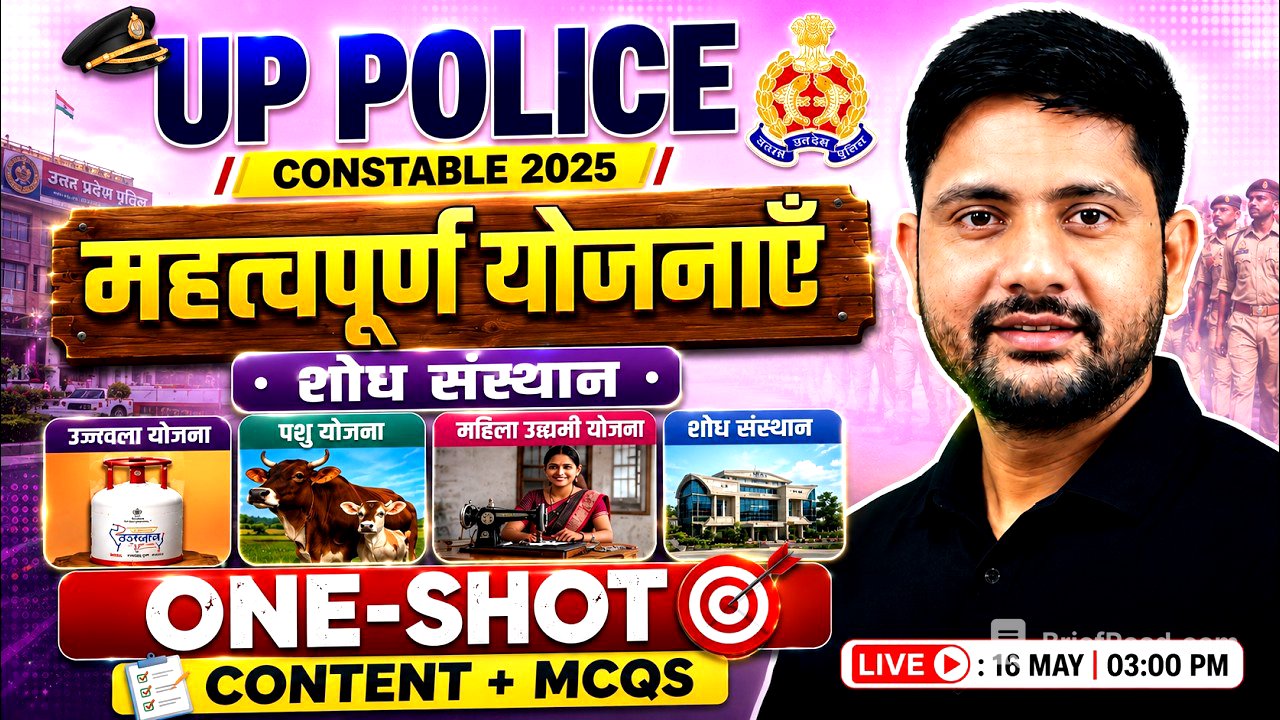
Alright guys, this video is all about important research institutes in India and government schemes. Ankit sir discusses important MCQs related to research institutes, their locations, and establishment years. Then, he moves on to various government schemes, their objectives, launch dates, and target beneficiaries. Key points include:
- Locations and establishment years of important research institutes.
- Objectives and launch years of various government schemes.
- Focus on schemes related to rural development, employment, and social welfare.
Agriculture Research Institute [0:59]
The Indian Agricultural Research Institute is located in New Delhi. It was originally established in Bihar in 1905 but later moved.
ISRO and Space Research [1:41]
The Indian Space Research Organisation (ISRO) operates under the Prime Minister's Office. ISRO was initially established in 1962 as INCOSPAR and later renamed ISRO in 1969. Its headquarters is in Bangalore, also known as the "City of Science."
Medicinal Research Institute [2:24]
The Central Drug Research Institute is located in Lucknow, Uttar Pradesh, and was established in 1951.
Food Technology and Other Institutes [2:56]
The Central Food Technological Research Institute is located in Mysore, Karnataka, and was established in 1950. The Virus Research Institute is located in Pune.
Botanical Research and CSIR [3:49]
The National Botanical Research Institute (NBRI) is located in Lucknow and was established in 1953. The Council of Scientific and Industrial Research (CSIR) is also discussed.
Environmental and Leather Research [5:04]
The National Environmental Engineering Research Institute (NEERI) was established in 1958 and focuses on environmental research. The Central Leather Research Institute is located in Chennai, Tamil Nadu, and was established in 1948.
Agricultural and Sugarcane Research [6:02]
The Indian Council of Agricultural Research was established in 1929 and is located in Delhi. The Sugarcane Breeding Institute is located in Coimbatore, Tamil Nadu, and was established in 1912.
Rice and Potato Research [7:02]
The Central Rice Research Institute is located in Cuttack, Odisha, and was established in 1946. The Central Potato Research Institute is located in Shimla, Himachal Pradesh, and was established in 1949.
Other Research Institutes in UP [8:08]
The Sugarcane Research Institute is located in Lucknow and was established in 1952.
Atomic Research Center [8:25]
The Bhabha Atomic Research Centre (BARC) was established in 1954 in Trombay, Mumbai. Homi Jehangir Bhabha is considered the father of India's atomic energy program.
DRDO and Tobacco Research [9:07]
The Defence Research and Development Organisation (DRDO) has the motto "Balasya Mulam Vigyanam." The Tobacco Research Institute is located in Rajahmundry and was established in 1947.
Meteorological and Astrophysical Research [9:54]
The Tropical Meteorology Institute is located in Pune and was established in 1962. The Indian Institute of Astrophysics is located in Bangalore and was established in 1971.
Viral and Oceanographic Research [10:59]
The National Institute of Virology researches viral diseases and is located in Pune. The Indian Institute of Oceanography is located in Panaji, Goa, and was established in 1966.
Petroleum and Salt Research [11:59]
The Indian Institute of Petroleum is located in Dehradun and was established in 1960. The Central Salt and Marine Chemicals Research Institute is located in Bhavnagar, Gujarat, and was established in 1954.
Mining and Metallurgical Research [12:51]
The Central Mining and Fuel Research Institute is located in Dhanbad, Jharkhand, and was established in 2007. The National Metallurgical Laboratory (NML) is located in Jamshedpur, Jharkhand.
Building and Aerospace Research [13:56]
The Central Building Research Institute is located in Roorkee and was established in 1947. The National Aerospace Laboratory is located in Bangalore and was established in 1959.
Road and Marine Fisheries Research [15:00]
The Central Road Research Institute is located in Delhi and was established in 1952. The Central Marine Fisheries Research Institute is located in Kochi, Kerala.
Meteorological Department and Molecular Biology [15:42]
The Indian Meteorological Department forecasts weather. The Centre for Cellular and Molecular Biology (CCMB) is discussed.
Nutrition and Dairy Research [16:40]
The National Institute of Nutrition is located in Hyderabad and was established in 1918. The National Dairy Research Institute (NDRI) is responsible for dairy and milk production research and is located in Karnal. It developed the world's first cloned buffalo, Garima.
Disease Control and Atomic Research [18:04]
The National Center for Disease Control is located in New Delhi and was established in 1909. The Indira Gandhi Centre for Atomic Research is located in Kalpakkam and was established in 1971.
AIIMS and Fundamental Research [18:45]
The All India Institute of Medical Sciences (AIIMS) was established in 1956. The Tata Institute of Fundamental Research is located in Mumbai and was established in 1945.
Space and Energy Research [19:30]
The Satish Dhawan Space Centre, where ISRO launches satellites, is located in Sriharikota, Andhra Pradesh. The Variable Energy Cyclotron Centre is located in Kolkata and was created for research in atomic physics.
Vikram Sarabhai Space Center [20:25]
The Vikram Sarabhai Space Centre, where ISRO keeps its rockets, is located in Thiruvananthapuram, Kerala, and was established in 1963.
Uranium Corporation and Space Application Centre [20:45]
The Uranium Corporation of India, which mines uranium, was established in 1967. The Space Applications Centre is located in Ahmedabad and was established in 1972.
Liquid Propulsion and Remote Sensing [21:44]
The Liquid Propulsion Systems Centre, which manufactures fuel for ISRO rockets, is located in Thiruvananthapuram, Kerala. The National Remote Sensing Centre is located in Hyderabad and was established in 1974.
Physics Research and Bose Institute [22:38]
The Physical Research Laboratory is located in Ahmedabad, Gujarat, and was established in 1947. The Bose Institute was established in 1917 by Jagdish Chandra Bose and is located in Kolkata.
Raman Research and Basic Science [24:05]
The Raman Research Institute is located in Bangalore. The National Centre for Basic Sciences is located in Kolkata and was established in 1986.
Nuclear Physics and Science Institute [24:35]
The Saha Institute of Nuclear Physics was established in 1950 and is located in Kolkata. The Indian Institute of Science is located in Bangalore and was established in 1909.
Mathematical Science and Harish-Chandra Institute [25:28]
The Institute of Mathematical Sciences is located in Chennai and was established in 1962. The Harish-Chandra Research Institute is located in Prayagraj and is known for research in mathematics and physics.
Arid Zone Research and Fisheries Technology [26:30]
The Central Arid Zone Research Institute is located in Jodhpur. The Central Institute of Fisheries Technology researches fish-catching equipment.
Animal and Plant Research [27:26]
The Indian Veterinary Research Institute is located in Izatnagar, Bareilly. The National Bureau of Plant Genetic Resources is located in New Delhi and was established in 1976.
Inland Fisheries and Bird Research [28:10]
The Central Inland Fisheries Research Institute is located in Barrackpore. The Bird Research Institute is located in Izatnagar, Bareilly.
Buffalo and Animal Genetic Research [28:36]
The Central Buffalo Research Institute is located in Hisar. The National Bureau of Animal Genetic Resources is located in Karnal and was established in 1984.
Sheep and Goat Research [29:39]
The Central Sheep Research Institute is located in Avikanagar and was established in 1962. The Central Goat Research Institute is located in Mathura.
Horticulture and Animal Disease Research [30:10]
The Indian Institute of Horticultural Research is located in Bangalore and was established in 1967. The High-Security Animal Disease Laboratory is located in Bhopal, Madhya Pradesh.
Subtropical Horticulture and Crop Research [30:40]
The Central Institute of Subtropical Horticulture is located in Lucknow. The crop research institute is located in Kasaragod, Kerala.
Cold Region and Spice Research [31:38]
The High Altitude Warfare School is located in Srinagar, Jammu and Kashmir, and was established in 1994. The Indian Spices Research Institute is located in Kozhikode, Kerala.
Tuber Crop and Post-Harvest Engineering [32:14]
The Central Tuber Crops Research Institute is located in Thiruvananthapuram, Kerala, and was established in 1963. The Central Institute of Post-Harvest Engineering and Technology is located in Ludhiana and was established in 1989.
Agricultural Engineering and Soil Salinity Research [32:58]
The Central Institute of Agricultural Engineering is located in Bhopal and was established in 1976. The Central Soil Salinity Research Institute is located in Karnal, Haryana, and was established in 1969.
Soil Survey and Pulses Research [33:37]
The National Soil Survey and Land Use Planning Bureau was established in 1976. The Indian Pulses Research Institute is located in Kanpur.
Mustard and Soybean Research [34:06]
The Directorate of Mustard Research is located in Rajasthan. The Soybean Research Directorate is located in Indore, Madhya Pradesh, and was established in 1987.
Groundnut and Millets Research [34:37]
The Groundnut Research Directorate is located in Junagadh, Gujarat. The Indian Institute of Millets Research is located in Hyderabad and was established in 1958.
Jute and Cotton Research [35:10]
The Central Jute and Allied Fibres Research Institute is located in Barrackpore, West Bengal, and was established in 1953. The Cotton Research Institute is located in Nagpur.
Vivekananda Agricultural Research and Water Management [35:43]
The Vivekananda Parvatiya Krishi Anusandhan Sansthan focuses on agriculture in mountainous regions. The Indian Institute of Water Management is located in Bhubaneswar and was established in 1988.
Soil Science and Vegetable Research [36:24]
The Indian Institute of Soil Science is located in Bhopal. The Indian Institute of Vegetable Research is located in Varanasi.
Island Agriculture and Stress Management [36:45]
The Central Island Agricultural Research Institute is located in Port Blair and was established in 1978. The National Institute of Biotic Stress Management is located in Baramati.
Wildlife and Forest Research [37:36]
The Wildlife Institute of India is located in Dehradun and was established in 1982.
Agricultural Economics and Bird Science [37:53]
The National Institute of Agricultural Economics and Policy Research is located in New Delhi. The Salim Ali Centre for Ornithology and Natural History is located in Coimbatore and was established in 1990.
Wood Science and Botanical Survey [38:29]
The Institute of Wood Science and Technology is located in Bangalore and was established in 1938. The Botanical Survey of India is located in Kolkata and was established in 1890.
Forest Survey and Zoological Survey [39:40]
The Forest Survey of India was established in 1981. The Zoological Survey of India is located in Kolkata, West Bengal, and was established in 1916.
Forest Research Institutes [40:24]
The Tropical Forest Research Institute is located in Jabalpur, Madhya Pradesh. The Arid Forest Research Institute is located in Jodhpur.
Rain Forest and Himalayan Forest Research [41:01]
The Rain Forest Research Institute is located in Jorhat, Assam, and was established in 1988. The Himalayan Forest Research Institute is located in Shimla, Himachal Pradesh, and was established in 1977.
Mental Health and Genetics Research [41:36]
The National Institute of Mental Health and Neurosciences is located in Bangalore. The Institute of Forest Genetics and Tree Breeding is located in Coimbatore.
Tuberculosis Research and Cancer Treatment [42:26]
The National Tuberculosis Institute was established in 1959 in Bangalore. A cancer treatment center is located in Navi Mumbai.
DWCRA and IRDP Schemes [43:31]
The Development of Women and Children in Rural Areas (DWCRA) scheme, started in 1982-83, was initially a subsidiary of the Integrated Rural Development Program (IRDP). The IRDP aimed to provide assets to families living below the poverty line and was implemented in all blocks by 1980-81.
MGNREGA and Employment Schemes [44:22]
The Mahatma Gandhi National Rural Employment Guarantee Act (MGNREGA) was enacted in 2005 and implemented in 2006. It initially provided 100 days of work, later increased to 125 days. The Swarna Jayanti Gram Swarozgar Yojana was launched in December 1997.
Operation Blackboard and Pradhan Mantri Adarsh Gram Yojana [46:59]
Operation Blackboard was initiated in 1987-88 to provide basic facilities in primary schools, following the National Education Policy. The Pradhan Mantri Adarsh Gram Yojana, launched in 2009-10, aimed to develop villages with a Scheduled Caste population of over 50%.
Swasthya Suraksha Yojana and Pura Yojana [48:11]
The Pradhan Mantri Swasthya Suraksha Yojana, announced in 2003 and implemented in 2006, aimed to establish AIIMS-like medical institutes. The Pura Yojana, conceptualized in 2003, aimed to prevent migration from villages to cities.
Jawahar Rozgar Yojana and Aajeevika Mission [50:12]
The Jawahar Rozgar Yojana, launched in 1989, was formed by merging the National Rural Employment Programme and the Rural Landless Employment Guarantee Programme. The National Rural Livelihood Mission, also known as Aajeevika Mission, was launched in 2011 and later renamed Deen Dayal Antyodaya Rashtriya Gramin Aajeevika Mission in 2015.
NREP and National Food Security Act [52:49]
The National Rural Employment Program (NREP) and the National Rural Landless Employment Guarantee Program were merged to form the Jawahar Rozgar Yojana in 1989. The National Food Security Act, providing subsidized grains, was implemented on July 5, 2013.
CAPART and Sarva Shiksha Abhiyan [54:05]
CAPART, established in 1986, acted as a bridge between the government and NGOs. The Sarva Shiksha Abhiyan, launched in 2001, aimed to increase school enrollment for children aged 6-14.
APL/BPL and Kisan Credit Card [55:23]
The categorization of Above Poverty Line (APL) and Below Poverty Line (BPL) ration cards was introduced in 1997. The Kisan Credit Card (KCC) scheme, providing affordable loans to farmers, was launched in 1998.
Jal Jeevan Mission and Indira Gandhi Pension Yojana [56:19]
The Sampoorna Grameen Jal Apurti Karyakram was launched in 2009 to improve drinking water supply and was later transformed into the Jal Jeevan Mission in 2019. The Rashtriya Vridha Avastha Pension Yojana, launched in 1995, was renamed Indira Gandhi Rashtriya Vridha Avastha Pension Yojana in 2007.
JNNURM and Rashtriya Uchchatar Shiksha Abhiyan [57:20]
The Jawaharlal Nehru National Urban Renewal Mission (JNNURM) was launched in 2005 to modernize urban development in select cities. The Rashtriya Uchchatar Shiksha Abhiyan was launched in 2013 to enhance the quality of higher education institutions.
Community Development Program and Indira Awas Yojana [58:41]
The Community Development Program, launched in 1952, was the first rural development program in India but was unsuccessful. The Indira Awas Yojana, launched in 1985, aimed to provide housing for the rural poor and was later merged into the Pradhan Mantri Awas Yojana-Gramin in 2016.
Minimum Needs Program and Mid-Day Meal Scheme [59:53]
The Minimum Needs Program was launched in 1974 during the fifth five-year plan. The Mid-Day Meal Scheme, launched in 1995 to increase enrollment and improve nutrition, was renamed PM Poshan Yojana in 2021.
Desert Development Program and Annapurna Yojana [1:01:08]
The Desert Development Program was launched in 1977-78 to combat desertification. The Annapurna Yojana, launched in 1999-2000, provided 10 kg of grains to elderly individuals not receiving pensions.
Pradhan Mantri Gram Sadak Yojana and Nirmal Bharat Abhiyan [1:05:39]
The Pradhan Mantri Gram Sadak Yojana, launched in 2000, aimed to connect villages with roads. The Sampoorna Swachhta Abhiyan, launched in 1999, was renamed Nirmal Bharat Abhiyan in 2012.
Rural Landless Employment Guarantee Program and TRYSEM [1:06:48]
The Rural Landless Employment Guarantee Program, launched in 1983, aimed to provide 100 days of work to a member of each landless family. The TRYSEM scheme, launched in 1979, aimed to provide technical skills to youth aged 18-35.
Rajiv Awas Yojana and Poverty Alleviation Programs [1:08:32]
The Rajiv Awas Yojana, launched in 2011 and implemented in 2013, aimed to provide property rights to slum dwellers. The 20-Point Program, launched by Indira Gandhi, aimed to eradicate poverty and ensure social justice.
Sampoorna Grameen Rozgar Yojana and Drinking Water Program [1:09:33]
The Sampoorna Grameen Rozgar Yojana, launched in 2001, merged the Employment Assurance Program and the Jawahar Gram Samriddhi Yojana. The Accelerated Rural Water Supply Program was launched in 1972-73 to provide clean drinking water.
Kisan Credit Card and Direct Benefit Transfer [1:10:58]
The Kisan Credit Card (KCC) scheme was launched in 1998 based on the recommendations of the RV Gupta Committee. Direct Benefit Transfer (DBT) was implemented to eliminate intermediaries, ensuring funds reach farmers directly.
Rashtriya Madhyamik Shiksha Abhiyan and Swarnajayanti Gram Swarozgar Yojana [1:12:05]
The Rashtriya Madhyamik Shiksha Abhiyan was launched in 2009 to increase access to and improve the quality of secondary education. The Swarnajayanti Gram Swarozgar Yojana replaced the Integrated Rural Development Program (IRDP).
National Literacy Mission and Rashtriya Krishi Vikas Yojana [1:13:45]
The National Literacy Mission was launched in 1988 to increase literacy. The Rashtriya Krishi Vikas Yojana was launched in 2007 to incentivize states to achieve 4% annual growth in agriculture.
Rashtriya Swasthya Bima Yojana and Drought Prone Areas Programme [1:14:47]
The Rashtriya Swasthya Bima Yojana was launched in 2008 to provide health insurance. The Drought Prone Areas Programme was launched in 1973-74 to mitigate the effects of drought.
SABLA Scheme and Aam Aadmi Bima Yojana [1:15:45]
The SABLA scheme, officially known as Rajiv Gandhi Kishori Sashaktikaran Yojana, was launched in 2010 to empower adolescent girls. The Aam Aadmi Bima Yojana was launched in 2007 to provide life and disability cover to rural landless households.
Jal Jeevan Mission 2.0 and Pradhan Mantri Surya Ghar Muft Bijli Yojana [1:16:57]
The Jal Jeevan Mission 2.0 has been extended to 2028, aiming to provide 55 liters of clean water per person per day to every rural household. The Pradhan Mantri Surya Ghar Muft Bijli Yojana aims to install solar panels on rooftops of one crore households, providing free electricity.
NITI Aayog and Pradhan Mantri Vishwakarma Yojana [1:18:11]
NITI Aayog was formed on January 1, 2015, replacing the Planning Commission. The Pradhan Mantri Vishwakarma Yojana, launched on September 17, 2023, aims to provide collateral-free loans to traditional artisans and craftsmen.
Lakhpati Didi Yojana and Make in India [1:19:38]
The Lakhpati Didi Yojana aims to create three crore Lakhpati Didis by August 15, 2023, by empowering women through self-help groups. Make in India was launched to transform India into a global manufacturing hub.
MISHTI Yojana and Startup India [1:20:52]
The MISHTI Yojana aims to conserve mangrove forests in coastal areas. Startup India was launched on January 16, 2016, to promote innovation and entrepreneurship.
PM-JANMAN and Digital India Programme [1:22:08]
The PM-JANMAN Yojana, launched on November 15, 2023, with a budget of ₹24,104 crore, aims to develop tribal communities. The Digital India Programme is based on nine pillars to digitally empower India.
Mahila Samman Savings Certificate and PM-PRANAM Yojana [1:23:22]
The Mahila Samman Savings Certificate, launched on April 1, 2023, offers a 7.5% interest rate on savings for women. The PM-PRANAM Yojana aims to promote organic fertilizers and reduce chemical fertilizer use.
Amrit Dharohar Yojana and Swachh Survekshan [1:24:36]
The Amrit Dharohar Yojana focuses on the conservation of Ramsar sites and wetlands. The Swachh Survekshan ranks cities based on cleanliness, with Indore consistently ranking high.
PM-SHRI Yojana and Deen Dayal Antyodaya Yojana [1:25:28]
The PM-SHRI Yojana, launched on September 5, 2022, aims to develop 14,500 schools as model schools. The Deen Dayal Antyodaya Yojana was previously known as Swarnajayanti Gram Swarozgar Yojana.
SMILE Scheme and Vibrant Villages Programme [1:27:22]
The SMILE scheme, launched on February 12, 2022, aims to rehabilitate marginalized individuals, including beggars. The Vibrant Villages Programme aims to develop villages along the northern border.
PM Poshan Yojana and PM Gati Shakti Yojana [1:28:40]
The PM Poshan Yojana is the renamed version of the Mid-Day Meal Scheme. The PM Gati Shakti Yojana, launched on October 13, 2021, aims to integrate infrastructure planning and reduce logistics costs.
PM Svanidhi Yojana and Pradhan Mantri Matsya Sampada Yojana [1:30:06]
The PM Svanidhi Yojana provides working capital loans to street vendors. The Pradhan Mantri Matsya Sampada Yojana aims to boost fish production.
Swamitva Yojana and Khelo India Yojana [1:31:14]
The Swamitva Yojana, launched on Panchayati Raj Diwas in 2020, aims to provide property cards to rural residents. The Khelo India Yojana has been extended to 2027-28.
Production Linked Incentive Scheme and PM Kisan Samman Nidhi [1:32:34]
The Production Linked Incentive Scheme incentivizes production in 14 sectors. The PM Kisan Samman Nidhi provides ₹6,000 per year to farmers in three installments.
NIPUN Bharat Mission and Ayushman Bharat Yojana [1:33:25]
The NIPUN Bharat Mission aims to improve foundational literacy and numeracy for students up to class 3. The Ayushman Bharat Yojana provides a health cover of ₹5 lakh per family.
PM Vidyalakshmi Yojana and Shram Yogi Maandhan Yojana [1:34:32]
The PM Vidyalakshmi Yojana provides financial assistance to students pursuing higher education. The Shram Yogi Maandhan Yojana provides a pension of ₹3,000 per month to unorganized sector workers after the age of 60.
GOBAR-Dhan Yojana and NAMASTE Scheme [1:35:56]
The GOBAR-Dhan Yojana promotes the use of organic waste to produce biogas and organic fertilizer. The NAMASTE scheme aims to mechanize the cleaning of sewers and septic tanks.
PM-KUSUM and PM-DevINE Schemes [1:37:34]
The PM-K