TLDR;
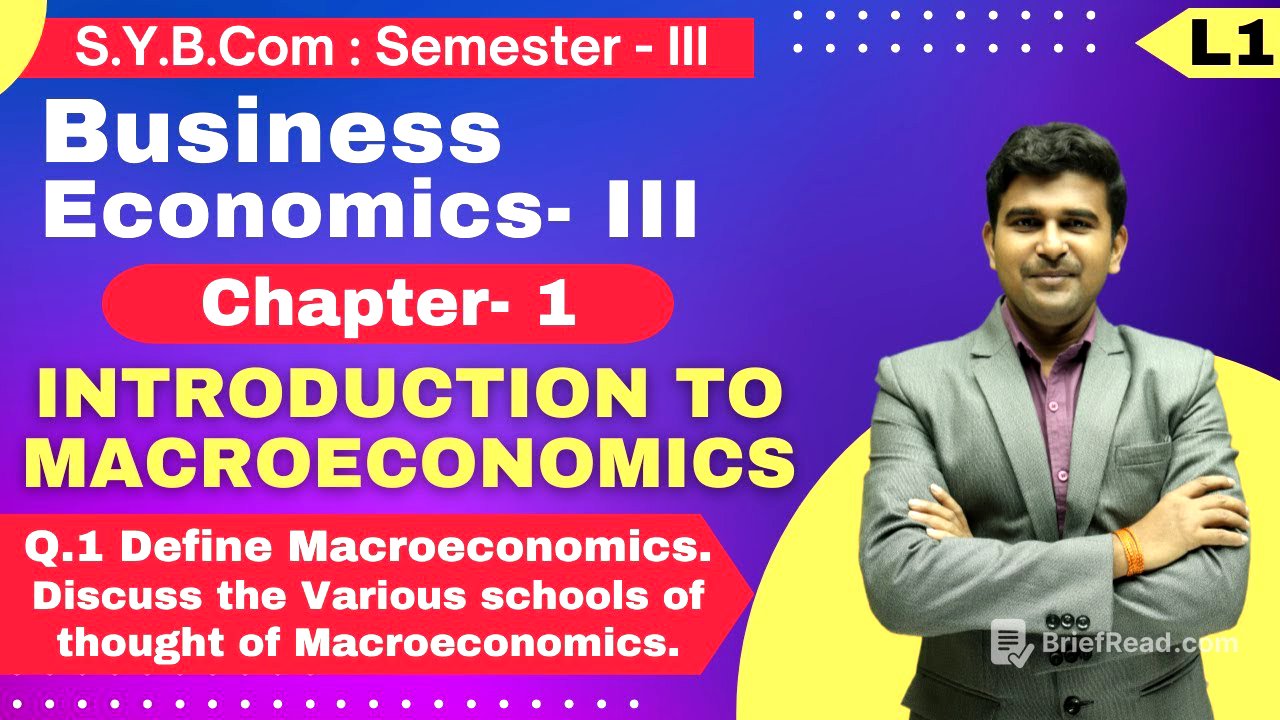
The video by Hemal Sir introduces the subject of Microeconomics, focusing on its transition from micro-level studies to macro-level concepts. The discussion revolves around the foundational principles of Microeconomics, addressing individual needs, wants, and economic issues faced by countries. It also covers important concepts like national income, inflation, unemployment, and economic systems, providing a context for examining the overall economy.
- Introduction to Microeconomics and its relevance.
- Overview of economic problems at national and individual levels.
Introduction to Microeconomics [0:00]
In this chapter, Hemal Sir welcomes students back and starts discussing the new session on Microeconomics. The transition from micro-level concepts learned in prior classes to more complex macro-level discussions is emphasized. He explains how the understanding of Microeconomics will help students as they progress in their studies, especially those in B.Com. and related courses.
Journey from Micro to Macro [2:20]
This section discusses the shift from simple microeconomic concepts to more intricate macroeconomic themes. Microeconomics is initially examined at an individual level, focusing on personal wants and needs. Hemal points out that while discussions previously revolved around small businesses, the focus now shifts to larger entities such as multinational corporations, international business, and national output.
Understanding Economic Challenges [7:20]
In this chapter, the video addresses common economic problems such as unemployment, population issues, and poverty. Hemal Sir stresses that these challenges are faced not only by individuals but also by nations. He encourages understanding these problems within the context of Microeconomics to find solutions that can be applied at both national and international levels.
Microeconomics Concepts [13:24]
Here, Hemal explains important Microeconomics concepts and terminology such as national income and general price levels. He elaborates on how the study of Microeconomics helps in assessing the performance of different economic sectors and dealing with issues like inflation, employment levels, and economic growth. The emphasis is on understanding the collective behavior of consumers, government, and industries.
Economic Systems Overview [22:55]
This section introduces various economic systems, particularly focusing on the mixed economy structure of India. Hemal discusses the roles of both public and private sectors and how they contribute to economic activities. He reinforces the idea that understanding different economic systems is crucial for analyzing how economies operate on a larger scale.
Classical and Modern Economic Theories [32:40]
In this chapter, Hemal covers the evolution of economic theories, including Classical Economics and its shortcomings during the Great Depression of 1929. He emphasizes the shift towards modern economic theories, especially how Keynesian economics addresses the need for government intervention during economic downturns. The importance of monetary policy in revitalizing the economy is highlighted.
Application of Economic Theories [42:25]
The final chapter discusses how understanding Microeconomics and its applications can help address real-world issues. Hemal encourages students to stay updated on current economic affairs and apply these concepts in discussions about national and international economic situations. He concludes with a call for continued learning and preparation for future classes.