TLDR;
This session covers the importance of cereals, discussing their structure, nutritional value, and role in Indian cuisine. It explains the various types of cereals, particularly rice and wheat, along with their products and health benefits.
- Cereals are a major energy source in the human diet.
- Different types of rice and wheat products are explained, with a focus on their nutritional profiles.
Introduction to Cereals [0:00]
Aayishwara Ci introduces the session on cereals, outlining objectives for students to understand the structure of cereals, their nutritional value, and culinary uses in Indian cookery. The term "cereal" originates from the Greek goddess of harvest, with the first grains being domesticated around 8,000 years ago. Cereals are staple foods known for their rich content of carbohydrates, proteins, vitamins, and minerals.
Structure of Cereal Grains [2:52]
Cereal grains consist of a seed coat, elurone layer, endosperm, and germ. The seed coat, made up of epidermis, forms the bran. The elurone layer contains essential nutrients, and the endosperm holds starch granules. These structural elements define the nutritional profile of grains like wheat, corn, and rice, with each component contributing to their overall makeup.
Nutritional Value of Cereals [5:02]
Cereals contribute significantly to energy needs, providing 70-80% of daily requirements primarily through carbohydrates. They contain 6-12% protein, but are low in micronutrients, with ragi being an exception as a good source of calcium and iron. Whole grains contribute B vitamins essential for human health, offering numerous health benefits despite their low fat content.
Types of Rice and Their Characteristics [7:27]
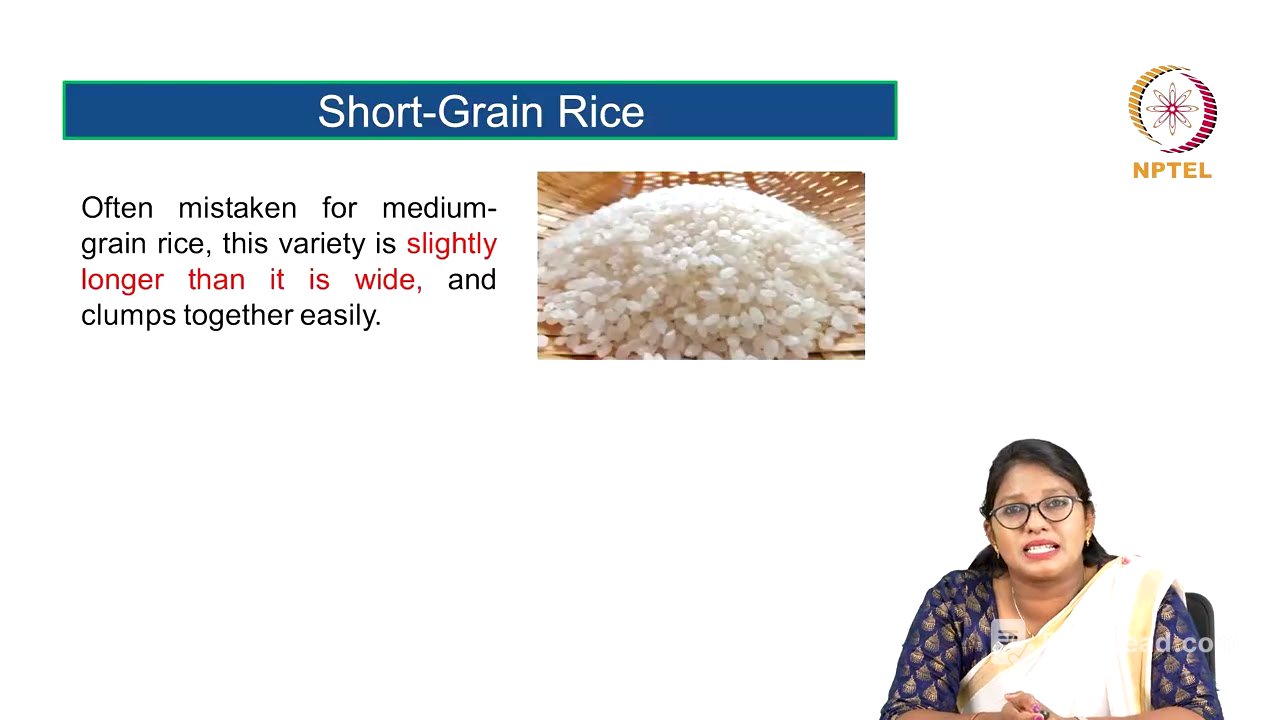
Various types of rice are explored, including long grain, medium grain, and short grain rice. Long grain rice is slender and non-sticky when cooked, while medium grain is chewy, and short grain is adhesive. The session discusses parboiled rice, polished rice, brown rice, black rice, and basmati rice, highlighting their differences in texture, cooking properties, and nutritional content.
Rice Products and Uses [14:18]
Rice can be processed into numerous products, including rice flour, bran, broken rice, and parched rice. Each type serves different culinary purposes, from making puddings and ice creams to creating upma, a popular dish in Indian cooking. The focus is on enhancing diversity in diet and the nutritional advantages these products offer.
Wheat and Its Nutritional Profile [17:12]
Wheat has an ovoid shape and is low in tryptophan but rich in glutamic acid. Whole wheat is highlighted as a source of various B vitamins and minerals like calcium and iron. Wheat products are essential in baked goods due to their gluten content, making them suitable for various food applications.
Wheat Products Overview [20:26]
A comprehensive overview of wheat products includes whole wheat flour, wheat germ, bran, semolina, and pasta products. Each product offers different nutritional benefits, with whole wheat flour being favored for its fiber and nutrient content, while maida, being refined, lacks many essential nutrients.
Oats and Barley [26:51]
Oats are described as whole grains rich in beta-glucans, which help reduce cholesterol levels. They are a popular breakfast choice in India. Barley, commonly used in traditional beverages, has utility in brewing and cooking, providing additional health benefits.
Cereal Processing Techniques [28:56]
Cereal processing is crucial for enhancing usability and nutritional value. Primary processing involves separating the outer layers to yield products like refined flour, while secondary processing includes creating baked goods and breakfast cereals. Each processing step impacts the final nutritional profile of the products.
Health Benefits of Cereals [43:44]
Cereals serve as critical sources of energy, providing essential vitamins and minerals. They aid in cancer prevention, maintaining blood sugar levels, and preventing constipation due to their fiber content. Whole grains, in particular, contribute positively to health by minimizing refinement and maximizing nutritional value.