TLDR;
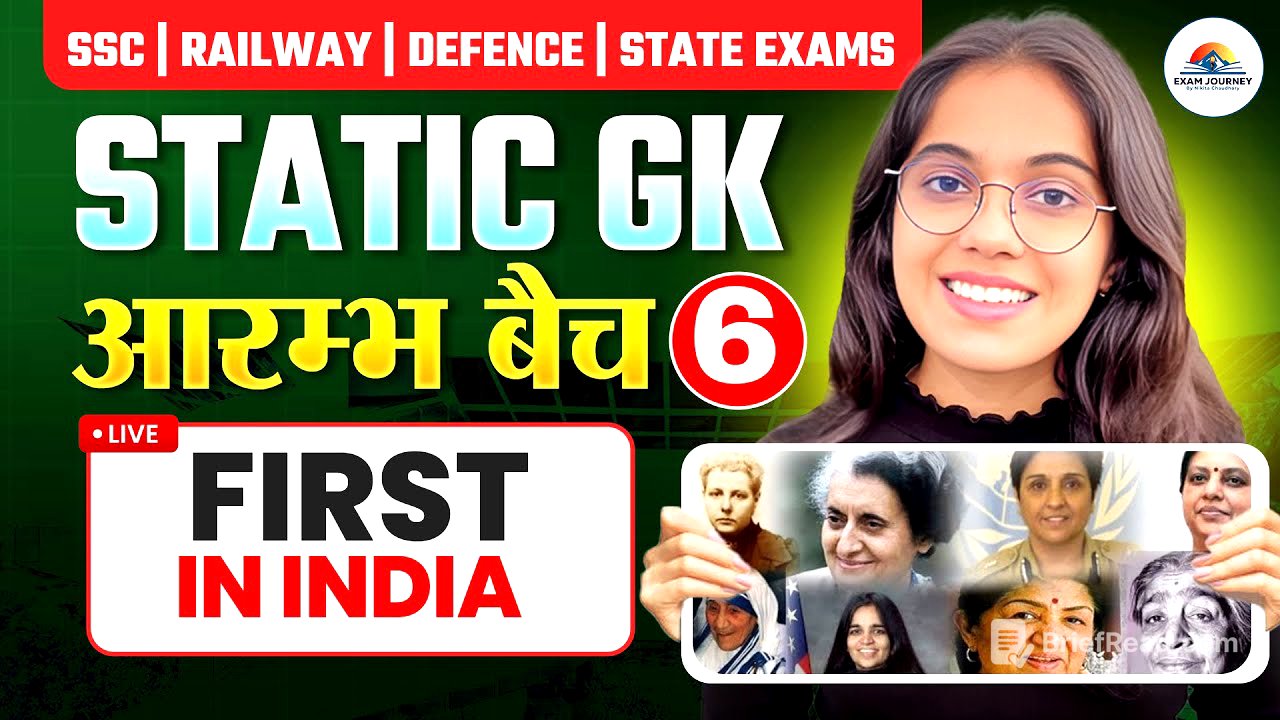
The video primarily focuses on "Firsts in India" highlighting the notable achievements of both men and women in various fields. The session covers significant historical figures who were pioneers in their respective areas, such as education, law, aviation, and politics. Key points include:
- First female doctor: Anandibai Joshi.
- First female teacher: Savitribai Phule.
- First female lawyer: Cornelia Sorabji.
- First female IPS officer: Kiran Bedi.
- First female prime minister: Indira Gandhi.
Firsts in India - Women Pioneers [2:00]
The session starts by addressing the first women in various fields in India, which includes completing a discussion on the first female doctor, Anandibai Joshi, who graduated in 1887. The first female teacher, Savitribai Phule, is recognized for her contributions in 1848. The first female lawyer, Cornelia Sorabji, who achieved this status in 1894, is noted alongside discussions about women's roles in education and law. Additional firsts covered include the first female pilot, Sarla Thakral in 1936, and the first female president, Pratibha Patil, emphasizing their significant contributions to society.
Firsts in India - Male Pioneers [23:20]
Following the celebrations of women's achievements, the focus shifts to male pioneers in India. Important figures include the first Field Marshal, Sam Manekshaw, and the first Indian Air Chief Marshal, Arjan Singh. The session covers India's first Prime Minister, Jawaharlal Nehru, and the first President, Dr. Rajendra Prasad. The video also mentions the first individual to receive the Param Vir Chakra, Somnath Sharma, and the first to be awarded the Bharat Ratna, C. Rajagopalachari. It encapsulates a variety of fields demonstrating how these men shaped modern India.
Significant Contributions Throughout History [43:20]
The discussion includes contributions from individuals such as the first woman to climb Everest, Bachendri Pal, and the first to achieve the Nobel Prize, Mother Teresa, who was awarded in 1979. The video highlights the achievements of pioneers in literature, science, and sports, with the mention of notable figures like C.V. Raman in physics and the introduction of printing presses by James Hickey. Each figure's legacy and the context of their contributions reinforce the path towards equality and recognition within India's historical framework.
Conclusion and Encouragement [52:40]
In conclusion, the session compels participants to recognize and honor the contributions of both men and women who were the first in their fields. This recognition extends to the current educational initiatives and structured courses aimed at revising these achievements. It emphasizes the importance of learning about history's most impactful figures and encourages students to actively engage in forthcoming educational sessions to further their understanding of these "firsts" in India.