TLDR;
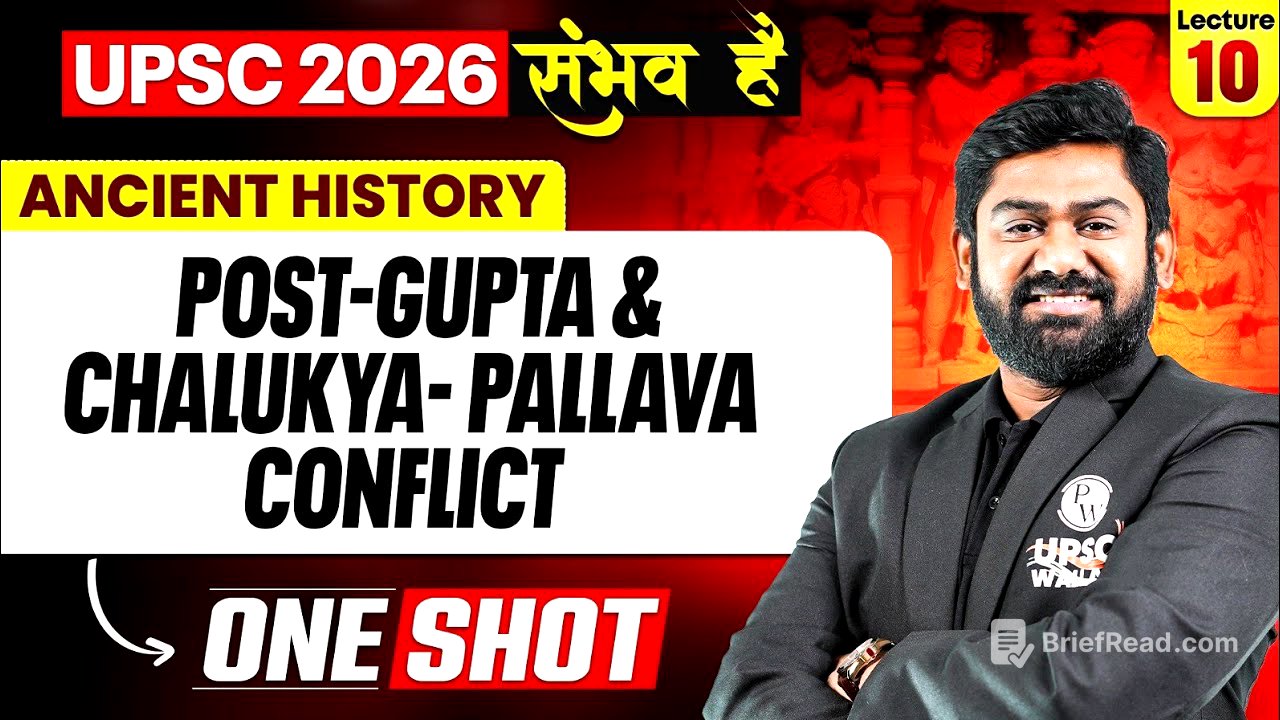
This video discusses the post-Gupta period in Indian history, focusing on various dynasties and their significance. Major points include:
- The rise of regional powers after the Gupta decline.
- The Pushyabhuti dynasty, particularly Harshavardhan and his succession.
- The conflict between the Chalukyas and the Pallavas and the socio-political dynamics during this era.
Introduction [0:00]
The video begins by introducing the topic of the post-Gupta period in Indian history. It highlights the shift from Gupta rule to several regional powers, including the Pushyabhuti dynasty and the emerging challenges faced by these new rulers.
Batch Updates [1:55]
The instructor provides updates on the current batches being offered for history studies, emphasizing the relevance of the material being taught.
Topics to be covered [2:03]
Key topics to be discussed include a detailed look at the Pushyabhuti dynasty, particularly the life and rule of Harshavardhan, as well as the interactions and conflicts between the Chalukyas and Pallavas.
Recap of Previous Lecture [2:30]
A brief recap of the previous lecture covers the decline of the Gupta Empire and the resulting rise of various regional powers, laying the groundwork for today's discussion.
Post Gupta Period Overview [11:40]
This chapter explores the political landscape following the Gupta decline, noting how several regional kingdoms declared independence. The emergence of the Pushyabhuti dynasty under Harshavardhan is highlighted alongside regional tensions.
Pushyabhuti Dynasty [17:10]
The Pushyabhuti dynasty is detailed, focusing on its founders, including its notable ruler Harshavardhan. The video discusses Harshavardhan's attributes, his early life, and how he ascended to power, along with his rule which consolidated Northern India.
Harshavardhan [28:54]
Harshavardhan's reign is examined, highlighting his military campaigns and political strategies. His compassionate rule and attempts at unifying India politically and culturally, along with his eventual establishment of Kanyakubja as a key political center, are discussed.
Post Gupta Period Dynamics [37:32]
The dynamics of power during the post-Gupta period are analyzed, mentioning various regional states that gained influence and the challenges to Harshavardhan’s rule from emerging dynasties.
Epigraphic Sources of Harshavardhan Period [48:26]
Various epigraphic sources from the Harshavardhan period, including inscriptions like the Madhubana copper plates, provide critical insights into his governance, social structure, and military conquests.
Harshavardhan’s Administration, Army, Society [49:00]
Detailed exploration of Harshavardhan's administrative structure, military organization, and societal norms, with emphasis on the feudal system and the reliance on land grants.
Chalukya-Pallava Conflict [1:02:00]
This chapter discusses the ongoing conflicts between the Chalukyas and Pallavas, outlining their territorial ambitions and key battles that shaped the political landscape of South India.
Mahendravarman-I [1:21:40]
The reign of Mahendravarman-I is described, highlighting his contributions to architecture and culture and his military campaigns against rival dynasties.
Narsimhavarma-I & Narsimhavarma-II [1:23:08]
Narsimhavarman-I and Narsimhavarman-II's rule is analyzed, focusing on their military successes and cultural contributions to the Pallava dynasty.
Sources of Pallava Dynasty, Important Rulers [1:24:58]
Sources detailing the history of the Pallava dynasty are discussed. Important rulers are highlighted, emphasizing their roles in expanding and consolidating Pallava influence in South India.
Pallava’s Administration [1:30:29]
An overview of the administrative structure of the Pallavas, detailing key officeholders and the governance mechanisms employed during their reign.
Revenue & Taxation [1:36:28]
This section delves into the revenue and taxation systems during the Pallava period, including land grants, taxation types, and their implications for society.
Pallava’s Army, Trade [1:38:51]
Analysis of the Pallava military structure and trade networks that connected them with other regions, emphasizing their naval capabilities and trade routes.
Pallava’s Society, Religion, Literature [1:41:42]
Insights into the social structure, religious practices, and literary contributions during the Pallava period, showcasing their cultural richness.
Chalukya : Sources, Rulers [1:44:13]
Sources detailing the Chalukyan era, including notable rulers and their contributions to the political and cultural environment of South India are discussed.
Chalukya’s Administration, Religion, Literature, Architecture [1:45:47]
An exploration of the administration, religious practices, literary contributions, and architectural achievements of the Chalukyan dynasty.
Thank You [1:52:03]
The video concludes with thanks to viewers for their attention, encouraging continued interest in Indian history and its dynasties.