TLDR;
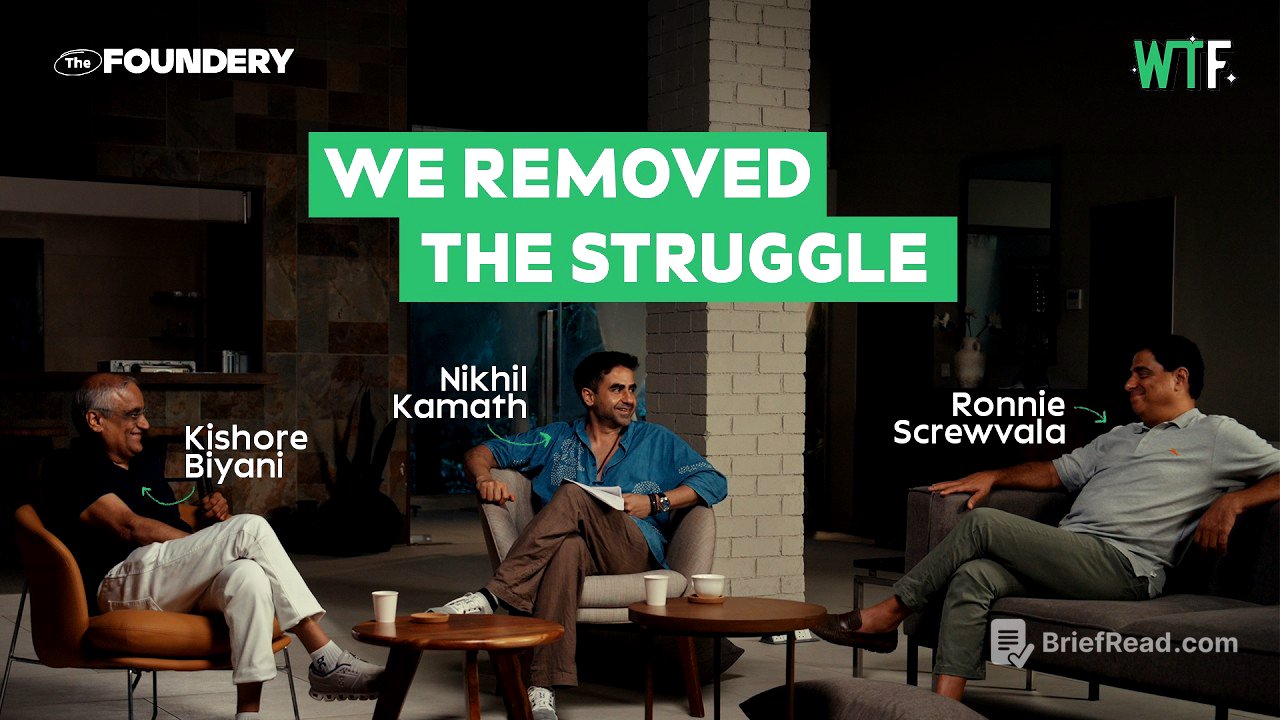
This video presents a comprehensive discussion about the entrepreneurial journey and the founding of The Foundery. Key points include:
- The definition and different perspectives on entrepreneurship.
- Analysis of The Foundery's model and equity structure.
- Insights into the current consumer trends in India.
- Challenges and learnings faced by entrepreneurs after 90 days in the program.
- The importance of relationships, social mobility, and differences between abundance and scarcity in business.
Introduction [0:00]
The discussion begins with different perspectives on what entrepreneurship means. An entrepreneur is described as a builder, someone who is willing to fail and learn from the experience. There’s a belief that definitions of entrepreneurship vary widely, and no classroom can provide a full understanding of it. An experiment called The Foundery is introduced, which involves 25 people living together in Alibaug and working on new-age consumer brands with a budget of 4 crores each in under 90 days.
Is The Foundery a selfish bet [6:18]
The concept of whether The Foundery is a selfish initiative is explored. It’s framed as an opportunity generator for aspiring entrepreneurs, aiming to foster enthusiasm and growth in the business landscape. The aspiration for The Foundery is to evangelize entrepreneurial opportunities in India as it transitions towards a large consumption economy. There is a focus on emphasizing consumer product brands, suggesting the small-scale sector needs more attention and innovation.
Why building new beats the capitalist high [12:29]
In this segment, the conversation shifts to the idea that creating new products and services may provide greater satisfaction than traditional capitalist achievements. The founders reflect on their contrasting backgrounds—one rooted in scarcity while the other embraces abundance—as a philosophy for entrepreneurship. Discussion emphasizes that true innovation stems from abundance, reflective of the beliefs upheld by the founders of The Foundery.
How the company-builder model formed [18:28]
The formation of The Foundery’s company-builder model is outlined. It discusses the synergy between consumer insights and a structural framework that facilitates entrepreneurial growth. The goal is to help individuals create businesses successfully by focusing on market needs and addressing gaps directly.
The new consumer categories driving the bets [24:47]
The segment highlights new consumer categories shaping the market, pointing out that Indian consumers are becoming more experimental with different cuisines and healthier food options. This rising consumer trend opens opportunities for entrepreneurs to innovate and develop products that cater specifically to these emergent demands.
What happens after day 90 [30:41]
Discussing the aftermath of the 90-day period within The Foundery program, it's stressed that success should not be viewed narrowly in terms of immediate sales or funding. Founders should instead maintain commitment beyond the program's duration and see business progress as a continuous journey. Preliminary pitching for potential investments occurs, but the journey forward must be viewed holistically.
The equity split everyone questions: 25% vs 75% [35:13]
The conversation explores the contentious equity split of 25% for the founders and 75% retention for The Foundery. It explains that this model allows for support and resources that young entrepreneurs often lack when starting independently. The discussion hints at skepticism yet emphasizes that the experience and mentorship provided can justify the split.
Where the ideas come from, and how the gates work [43:11]
This chapter outlines how ideas are generated within The Foundery through a research-driven community. Founders partake in a structured process that guides their progress, still emphasizing the importance of innovative thinking and responding to market needs flexibly.
Founder–idea fit and the flaws each founder owns [50:56]
Insights into the compatibility between founders and their ideas reveal personal flaws that impact their entrepreneurial journey. Acknowledging these flaws leads to better decision-making and builds a stronger foundation for business development.
Why equity beats an endorsement fee [58:05]
The discussion tackles the idea that having equity in a business is more valuable than simply receiving an endorsement fee. Equity fosters a deeper commitment from partners and leads to more authentic brand engagement rather than transactional relationships.
What happens if the brands fail [1:05:14]
Exploring potential failures of the brands built in The Foundery, it's acknowledged that setbacks are part of the entrepreneurial journey. Founders are encouraged to learn from failures and iterate, fostering resilience and adaptability for future endeavors.
What actually drives Nikhil [1:11:08]
Nikhil shares insights into his motivations as an entrepreneur. He speaks to the constant pursuit of new challenges and opportunities, emphasizing that success is not merely a product of wealth but rather a continuous journey of learning and growth.
Abundance vs scarcity in one house [1:17:46]
The contrasting philosophies of abundance and scarcity are examined within the context of The Foundery. Nikhil argues that a culture of abundance can lead to greater creativity and innovation among participants.
Social mobility and India's bubbles [1:23:54]
This segment discusses social mobility in India, highlighting the economic disparities between classes. The conversation encourages recognizing privilege and the need for equitable opportunities for all.
What the founders are unlearning [1:28:54]
The founders reflect on what they are unlearning through their journey in The Foundery, which includes letting go of preconceived notions and adapting to new ways of thinking that align with contemporary market demands.
Twelve months out: what they'd change [1:33:09]
Looking ahead, reflections on the past year center around potential improvements for The Foundery, emphasizing the importance of adaptability in the program's approach to selecting founders and structuring the entrepreneurial process for future cohorts.