TLDR;
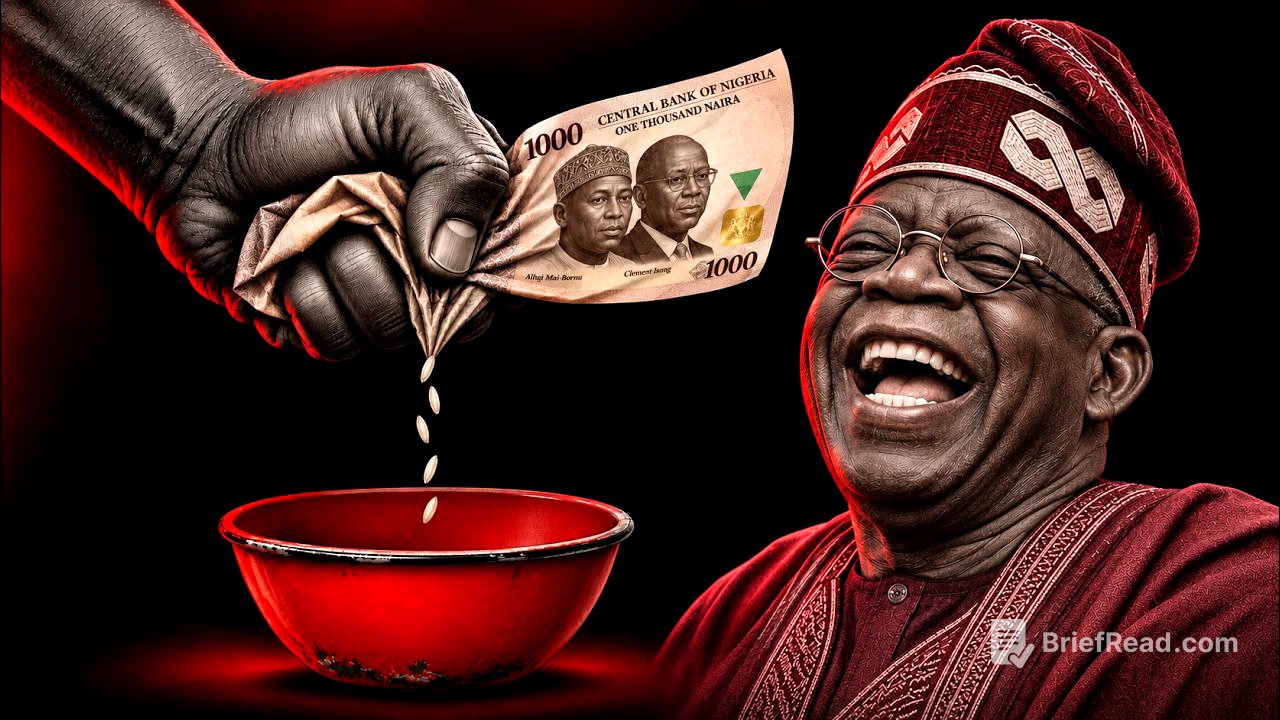
The video explores the disparity between Nigeria's reported economic recovery and the harsh realities faced by ordinary workers. It highlights the experience of Grace Adamu, a health worker whose salary lasts only a week due to rising costs. While the government touts economic growth and falling inflation, many Nigerians, like Grace, continue to struggle with poverty and financial instability.
- Grace Adamu's salary is insufficient to cover her monthly expenses.
- President Bola Tinubu claims economic recovery, but many like Grace feel left behind.
Grace's Struggle with Salary [0:00]
Grace Adamu, a health worker in Abuja, earns a monthly salary of 135,000 naira, which is nearly double the national minimum wage. Despite this, her salary lasts only one week after payday, leaving her to borrow and cut back for the rest of the month. The cost of living has risen sharply, with petrol prices substantially increasing and food costs nearly 20% higher than the previous year. If Grace earned the minimum wage of 70,000 naira, she would struggle to live on about $52 a month.
Contrasting Economic Narratives [1:00]
In a parallel narrative, President Bola Tinubu claims that Nigeria's economy is stabilising and experiencing growth. He reports a 4.43% economic growth from April to June 2026, and a significant drop in inflation from 24.48% in January 2025 to 14.63% by September 2026. The government also notes a rise in foreign reserves and asserts that the economic reforms, while painful, have led to positive outcomes. These claims are backed by independent checks, but they stand in stark contrast to the struggles faced by individuals like Grace.
The Disparity in Economic Growth [2:00]
The economic recovery appears beneficial primarily for large corporations and banks, with no real impact on individual workers. Statistics show profits for banks and telecoms have soared, contributing greatly to the reported economic growth. However, the majority of Nigerians, who are engaged in informal jobs, do not benefit from this prosperity. The unemployment rate has not been officially published since November 2024, highlighting the lack of clear employment data amidst claims of economic recovery.
Understanding Inflation [3:00]
Despite claims of declining inflation, the actual purchasing power for individuals like Grace has not improved. Inflation measures how quickly prices are rising, and while the rate may be falling, prices continue to increase. The video notes that while food prices saw a slight decrease, core prices, which include essentials like rent and transportation, have risen. For households where food constitutes up to 70% of their expenses, these increases contribute to ongoing financial distress.
The Impact of Global Events [4:00]
An international event, specifically a conflict involving Iran, led to a spike in oil prices, resulting in increased revenue for Nigeria's government. However, for households, this uptick translates into higher petrol prices and costs for public transport, further straining already limited budgets. Grace's financial burden increases alongside government revenue, but she sees none of the benefits from these changes.
Where Does the Money Go? [5:00]
The flow of government revenue is primarily redirected toward debt repayment and funding projects that do not directly benefit citizens like Grace. Between 2023 and 2025, government funds increased significantly due to various reforms, yet spending on essential areas like education has declined. Rising interest payments on loans overshadow any potential social impact, creating a situation where the few benefits reaching households are minimal.
Cash Transfer Program and its Limitations [6:00]
The government has initiated a cash transfer programme aimed at alleviating poverty, providing 75,000 naira to about 10.4 million households. However, this amount is not sufficient to cover essential costs, representing only a fraction of a month’s minimum wage spread over several months. With no recent increase in the minimum wage and calls for a review stalling, many households remain in precarious situations with little hope for improvement.
Reassessing Economic Metrics [7:00]
To measure the true recovery of an economy, it is suggested that indicators should focus on household viability instead of merely economic growth figures. An economy is truly recovering when families can afford to plan beyond immediate needs. Grace's situation embodies this challenge, as her salary only lasts a week, leaving her uncertain about future expenses. The outlook remains bleak for millions of Nigerians living in poverty despite government claims of progress.
Looking Ahead: Future Challenges [8:00]
As Nigeria approaches its next elections in January 2027, the focus will shift to economic metrics and the lived experiences of citizens. The video encourages viewers to reflect on their own situations, particularly on how far their salaries stretch, highlighting that progress should be measured not just in statistics but in the quality of life and financial stability for everyday people.